
ABSTRACT
Environmental, Social, and Governance (ESG) considerations have emerged as a significant dimension of contemporary corporate governance, reflecting a shift from shareholder primacy towards stakeholder-inclusive and sustainability-oriented corporate regulation. In India, ESG compliance has developed through a fragmented assemblage of corporate law reforms, securities regulation, environmental statutes, labour laws, and disclosure-based mechanisms rather than through a unified legislative framework. This paper undertakes a doctrinal and analytical examination of the evolution of corporate governance in India and evaluates the extent to which existing legal and regulatory mechanisms effectively institutionalise ESG principles.
The study analyses key legislative developments, including the Companies Act 2013, SEBI’s Listing Obligations and Disclosure Requirements, mandatory Corporate Social Responsibility, and Business Responsibility and Sustainability Reporting, alongside sector-specific environmental and social regulations. It critically identifies regulatory gaps relating to fragmentation, limited enforcement, data reliability, climate risk governance, and supply chain accountability. Through a comparative analysis with ESG frameworks in the European Union, the United Kingdom, and the United States, the paper highlights structural deficiencies in India’s ESG regime while recognising its unique statutory innovations. The study concludes by proposing regulatory, institutional, and policy reforms aimed at strengthening ESG integration and advancing sustainable corporate governance in India.
HYPOTHESES
- India’s ESG framework is predominantly disclosure-driven and fragmented, resulting in formal compliance without substantive integration of ESG principles into corporate decision-making.
- While corporate governance norms in India are relatively well-developed, the environmental and social pillars of ESG suffer from weak enforcement, limited assurance mechanisms, and inadequate regulatory integration.
- The absence of mandatory climate-related disclosures, supply chain due diligence, and unified ESG legislation significantly constrains India’s ability to align corporate conduct with global sustainability standards.
CHAPTER 1: INTRODUCTION
Background and Context
Environmental, Social, and Governance (ESG) considerations have emerged as a central paradigm in contemporary corporate governance discourse, reflecting a shift from shareholder-centric models to broader stakeholder-oriented approaches. Globally, corporations are increasingly evaluated not only on financial performance but also on their environmental footprint, social responsibility, and governance standards. This transition has been driven by heightened awareness of climate change, social inequality, corporate scandals, and systemic governance failures, alongside growing pressure from investors, regulators, and civil society. In India, ESG has gained prominence against the backdrop of rapid economic growth, increased foreign investment, and evolving regulatory expectations. While traditional corporate governance focused on compliance and profitability, ESG introduces sustainability, accountability, and long-term value creation as core corporate objectives1.
Significance of ESG in Corporate Governance
ESG operates as an extension and deepening of corporate governance principles. It integrates environmental stewardship, social equity, and ethical governance into boardroom decision-making and risk management frameworks. From a governance perspective, ESG strengthens transparency, accountability, and board oversight, while from an investment standpoint, it functions as a risk-assessment and value-creation tool. Empirical studies suggest that companies with strong ESG performance demonstrate greater resilience, improved access to capital, and enhanced stakeholder trust2. In India, ESG assumes particular significance due to persistent environmental challenges, labour market vulnerabilities, and governance deficits, making it a critical instrument for aligning corporate conduct with constitutional values and sustainable development goals.
Indian Corporate Landscape: An Overview
India’s corporate sector is characterised by a diverse mix of large conglomerates, public sector enterprises, multinational corporations, and a vast small and medium enterprise (SME) base. Post-liberalisation reforms since 1991 have transformed corporate governance through enhanced disclosure norms, shareholder protection mechanisms, and market regulation. The enactment of the Companies Act 2013 and the proactive role of the Securities and Exchange Board of India (SEBI) signify a regulatory shift towards accountability and stakeholder inclusivity. However, ESG adoption remains uneven, with advanced compliance largely confined to listed and large-cap companies, while mid-cap firms and SMEs lag behind.3
Statement of the Problem
Despite the growing emphasis on ESG compliance, India lacks a unified and comprehensive ESG regulatory framework. ESG obligations are dispersed across corporate, securities, environmental, and labour laws, resulting in regulatory fragmentation and inconsistent enforcement. While initiatives such as mandatory Corporate Social Responsibility (CSR) spending and Business Responsibility and Sustainability Reporting (BRSR) have strengthened disclosure, substantive ESG integration remains limited. This gap between formal compliance and actual governance practices raises concerns regarding greenwashing, inadequate stakeholder protection, and weak accountability mechanisms.
Research Questions and Objectives
This study seeks to address the following research questions:
- How has ESG evolved within India’s corporate governance framework?
- What are the existing legal and regulatory mechanisms governing ESG compliance in India?
- What gaps and challenges undermine effective ESG implementation?
- How does India’s ESG framework compare with international standards?
The objectives of the study are to analyse the legal evolution of corporate governance in India, critically examine the current ESG compliance architecture, identify regulatory and implementation gaps, and propose reforms for strengthening sustainable corporate governance.
Research Methodology
The research adopts a doctrinal and analytical methodology. Primary sources include statutes, rules, regulations, committee reports, and judicial decisions. Secondary sources comprise academic literature, policy reports, regulatory guidelines, and international frameworks. Comparative analysis is employed to assess India’s ESG framework vis-à-vis selected foreign jurisdictions. The study is qualitative in nature and relies on critical legal analysis.
Scope and Limitations
The scope of the paper is limited to ESG compliance within the Indian corporate governance framework, with comparative references to select international regimes. The study primarily focuses on listed companies and large corporations, given the availability of regulatory data. Limitations include reliance on secondary sources and the evolving nature of ESG regulations, which may affect the contemporaneity of certain findings.
Structure of the Paper
The paper is structured into eleven chapters. Chapter 1 introduces the research framework. Chapter 2 develops the conceptual and theoretical foundations of ESG and corporate governance. Chapter 3 traces the legal evolution of corporate governance in India. Chapter 4 examines the existing ESG compliance architecture. Chapters 5 and 6 analyse regulatory gaps and implementation challenges. Chapter 7 undertakes a comparative international analysis. Chapters 8 and 9 explore stakeholder dynamics and future trends. Chapter 10 proposes policy recommendations, and Chapter 11 concludes the study.
CONCEPTUAL FRAMEWORK AND LITERATURE REVIEW
Understanding ESG: Definitions and Dimensions
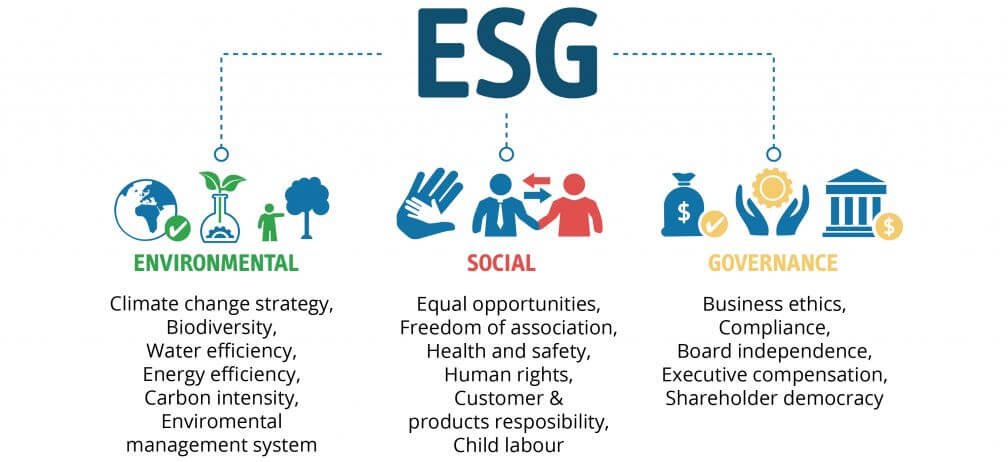
ESG refers to a set of non-financial criteria used to assess a corporation’s sustainability and ethical impact. Unlike traditional financial metrics, ESG evaluates how companies manage environmental risks, social responsibilities, and governance structures. The concept has evolved from voluntary corporate responsibility initiatives to a semi-regulated governance framework influencing investment decisions and regulatory policies.4
Environmental Pillar
The environmental dimension addresses a corporation’s impact on natural ecosystems, including climate change mitigation, resource efficiency, pollution control, biodiversity conservation, and waste management. Corporate environmental responsibility is increasingly linked to regulatory compliance, climate risk disclosure, and alignment with international commitments such as the Paris Agreement.5
Social Pillar
The social pillar focuses on a company’s relationship with its stakeholders, encompassing labour rights, workplace safety, diversity and inclusion, community engagement, and human rights due diligence. In the Indian context, social ESG concerns intersect with labour law reforms, gender justice, and inclusive growth imperatives.6
Governance Pillar
Governance relates to corporate leadership, board composition, ethical conduct, transparency, and accountability mechanisms. Effective governance ensures that ESG commitments are integrated into strategic decision-making and monitored through robust oversight structures. Weak governance undermines ESG credibility and facilitates superficial compliance.
Corporate Governance: Theoretical Foundations
Agency Theory
Agency theory conceptualises corporate governance as a mechanism to address conflicts between principals (shareholders) and agents (management). ESG expands this framework by recognising that unchecked managerial behaviour may also harm non-shareholder stakeholders and long-term firm value.7
Stakeholder Theory
Stakeholder theory posits that corporations owe responsibilities to a broad range of stakeholders, including employees, consumers, communities, and the environment. ESG is deeply rooted in this theory, operationalizing stakeholder interests through disclosure, accountability, and participatory governance.8
Stewardship Theory
Stewardship theory assumes that managers act as responsible stewards of corporate assets and societal interests. ESG aligns with this approach by emphasising ethical leadership, long-term sustainability, and trust-based governance.
ESG and Sustainable Development: The Linkage
ESG serves as a micro-level implementation mechanism for macro-level sustainable development objectives. By aligning corporate strategies with the United Nations Sustainable Development Goals (SDGs), ESG facilitates private sector participation in addressing global challenges such as climate change, inequality, and resource depletion.9
Global ESG Movement: Historical Context
The global ESG movement traces its origins to early corporate social responsibility initiatives, evolving through milestones such as the UN Global Compact, the Principles for Responsible Investment (PRI), and contemporary sustainability reporting standards. Regulatory interventions in the EU, UK, and US have accelerated ESG mainstreaming.10
Literature Review
International Studies on ESG Compliance
International scholarship highlights a positive correlation between ESG performance and long-term financial stability, while also cautioning against inconsistent metrics and greenwashing risks.11
Indian Context: Existing Research
Indian literature emphasises regulatory innovation through CSR mandates and BRSR reporting but notes limited empirical evidence of substantive ESG integration. Scholars identify enforcement deficits and capacity constraints as major barriers.12
Research Gaps Identified
Existing studies often focus on disclosure rather than enforcement, lack sector-specific analysis, and under-examine SME participation. This research addresses these gaps by adopting a comprehensive legal and governance perspective.
LEGAL AND REGULATORY EVOLUTION OF CORPORATE GOVERNANCE IN INDIA
Pre-Independence Era: Early Corporate Regulation
Corporate regulation in India during the colonial period was primarily designed to facilitate British commercial interests rather than promote stakeholder welfare or accountability. Early legislations such as the Joint Stock Companies Act 1850 and subsequent Companies Acts of 1866 and 1913 focused on incorporation, capital formation, and basic disclosure, with minimal attention to governance standards or social responsibility. Corporate activity was largely shareholder-centric, and issues of labour welfare, environmental protection, and ethical governance remained outside the regulatory imagination.13
Companies Act 1956: Foundation of Modern Corporate Law
Post-Independence, the Companies Act 1956 marked a significant step in building a structured corporate governance framework aligned with India’s planned economy model. The Act introduced provisions relating to board structure, shareholder rights, audit mechanisms, and government oversight. However, governance under the 1956 Act remained compliance-oriented and state-controlled, with limited emphasis on transparency, minority shareholder protection, or stakeholder interests. ESG-related concerns were largely absent, except indirectly through labour and environmental legislations operating outside corporate law.14
Liberalisation Era and Governance Reforms (1991–2000)
The economic liberalisation of 1991 transformed India’s corporate governance landscape by shifting focus towards market efficiency, investor confidence, and global integration. Increased foreign investment and capital market expansion exposed weaknesses in corporate accountability, prompting regulatory reforms driven largely by SEBI.
Kumar Mangalam Birla Committee (1999)
The Kumar Mangalam Birla Committee Report marked the first comprehensive attempt to codify corporate governance standards for listed companies. It emphasised board independence, audit committees, disclosure norms, and shareholder protection, leading to the introduction of Clause 49 of the Listing Agreement. Although ESG was not explicitly articulated, the committee laid the foundation for governance transparency and accountability—key components of the ESG framework.15
Naresh Chandra Committee (2002)
The Naresh Chandra Committee focused on strengthening auditor independence and corporate disclosure in response to global corporate scandals such as Enron. Its recommendations underscored the importance of ethical governance, internal controls, and accountability, reinforcing the governance pillar of ESG.16
Narayana Murthy Committee (2003)
The Narayana Murthy Committee further refined Clause 49 by enhancing disclosure requirements, defining the role of independent directors, and emphasising board responsibility. These reforms advanced transparency and ethical governance, indirectly contributing to ESG-oriented corporate practices.17
Companies Act 2013: A Paradigm Shift
The enactment of the Companies Act 2013 represents a watershed moment in Indian corporate governance, signalling a transition from shareholder primacy to stakeholder-inclusive governance.
Enhanced Corporate Governance Provisions
The 2013 Act strengthened board accountability through provisions on independent directors, women directors, board committees, related party transactions, and mandatory disclosures. It embedded governance norms within statutory law rather than contractual listing obligations.18
Introduction of CSR Mandate (Section 135)
Section 135 of the Companies Act 2013 introduced mandatory Corporate Social Responsibility (CSR) spending for qualifying companies, making India the first country to legislate CSR obligations. While CSR is distinct from ESG, it represents a statutory recognition of corporate social responsibility and serves as a precursor to broader ESG integration.19
Stakeholder Protection Mechanisms
The Act expanded stakeholder protection through class action suits, enhanced minority shareholder remedies, and stricter regulation of managerial conduct. These mechanisms align with ESG objectives by promoting accountability, transparency, and social responsibility.20
SEBI’s Role in Corporate Governance
SEBI has played a pivotal role in operationalising corporate governance norms through securities regulation.
Listing Obligations and Disclosure Requirements (LODR)
The SEBI (Listing Obligations and Disclosure Requirements) Regulations, 2015 consolidated and strengthened governance requirements for listed entities, including board composition, disclosure standards, and stakeholder engagement. LODR forms the regulatory backbone for ESG-related disclosures in India.21
Corporate Governance Norms Evolution
Subsequent SEBI reforms, including mandatory disclosure of related party transactions, risk management committees, and enhanced role of independent directors, reflect a gradual alignment with global ESG expectations. The introduction of Business Responsibility and Sustainability Reporting (BRSR) further institutionalised ESG disclosure within securities regulation.22
Timeline of Key Regulatory Milestones
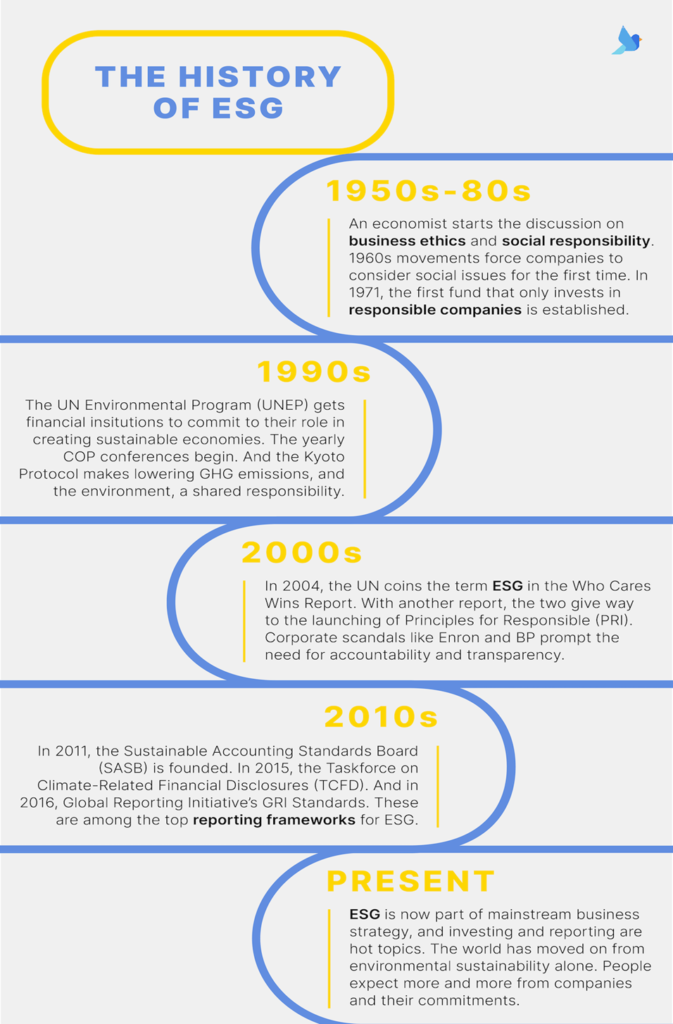
India’s corporate governance evolution reflects a gradual progression from colonial-era company law to a modern, stakeholder-oriented framework. Key milestones include the Companies Acts of 1956 and 2013, SEBI committee-led reforms, the introduction of Clause 49, LODR Regulations, and ESG-focused reporting mandates. This evolutionary trajectory underscores that ESG compliance in India is not an abrupt regulatory import but the culmination of decades of governance reform.
ESG COMPLIANCE FRAMEWORK IN INDIA: CURRENT ARCHITECTURE
Mandatory Corporate Social Responsibility (CSR)
India’s ESG framework finds its earliest statutory expression in the form of mandatory Corporate Social Responsibility under the Companies Act 2013. Although CSR predates the formal ESG discourse, it represents a significant regulatory intervention recognising corporate responsibility towards society beyond profit maximisation.
Section 135 of the Companies Act 2013
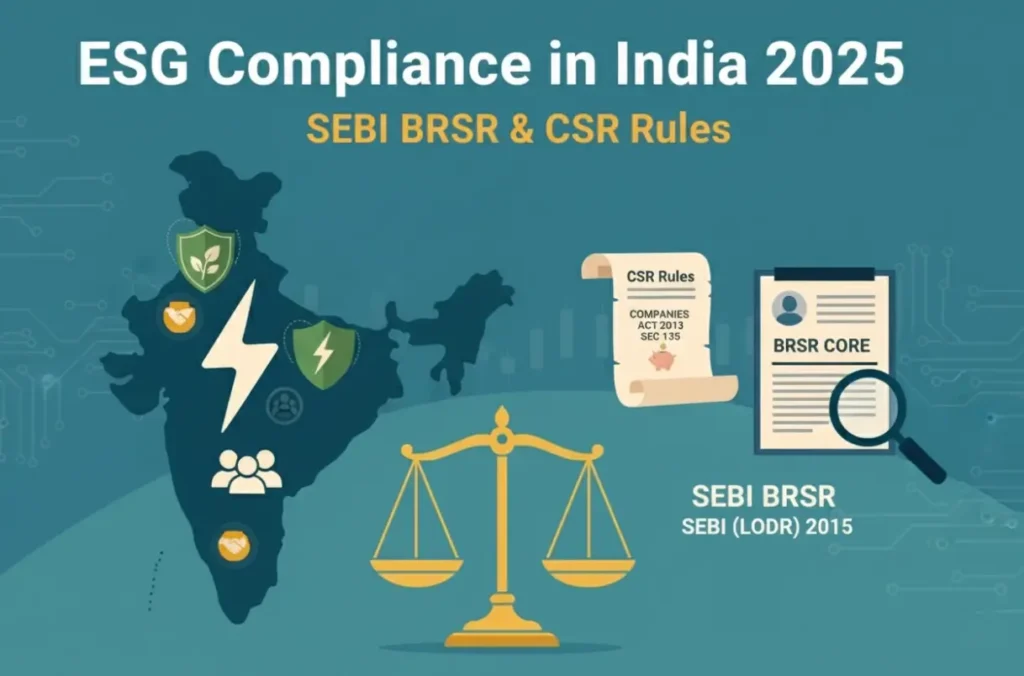
Section 135 mandates qualifying companies—based on net worth, turnover, or net profit thresholds—to spend at least two per cent of their average net profits on CSR activities. The provision institutionalizes corporate contribution to social development, covering areas such as education, healthcare, environmental sustainability, and poverty alleviation. While CSR is expenditure-based rather than outcome-oriented, it marks a departure from voluntary philanthropy to legally enforceable social responsibility.23
CSR Rules and Amendments
The Companies (CSR Policy) Rules, 2014 and subsequent amendments have strengthened the CSR regime by introducing impact assessment requirements, penalties for non-compliance, and clearer reporting obligations. The shift from a ‘comply or explain’ approach to a quasi-mandatory enforcement mechanism reflects India’s evolving stance on corporate accountability.24
Scope, Applicability, and Spending Requirements
CSR applicability is limited to larger corporations, excluding a significant portion of SMEs. Additionally, CSR spending focuses on external social projects rather than integrating sustainability into core business operations, thereby limiting its effectiveness as a holistic ESG instrument.
Implementation Challenges
Key challenges include box-ticking compliance, lack of strategic alignment with corporate objectives, limited monitoring of outcomes, and regional concentration of CSR spending. These issues dilute CSR’s potential contribution to comprehensive ESG governance.
Business Responsibility and Sustainability Reporting (BRSR)
BRSR represents India’s most direct regulatory engagement with ESG disclosure and reporting.
Evolution from BRR to BRSR
SEBI initially introduced Business Responsibility Reporting (BRR) in 2012 based on the National Voluntary Guidelines. In 2021, BRR was replaced by BRSR to align Indian disclosure norms with global ESG standards and investor expectations.25
National Guidelines on Responsible Business Conduct (NGRBC)
BRSR is anchored in the National Guidelines on Responsible Business Conduct (2019), which articulate nine principles covering ethics, sustainability, human rights, stakeholder engagement, and environmental responsibility. These principles form the normative foundation of India’s ESG framework.26
BRSR Core: Mandatory ESG Disclosures
SEBI has introduced ‘BRSR Core’ for the top listed entities, mandating quantitative and qualitative disclosures across environmental, social, and governance parameters. This marks a shift from narrative reporting to data-driven ESG accountability.27
Reporting Requirements and Framework
BRSR requires disclosures on emissions, energy consumption, workforce diversity, supply chain practices, board composition, and ethical conduct. However, the absence of mandatory third-party assurance raises concerns regarding data reliability and greenwashing.
Environmental Regulations with Corporate Impact
India’s environmental regulatory framework significantly influences the environmental pillar of ESG, though it operates largely outside corporate law.
The Environment (Protection) Act, 1986 empowers the central government to regulate industrial pollution, emissions, and environmental clearances. Corporate compliance with environmental standards directly impacts ESG performance, particularly in high-pollution sectors.28 The Forest (Conservation) Act regulates diversion of forest land for non-forest purposes, imposing compliance obligations on corporations engaged in infrastructure, mining, and industrial projects.29
The Plastic Waste Management Rules impose obligations relating to waste reduction, recycling, and disposal, embedding sustainability obligations into corporate operations. E-Waste rules regulate the disposal and recycling of electronic waste, particularly affecting technology and manufacturing companies.
Extended Producer Responsibility (EPR) regimes require producers to bear responsibility for post-consumer waste, reflecting a shift towards life-cycle-based environmental accountability.
Social Compliance Requirements
The social pillar of ESG in India is governed through labour, equality, and human rights legislations.
Labour Laws and Codes
The consolidation of labour laws into four labour codes seeks to rationalise compliance while ensuring worker welfare, safety, and social security. Corporate adherence to labour standards is integral to ESG social performance.30
Sexual Harassment of Women at Workplace Act, 2013
The POSH Act mandates preventive and redressal mechanisms for workplace sexual harassment, reinforcing gender equity and safe working environments as ESG imperatives.31
Rights of Persons with Disabilities Act
The Act imposes obligations on employers to ensure non-discrimination, accessibility, and inclusion of persons with disabilities, aligning corporate conduct with social justice principles.
Human Rights Due Diligence
While India lacks a comprehensive human rights due diligence law, corporations are increasingly expected to respect human rights across operations and supply chains, particularly under BRSR disclosures.
Governance Requirements
Governance remains the most developed pillar within India’s ESG architecture. Statutory requirements relating to independent directors and women directors aim to enhance board diversity and oversight quality.32
Independent directors play a critical role in monitoring management, protecting minority shareholders, and ensuring ethical governance. Stringent regulation of related party transactions under the Companies Act and SEBI LODR seeks to prevent conflicts of interest and promote transparency. Whistleblower mechanisms mandated under SEBI regulations strengthen internal accountability and ethical governance.
Sector-Specific ESG Regulations
ESG obligations vary across sectors based on risk profiles and regulatory exposure. RBI guidelines on risk management, priority sector lending, and climate risk assessment influence ESG practices in the financial sector. Mining regulations impose stringent environmental and social compliance obligations, including rehabilitation and community development. The textile sector faces ESG scrutiny regarding labour practices, supply chain transparency, and environmental impact.
Role of Regulatory Bodies
The Ministry of Corporate Affairs (MCA) oversees CSR, corporate disclosures, and governance norms under company law. Securities and Exchange Board of India (SEBI) plays a central role in ESG disclosure, governance enforcement, and investor protection.
Stock Exchanges (BSE, NSE) act as frontline enforcers of listing and ESG disclosure requirements. Reserve Bank of India (RBI) influences ESG integration in financial institutions through prudential regulation. Central Pollution Control Board (CPCB) enforces environmental compliance affecting corporate ESG performance.
CRITICAL ANALYSIS OF REGULATORY GAPS
Regulatory Fragmentation and Lack of Integration
A central weakness of India’s ESG framework lies in its fragmented regulatory architecture. ESG-related obligations are dispersed across company law, securities regulation, environmental statutes, labour laws, and sector-specific regulations, without a unifying legislative framework. This compartmentalised approach leads to overlapping compliance requirements, regulatory arbitrage, and inconsistent standards. The absence of an integrated ESG statute prevents holistic assessment of corporate sustainability performance and undermines coherent enforcement.33
Voluntary vs Mandatory Compliance: The Dilemma
While India has adopted certain mandatory ESG-related measures—such as CSR spending and BRSR disclosures—large segments of ESG compliance remain voluntary or disclosure-based. This hybrid model creates ambiguity regarding enforceability and corporate accountability. Disclosure-centric regulation prioritises form over substance, enabling companies to comply procedurally without embedding ESG principles into core business strategies.34
Limited Scope and Applicability
SME and Mid-Cap Exclusion
ESG regulations in India primarily target large, listed entities, leaving SMEs and mid-cap companies outside the formal ESG compliance net. Given that SMEs constitute a substantial portion of India’s economy and supply chains, their exclusion weakens the overall effectiveness of ESG governance.
Threshold-Based Exemptions
Threshold-based applicability under CSR and BRSR frameworks results in regulatory blind spots, allowing corporations below prescribed limits to evade ESG scrutiny despite significant environmental or social impact.
Data Quality and Verification Issues
Absence of Mandatory Assurance
BRSR disclosures do not uniformly mandate independent third-party assurance. This undermines data credibility and allows subjective or selective reporting, reducing the reliability of ESG information for investors and regulators.35
Inconsistent Reporting Standards
Despite alignment efforts, inconsistencies persist between Indian ESG disclosures and international reporting standards such as GRI and ISSB. This hampers comparability and cross-border investment decision-making.
Greenwashing Concerns
The lack of robust verification mechanisms facilitates greenwashing, wherein companies exaggerate or misrepresent ESG performance to enhance reputational capital without substantive change.36
Enforcement Deficiencies
Penalties for ESG-related non-compliance are limited and often insufficient to deter violations. CSR non-spending penalties, for instance, are modest relative to corporate revenues. Regulatory bodies face capacity constraints in monitoring ESG compliance across thousands of corporations, leading to selective enforcement.
Indian courts have yet to develop a robust jurisprudence on ESG enforcement, with limited case law directly addressing corporate ESG obligations.
Climate Change Regulation Gap
India lacks mandatory climate risk disclosure requirements comparable to TCFD or ISSB standards, resulting in inadequate assessment of climate-related financial risks.37
The absence of a carbon pricing or emissions trading mechanism limits market-based incentives for corporate decarbonisation. Climate risks are not systematically integrated into prudential regulation or stress testing frameworks within the Indian financial system.
Supply Chain Accountability Gap
Indian ESG regulations inadequately address supply chain impacts, allowing corporations to externalise environmental and social risks through outsourcing and subcontracting arrangements.
Stakeholder Engagement Mechanisms: Inadequacies
Formal mechanisms for stakeholder participation in corporate ESG decision-making remain underdeveloped, particularly for affected communities, workers, and consumers.
Integration with Investment and Finance
ESG considerations are not fully embedded within investment decision-making frameworks, credit appraisal processes, or fiduciary duties of institutional investors in India.
Sectoral Gaps and One-Size-Fits-All Approach
Uniform ESG requirements fail to account for sector-specific risks and impacts, resulting in under-regulation of high-risk sectors and over-compliance burdens on low-risk industries.

CORPORATE IMPLEMENTATION: CHALLENGES AND REALITIES
ESG Integration in Indian Corporations: Current Status
The integration of ESG principles within Indian corporations remains uneven and sector-specific. Large listed companies, particularly those with significant foreign institutional investment, have begun incorporating ESG considerations into governance frameworks, risk management policies, and sustainability strategies. However, for many corporations, ESG remains primarily a compliance and disclosure exercise rather than a core strategic objective. The depth of ESG integration often correlates with regulatory exposure, investor scrutiny, and reputational considerations rather than intrinsic commitment to sustainability.38
Implementation Challenges
Resource and Capacity Constraints
A significant barrier to effective ESG implementation is the lack of financial, technical, and human resources, particularly among mid-cap companies and SMEs. Establishing ESG governance structures, data management systems, and reporting mechanisms entails costs that many firms perceive as burdensome.
Lack of Awareness and Expertise
Many corporations lack in-house expertise to interpret evolving ESG regulations and global standards. Board members and senior management often possess limited understanding of ESG risks and opportunities, resulting in superficial adoption and poor oversight.
Short-Term Financial Pressures vs Long-Term ESG Goals
Corporate decision-making in India continues to prioritise short-term financial performance, often at the expense of long-term sustainability objectives. ESG investments—such as decarbonisation, workforce welfare, or supply chain reform—are frequently viewed as cost centres rather than value drivers.
Data Collection and Management Challenges
Reliable ESG data collection poses operational challenges, especially for environmental metrics and supply chain disclosures. Inconsistent data methodologies and decentralised operations further undermine reporting accuracy.
Case Studies of ESG Implementation
Large Conglomerates (Success Stories)
Certain Indian conglomerates have demonstrated relatively advanced ESG integration by embedding sustainability into corporate strategy, board oversight, and public reporting. These companies often align ESG goals with business objectives, invest in renewable energy, and adopt global reporting frameworks, thereby enhancing investor confidence and long-term resilience.39
Mid-Cap Companies (Challenges)
Mid-cap companies face greater difficulty balancing ESG compliance with cost pressures and competitive constraints. While some adopt selective ESG initiatives, comprehensive integration remains limited due to resource constraints and lower regulatory scrutiny.
SME Sector (Barriers)
For SMEs, ESG compliance is largely aspirational. Limited awareness, absence of tailored regulatory frameworks, and lack of financial incentives significantly restrict ESG adoption, despite SMEs’ substantial cumulative environmental and social impact.
ESG and Financial Performance: The Indian Evidence
Empirical studies on the relationship between ESG performance and financial outcomes in India present mixed results. While some evidence suggests that strong governance and social practices contribute to stability and investor trust, environmental investments often yield long-term rather than immediate financial returns. The lack of standardised metrics complicates definitive conclusions.40
Greenwashing and Superficial Compliance
The growing emphasis on ESG disclosures has inadvertently incentivised superficial compliance. Companies may prioritise positive narratives and selective indicators while avoiding substantive operational changes. This phenomenon undermines stakeholder trust and distorts capital allocation.
Stakeholder Perspectives
Institutional investors increasingly incorporate ESG considerations into investment decisions, though ESG integration in India remains secondary to financial performance and risk mitigation. Civil society organisations play a critical watchdog role, highlighting corporate misconduct and advocating for stronger ESG enforcement. However, limited access to reliable data constrains effective engagement. Employees increasingly expect corporations to uphold ethical labour practices, workplace safety, and inclusivity. Failure to address social ESG concerns can adversely affect productivity, retention, and corporate reputation.
COMPARATIVE ANALYSIS: INTERNATIONAL ESG FRAMEWORKS
Global ESG Regulatory Landscape
Across jurisdictions, ESG regulation has evolved from voluntary guidelines to increasingly mandatory, enforceable frameworks. Developed economies have adopted comprehensive sustainability disclosure regimes, climate risk mandates, and due diligence obligations, driven by investor protection, systemic risk concerns, and international climate commitments. A comparative analysis highlights both convergence around core ESG principles and divergence in regulatory depth, scope, and enforcement mechanisms.
European Union
The European Union represents the most advanced and integrated ESG regulatory regime globally, characterised by binding disclosure, classification, and due diligence requirements. The Corporate Sustainability Reporting Directive (CSRD) significantly expands the scope, depth, and assurance of sustainability reporting for EU companies and certain non-EU entities. It mandates detailed ESG disclosures aligned with European Sustainability Reporting Standards (ESRS) and requires third-party assurance, addressing data credibility and
greenwashing concerns.41 SFDR imposes ESG disclosure obligations on financial market participants, integrating sustainability risks into investment decision-making and fiduciary duties. This regulatory linkage between ESG and finance is notably stronger than in the Indian framework.42
The EU Taxonomy establishes a classification system for environmentally sustainable economic activities, providing clarity on what qualifies as ‘green’ and preventing misleading sustainability claims.43 The proposed Corporate Sustainability Due Diligence Directive introduces mandatory human rights and environmental due diligence across corporate value chains, significantly strengthening supply chain accountability.
United Kingdom
The UK has adopted a principles-based ESG framework, combining mandatory disclosures with governance codes.
The UK mandates Task Force on Climate-Related Financial Disclosures (TCFD)-aligned climate disclosures for large companies and financial institutions, integrating climate risk into corporate reporting and financial regulation.44
The Modern Slavery Act requires companies to report on measures taken to prevent forced labour and human trafficking in supply chains, embedding social ESG accountability into corporate reporting.45 The Code emphasises board accountability, stakeholder engagement, and long-term value creation, reinforcing the governance pillar of ESG.
United States
The US ESG framework remains fragmented and politically contested, combining federal disclosure initiatives with state-level regulation.
The Securities and Exchange Commission has proposed climate-related disclosure rules focusing on greenhouse gas emissions, climate risks, and governance oversight. While implementation faces legal challenges, these rules signal a shift towards mandatory ESG disclosures.46
Several US states have adopted divergent ESG policies, reflecting political polarisation and regulatory inconsistency.
Other Jurisdictions
Singapore
Singapore mandates sustainability reporting for listed companies and integrates ESG into corporate governance codes, balancing flexibility with regulatory oversight.
South Africa
South Africa’s King IV Report adopts an integrated reporting and stakeholder-inclusive governance model, strongly aligning corporate governance with sustainability principles.
Brazil
Brazil has introduced ESG disclosure initiatives through securities regulation, with increasing focus on environmental risk management in high-impact sectors.
International Standards and Frameworks
Global Reporting Initiative (GRI) provides widely adopted sustainability reporting standards, promoting transparency and comparability. Sustainability Accounting Standards Board (SASB) focuses on financially material ESG issues, linking sustainability to investor decision-making. International Sustainability Standards Board (ISSB) aims to harmonise global sustainability reporting standards, addressing fragmentation across jurisdictions.
The UNGPs establish corporate responsibility to respect human rights, influencing ESG norms globally.
Comparative Analysis: India vs International Standards
Compared to EU and UK regimes, India’s ESG framework remains disclosure-centric, fragmented, and limited in scope. Mandatory assurance, climate risk integration, and supply chain due diligence are notably underdeveloped. However, India’s CSR mandate represents a unique statutory innovation absent in most jurisdictions.
Lessons for India
International experience underscores the importance of integrated ESG legislation, mandatory assurance, climate disclosures, supply chain accountability, and alignment between ESG and financial regulation. These lessons inform the reform proposals advanced in subsequent chapters.
STAKEHOLDER ECOSYSTEM & ESG GOVERNANCE
Role of Institutional Investors
Institutional investors play an increasingly influential role in shaping ESG governance in India. Foreign institutional investors (FIIs), mutual funds, and insurance companies are progressively integrating ESG considerations into investment decisions, voting policies, and shareholder engagement strategies. Investor expectations regarding transparency, risk management, and sustainability performance have emerged as significant drivers of corporate ESG adoption, particularly among listed entities. However, ESG integration by domestic institutional investors remains uneven, with fiduciary duties still largely interpreted through a narrow financial lens.47
ESG Rating Agencies in India
ESG rating agencies act as intermediaries between corporations and investors by assessing and scoring ESG performance. In India, ESG ratings are provided by both domestic and international agencies. While these ratings enhance market awareness and comparability, concerns persist regarding methodological opacity, inconsistent scoring outcomes, and over-reliance on self-reported corporate data. The absence of regulatory oversight of ESG rating agencies further raises accountability concerns.48
Civil Society and Advocacy Groups
Civil society organisations and non-governmental organisations play a critical role in monitoring corporate conduct, advocating for environmental protection, labour rights, and social justice. Through litigation, public campaigns, and policy advocacy, these groups exert pressure on corporations and regulators to strengthen ESG compliance. However, limited access to corporate data and resource constraints often restrict sustained engagement.
Role of Media and Public Disclosure
The media functions as an informal accountability mechanism by exposing corporate misconduct and amplifying ESG-related issues. Investigative journalism and digital platforms contribute to reputational risk, incentivising corporations to improve ESG practices. Nevertheless, inconsistent reporting standards and sensationalism may dilute constructive ESG discourse.
Academic and Research Institutions
Academic institutions contribute to ESG governance by generating empirical research, policy analysis, and critical scholarship. Universities and think tanks play an important role in developing ESG metrics, training professionals, and informing regulatory reform. However, ESG research in India remains underdeveloped compared to global standards.
International Organizations and Development Partners
International organisations such as the United Nations, World Bank, and OECD influence India’s ESG ecosystem through normative frameworks, technical assistance, and capacity-building initiatives. These institutions promote alignment with global sustainability standards and facilitate cross-border policy learning.49
Shareholder Activism and ESG
Shareholder activism in India has gradually expanded beyond traditional governance issues to encompass ESG concerns such as executive remuneration, environmental risk management, and social responsibility. While activism remains limited compared to developed markets, its growing presence signals increasing stakeholder engagement in corporate governance.
THE FUTURE OF SUSTAINABLE CORPORATIONS IN INDIA
Emerging Trends and Opportunities
The future of ESG in India is shaped by evolving regulatory expectations, market dynamics, technological innovation, and global sustainability commitments. Corporate India is gradually transitioning from compliance-driven approaches towards strategic integration of sustainability into business models.
Green Finance and Sustainable Investing
Green finance has emerged as a critical enabler of ESG integration. Instruments such as green bonds, sustainability-linked loans, and ESG-focused mutual funds are gaining traction in India. Regulatory initiatives by SEBI and the Reserve Bank of India to promote sustainable finance indicate a gradual alignment between capital markets and sustainability objectives.50
Technology and ESG (AI, Blockchain, Big Data)
Technological advancements offer significant potential to enhance ESG data collection, monitoring, and verification. Artificial intelligence and big data analytics can improve risk assessment and performance tracking, while blockchain technology may strengthen supply chain transparency and accountability.
Circular Economy Adoption
The transition towards a circular economy—emphasising resource efficiency, recycling, and waste minimisation—presents opportunities for sustainable value creation. Regulatory incentives and extended producer responsibility regimes are expected to accelerate corporate adoption of circular business models.
Just Transition and Social Equity
A just transition framework seeks to balance environmental sustainability with social equity, ensuring that climate action does not disproportionately impact vulnerable communities or workers. Corporate engagement in reskilling, social protection, and inclusive growth will be central to India’s ESG trajectory.
Climate Change and Corporate India
Net Zero Commitments
Several Indian corporations have announced net zero targets, reflecting growing recognition of climate risks and investor expectations. However, the absence of uniform disclosure standards and verification mechanisms raises concerns regarding credibility and accountability.51
Climate Risk Management
Integrating climate-related risks into enterprise risk management and board oversight remains a nascent practice in India. Strengthening climate governance will be essential to safeguarding long-term corporate resilience.
Renewable Energy Transition
Corporate adoption of renewable energy through power purchase agreements and on-site generation contributes to emissions reduction and energy security. Policy stability and infrastructure development will influence the pace of transition.
India’s Global Commitments and Domestic Implications
India’s commitments under the Paris Agreement, including emissions intensity reduction and renewable energy targets, impose indirect obligations on corporate actors. Aligning corporate strategies with national climate goals is critical to achieving these commitments.52
The Sustainable Development Goals (SDGs) provide a comprehensive framework for aligning corporate ESG initiatives with global development priorities. ESG reporting increasingly references SDG alignment, though substantive integration varies across sectors.
Proposed Regulatory Reforms
The enactment of a unified ESG legislation could consolidate fragmented obligations, enhance clarity, and strengthen enforcement mechanisms. Introducing mandatory climate-related financial disclosures aligned with international standards such as ISSB would improve risk assessment and investor confidence.
Strengthening penalties, monitoring capacity, and regulatory coordination is essential to ensuring meaningful ESG compliance. Mandatory human rights and environmental due diligence across corporate value chains would address outsourcing-related ESG risks.
Tailored ESG frameworks and incentives for SMEs could promote broader participation in sustainable governance.
Embedding ESG considerations within prudential regulation, credit appraisal, and fiduciary duties would align financial systems with sustainability objectives.
Building Institutional Capacity
Developing regulatory expertise, professional training, and data infrastructure is essential for effective ESG governance. Capacity-building initiatives should target regulators, corporations, and financial institutions.
Multi-Stakeholder Collaboration Models
Collaborative governance involving regulators, corporations, investors, civil society, and academia can enhance ESG outcomes through shared responsibility and knowledge exchange.
Vision 2047: Sustainable Corporate India
As India approaches the centenary of its independence, ESG presents an opportunity to redefine corporate purpose in alignment with constitutional values, sustainable development, and inclusive growth. Building sustainable corporations will be integral to achieving long-term economic resilience and social equity.
RECOMMENDATIONS AND POLICY IMPLICATIONS
Short-Term Recommendations (1–2 Years)
In the immediate term, regulatory authorities should prioritise strengthening disclosure quality and regulatory coordination. SEBI should expand the scope of BRSR Core to include mandatory limited assurance for key ESG metrics, particularly environmental and governance indicators. Capacity-building initiatives for corporate boards and compliance officers should be introduced to enhance ESG literacy and oversight. Additionally, regulators should issue sector-specific ESG guidance to reduce ambiguity and compliance costs.
Medium-Term Recommendations (3–5 Years)
Over the medium term, India should work towards harmonising ESG disclosures with international standards such as ISSB to enhance comparability and investor confidence. Mandatory climate-related financial disclosures aligned with TCFD or ISSB frameworks should be introduced for listed and systemically important entities. The integration of ESG considerations into lending, credit appraisal, and investment decision-making processes should be encouraged through regulatory incentives and guidance.
Long-Term Recommendations (5–10 Years)
In the long term, India should consider enacting comprehensive ESG legislation that consolidates environmental, social, and governance obligations within a unified statutory framework. Such legislation should incorporate mandatory assurance, enforcement mechanisms, and supply chain due diligence requirements. A phased approach would allow corporations to adapt while ensuring regulatory certainty and systemic sustainability.
Recommendations for Regulators
Regulatory bodies should enhance inter-agency coordination among the Ministry of Corporate Affairs, SEBI, RBI, and environmental regulators to ensure coherent ESG governance. Strengthening enforcement capacity, data infrastructure, and monitoring mechanisms is essential to prevent superficial compliance and greenwashing.
Recommendations for Corporations
Corporations should integrate ESG considerations into core business strategies, board oversight, and risk management frameworks rather than treating ESG as a peripheral compliance function. Investment in data systems, stakeholder engagement, and long-term sustainability initiatives will enhance resilience and competitiveness.
Recommendations for Investors and Financial Institutions
Investors and financial institutions should incorporate ESG risks and opportunities into fiduciary duties, portfolio management, and stewardship activities. Transparent voting policies, active engagement with investee companies, and alignment with responsible investment principles can drive substantive ESG improvements.
Recommendations for Civil Society and Academia
Civil society organisations and academic institutions should strengthen ESG research, monitoring, and advocacy. Collaborative research initiatives, public awareness campaigns, and policy dialogue can contribute to more accountable and inclusive ESG governance.
Policy Roadmap for Integrated ESG Framework
An integrated ESG policy roadmap should encompass regulatory consolidation, mandatory disclosures and assurance, climate risk integration, supply chain accountability, and SME inclusion. A multi-stakeholder approach will be critical to achieving a balanced and effective ESG governance ecosystem.
CONCLUSION
Summary of Findings
This study has examined the evolution, structure, and effectiveness of ESG compliance within India’s corporate governance framework. It finds that ESG in India has emerged through a gradual layering of corporate governance reforms, sectoral regulations, and disclosure-based mechanisms rather than through a unified legislative design. While initiatives such as mandatory CSR and BRSR reporting signify important regulatory innovation, ESG compliance remains fragmented, unevenly enforced, and largely procedural.
Governance norms are comparatively advanced, whereas environmental and social pillars suffer from regulatory gaps, weak integration, and limited assurance mechanisms.
Answering the Research Questions
The research demonstrates that ESG has evolved in India as an extension of corporate governance reforms driven by liberalisation, investor protection, and global sustainability pressures. Existing legal mechanisms governing ESG include company law provisions, securities regulation, environmental statutes, labour laws, and reporting frameworks such as BRSR. However, regulatory fragmentation, limited applicability, enforcement deficiencies, and inadequate climate and supply chain regulation undermine effective ESG implementation. Comparative analysis reveals that India lags behind jurisdictions such as the European Union and the United Kingdom in mandatory assurance, climate disclosure, and due diligence, while simultaneously pioneering statutory CSR obligations.
Contributions of the Study
This study contributes to existing scholarship by offering a comprehensive legal and regulatory analysis of ESG in India, integrating corporate governance theory, statutory evolution, regulatory critique, and comparative perspectives. It advances the argument that ESG should be understood not merely as a disclosure regime but as a substantive governance framework requiring integration across corporate strategy, financial regulation, and stakeholder engagement. The study also highlights under-explored areas such as SME participation, supply chain accountability, and institutional capacity-building.
Limitations of the Research
The study is limited by its reliance on doctrinal and secondary sources and does not incorporate primary empirical data or interviews. Given the rapidly evolving nature of ESG regulation, certain regulatory developments may emerge subsequent to the period of analysis. Additionally, the paper focuses primarily on listed and large corporations, limiting the generalisability of findings across the entire corporate sector.
Directions for Future Research
Future research may focus on empirical assessment of ESG outcomes in India, sector-specific ESG regulation, judicial responses to ESG disputes, and the role of financial institutions in driving sustainable corporate behaviour. Comparative studies examining ESG enforcement effectiveness across emerging economies would further enrich the discourse.
Final Reflections: Building Sustainable Corporate India
As India advances towards its Vision 2047 goals, ESG presents an opportunity to redefine corporate purpose in alignment with constitutional values of justice, equality, and environmental protection. Building sustainable corporations will require a shift from symbolic compliance to substantive accountability, supported by coherent regulation, robust enforcement, and active stakeholder participation. ESG, when effectively integrated, can serve as a powerful instrument for achieving long-term economic resilience, social equity, and environmental sustainability.
REFERENCES
- CASES: Vishaka v State of Rajasthan (1997) 6 SCC 241.
- LEGISLATION: Companies Act 1956. Companies Act 2013. Environment (Protection) Act 1986. Forest (Conservation) Act 1980. Sexual Harassment of Women at Workplace (Prevention, Prohibition and Redressal) Act 2013. Labour Codes, 2020.
- SUBORDINATE LEGISLATION AND REGULATIONS: SEBI (Listing Obligations and Disclosure Requirements) Regulations 2015. Companies (Corporate Social Responsibility Policy) Rules 2014. Plastic Waste Management Rules 2016. E-Waste Management Rules 2016.
- COMMITTEE REPORTS AND GOVERNMENT DOCUMENTS: Kumar Mangalam Birla Committee, Report on Corporate Governance (SEBI 1999). Naresh Chandra Committee, Report on Corporate Audit and Governance (2002). Narayana Murthy Committee, Report on Corporate Governance (SEBI 2003). Ministry of Corporate Affairs, National Guidelines on Responsible Business Conduct (2019).
- INTERNATIONAL INSTRUMENTS: Paris Agreement (adopted 12 December 2015, entered into force 4 November 2016). UN General Assembly, Transforming our World: The 2030 Agenda for Sustainable Development (2015). UN Guiding Principles on Business and Human Rights (2011).
- EU AND FOREIGN REGULATIONS: Regulation (EU) 2020/852 (EU Taxonomy Regulation). Directive (EU) 2022/2464 (Corporate Sustainability Reporting Directive). UK Modern Slavery Act 2015.
- BOOKS: R Edward Freeman, Strategic Management: A Stakeholder Approach (Pitman 1984).
- JOURNAL ARTICLES: Gunnar Friede, Timo Busch and Alexander Bassen, ‘ESG and Financial Performance: Aggregated Evidence from More than 2000 Empirical Studies’ (2015) 5 Journal of Sustainable Finance & Investment 210. Robert G Eccles, Ioannis Ioannou and George Serafeim, ‘The Impact of Corporate Sustainability on Organizational Processes and Performance’ (2014) 60 Management Science 2835.
- REPORTS AND POLICY PAPERS: OECD, Responsible Business Conduct for Institutional Investors (2017). IOSCO, Environmental, Social and Governance (ESG) Ratings and Data Products Providers (2021). EY, ESG Landscape in India (2022). KPMG, ESG Reporting in India: Challenges and Opportunities (2021).
- WEBSITES: Securities and Exchange Board of India https://www.sebi.gov.in accessed 2025. Ministry of Corporate Affairs https://www.mca.gov.in accessed 2025. Net Zero Tracker https://zerotracker.net accessed 2025.
FOOTNOTES
- MCA, Voluntary Guidelines on CSR 2009 ↩︎
- Friede, Busch and Bassen, ‘ESG and Financial Performance’ (2015) ↩︎
- SEBI, BRSR Framework 2021 ↩︎
- OECD, Responsible Business Conduct (2018) ↩︎
- Paris Agreement 2015 ↩︎
- Vishaka v State of Rajasthan (1997) 6 SCC 241 ↩︎
- Jensen and Meckling (1976) ↩︎
- Freeman, Stakeholder Theory (1984) ↩︎
- UN SDGs, 2015 ↩︎
- EU CSRD; PRI ↩︎
- Eccles et al. (2014) ↩︎
- EY, ESG Landscape in India ↩︎
- Joint Stock Companies Act 1850; Companies Act 1913 ↩︎
- Companies Act 1956 ↩︎
- SEBI, Kumar Mangalam Birla Committee Report 1999 ↩︎
- Naresh Chandra Committee Report 2002 ↩︎
- Narayana Murthy Committee Report 2003 ↩︎
- Companies Act 2013, ss 149–177 ↩︎
- Companies Act 2013, s 135 ↩︎
- Companies Act 2013, ss 245, 241 ↩︎
- SEBI LODR Regulations 2015 ↩︎
- SEBI, BRSR Framework 2021 ↩︎
- Companies Act 2013 s 135 ↩︎
- Companies (CSR Policy) Rules 2014 (as amended) ↩︎
- SEBI Circular on BRSR (2021) ↩︎
- National Guidelines on Responsible Business Conduct 2019 ↩︎
- SEBI BRSR Core Framework ↩︎
- Environment (Protection) Act 1986 ↩︎
- Forest (Conservation) Act 1980 ↩︎
- Labour Codes, 2020 ↩︎
- Sexual Harassment of Women at Workplace Act 2013 ↩︎
- Companies Act 2013 ss 149–152 ↩︎
- OECD, Corporate Governance and Sustainability (2020) ↩︎
- SEBI Discussion Paper on ESG Disclosures ↩︎
- KPMG, ESG Reporting Challenges in India ↩︎
- UN Environment Programme, Greenwashing Report ↩︎
- TCFD Recommendations ↩︎
- EY, ESG Reporting and Adoption in India ↩︎
- Tata Group Sustainability Reports ↩︎
- Friede, Busch and Bassen, ‘ESG and Financial Performance’ (2015) ↩︎
- EU CSRD ↩︎
- SFDR Regulation ↩︎
- EU Taxonomy Regulation ↩︎
- UK TCFD Regulations ↩︎
- UK Modern Slavery Act 2015 ↩︎
- US SEC Climate Disclosure Proposal ↩︎
- SEBI Stewardship Code ↩︎
- IOSCO, ESG Ratings and Data Providers Report ↩︎
- OECD, Responsible Business Conduct ↩︎
- SEBI Green Bond Guidelines ↩︎
- Net Zero Tracker Reports ↩︎
- Paris Agreement 2015 ↩︎
Author

About the Author