Introduction
India is home to some of the world’s richest biodiversity, hosting nearly eight percent of global species, including many that are endemic and endangered. The vast ecological diversity — ranging from tropical rainforests to arid deserts — has made India one of the 17 megadiverse countries of the world. Yet, industrial expansion, habitat loss, poaching, and climate change continue to threaten this fragile balance. Recognizing these threats, India has developed one of the most comprehensive sets of wildlife protection laws among developing nations. The Wildlife (Protection) Act, 1972, marks a cornerstone in Indian environmental jurisprudence. It was enacted to control hunting, protect species listed in various Schedules, and establish protected areas such as national parks, wildlife sanctuaries, and tiger reserves. Complementing this law are other key statutes such as the Forest Conservation Act, 1980, the Environment (Protection) Act, 1986, and the Biological Diversity Act, 2002, which collectively aim to conserve flora and fauna. However, the effectiveness of these laws remains debatable. While India has achieved successes—such as the recovery of the Bengal tiger population through Project Tiger—serious challenges persist in enforcement, coordination, and community involvement. This paper examines how effectively India’s legal framework protects its wildlife, explores judicial interventions, identifies practical challenges, and suggests reforms for a more sustainable, inclusive conservation strategy.
Evolution of Wildlife Protection Laws in India
The legal journey of wildlife protection in India has evolved through distinct historical phases—each shaped by changing attitudes toward nature, governance priorities, and global environmental movements. Before independence, wildlife was largely viewed as a hunting resource rather than a national heritage requiring protection. Royal families and colonial administrators often encouraged big game hunting, leading to severe depletion of species such as tigers, lions, and rhinoceroses. The earliest laws aimed more at controlling hunting rights than conservation. The Indian Forest Act of 1927 allowed the government to reserve forests and regulate their use, but it primarily served commercial and administrative goals. Similarly, the Elephants Preservation Act, 1879 and various provincial game laws focused on restricting hunting to certain seasons or license holders, not on protecting ecosystems or endangered species. Post-independence, however, the ecological damage caused by decades of unregulated hunting and deforestation became visible. This prompted a national awakening, supported by conservationists and policymakers. The Indian Board for Wildlife (IBWL) was established in 1952, marking the first organized effort to address wildlife conservation at the national level.
The Turning Point: Wildlife (Protection) Act, 1972. The watershed moment came with the enactment of the Wildlife (Protection) Act, 1972. Influenced by India’s participation in the 1972 Stockholm Conference on the Human Environment, this law created a uniform structure for wildlife protection across all states. It prohibited hunting of listed species, regulated trade in animal products, and provided for the creation of protected areas—including national parks, wildlife sanctuaries, and conservation reserves. The Act’s Schedules I–VI classify species based on the degree of protection needed, with Schedule I providing the highest level of protection and the most stringent penalties. This marked a shift from viewing wildlife as a state-owned resource to recognizing it as a national and ecological asset. Subsequent Legal and Policy Development .Over the following decades, India introduced several complementary laws and policies. The Forest Conservation Act (1980) aimed to prevent the diversion of forest land for non-forest purposes without central approval. The Environment (Protection) Act (1986) expanded environmental governance by giving the central government authority to take comprehensive measures for protecting the environment.
Later, the Biological Diversity Act (2002) aligned India’s domestic laws with its obligations under the Convention on Biological Diversity (CBD). It emphasized sustainable use, benefit-sharing with local communities, and the protection of traditional knowledge. India’s conservation approach also became more species-specific with projects like Project Tiger (1973) and Project Elephant (1992), which focused on flagship species and habitat preservation. These programs demonstrated the government’s growing commitment to biodiversity, though their success has varied by region. The evolution of wildlife protection laws in India reflects a gradual transition—from colonial exploitation to constitutional responsibility and global environmental leadership. Yet, the effectiveness of these laws depends on implementation, public participation, and addressing socio-economic conflicts that continue to challenge wildlife governance.
Legal Framework and Institutional Mechanisms for Wildlife Protection in India
India’s legal architecture for wildlife conservation is one of the most comprehensive in the developing world. It combines constitutional directives, statutory provisions, institutional mechanisms, and judicial oversight to ensure the protection of biodiversity and natural habitats. However, while the framework is legally sound, its practical implementation often reveals structural weaknesses and administrative challenges.

Constitutional Basis
The Indian Constitution lays the foundation for environmental protection. Article 48A, introduced through the 42nd Constitutional Amendment (1976), directs the State to “protect and improve the environment and to safeguard the forests and wildlife of the country.” Simultaneously, Article 51A(g) places a fundamental duty on every citizen “to protect and improve the natural environment including forests, lakes, rivers and wildlife.”
These provisions reflect a dual responsibility — both the State and citizens share a constitutional obligation to conserve wildlife. Moreover, the judiciary has interpreted the right to life under Article 21 to include the right to a healthy environment, further strengthening wildlife protection through human rights jurisprudence.
The Wildlife (Protection) Act, 1972
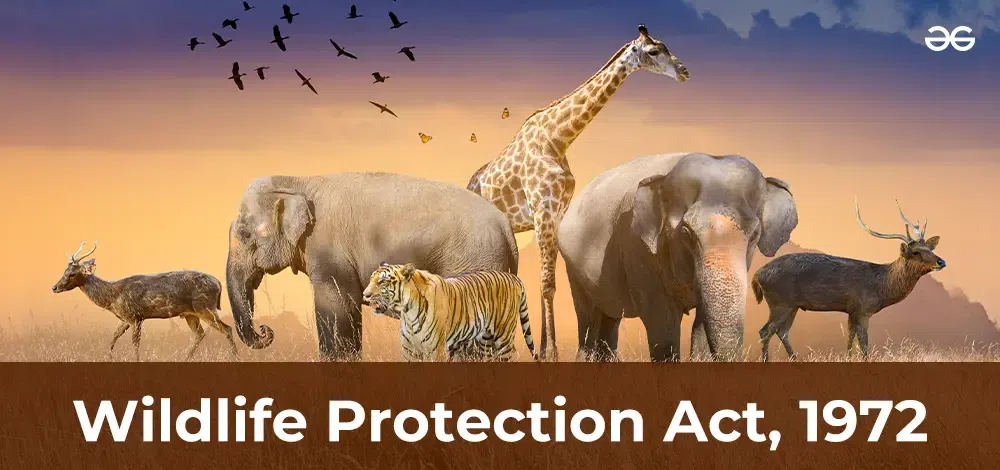
The Wildlife (Protection) Act (WPA) remains the principal legislation for wildlife conservation in India. It provides a legal framework to regulate hunting, trade, and the establishment of protected areas. Schedules I–VI: Classify species based on protection level; Schedule I species (like tigers, elephants, rhinos) receive absolute protection. Protected
Areas: The Act provides for the creation of national parks, sanctuaries, conservation reserves, and community reserves, ensuring habitat preservation. Penalties: The 2002 Amendment increased fines and imprisonment terms for wildlife crimes, particularly poaching and illegal trade. Regulatory Bodies: The Act established Wildlife Advisory Boards at both state and central levels to guide conservation policy. Recent amendments have sought to align India’s wildlife laws with international conventions such as the Convention on International Trade in Endangered Species of Wild Fauna and Flora (CITES), of which India is a signatory.
Complementary Legislation
Several other laws reinforce the objectives of the Wildlife Act: The Forest Conservation Act, 1980, prevents diversion of forest land for non-forest purposes without prior approval from the central government. The Environment (Protection) Act, 1986, enacted after the Bhopal Gas Tragedy, serves as an umbrella law, empowering the central government to take all necessary measures to protect the environment. The Biological Diversity Act, 2002, promotes sustainable use of biodiversity and equitable sharing of benefits with local communities. Together, these statutes create an interconnected system for protecting ecosystems and species:
- T.N. Godavarman Thirumulpad v. Union of India (1995) – the Supreme Court monitored deforestation and protected forest areas as part of wildlife habitats.
- Centre for Environmental Law, WWF-India v. Union of India (2013) – the Court emphasized the importance of preserving critical tiger habitats.
- Navin M. Raheja v. Union of India (2001) – recognized humane treatment of zoo animals as part of wildlife welfare
These judgments have transformed India’s environmental jurisprudence by reinforcing the principles of sustainable development and ecological balance.
Challenges in Implementation and Key Case Studies
Although India’s wildlife protection framework is among the strongest in the world, its success is hindered by multiple ground-level challenges. The gap between legislation and implementation often arises from socio-economic pressures, weak enforcement mechanisms, and competing developmental interests. Understanding these challenges is vital to assess the true effectiveness of India’s wildlife protection system.
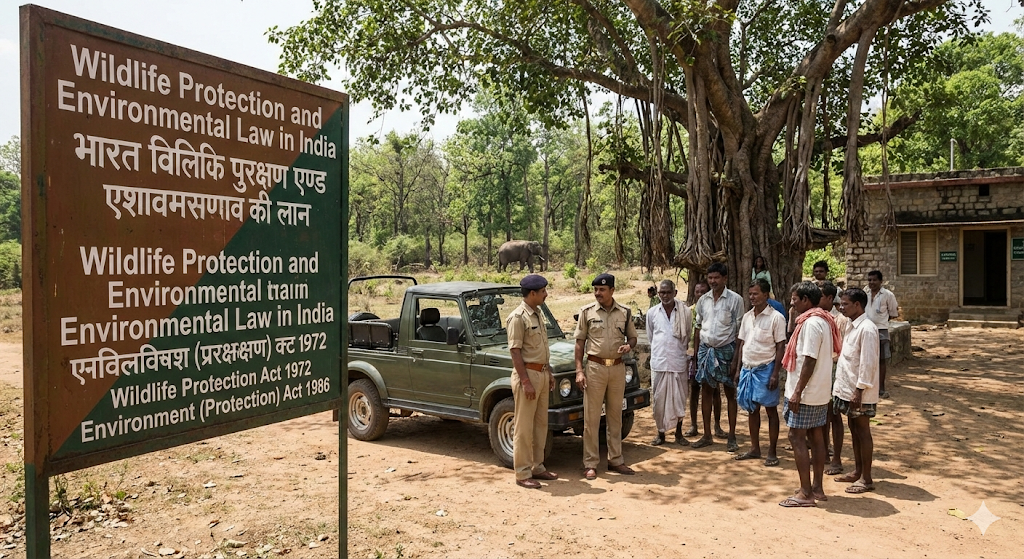
Poaching and Illegal Wildlife Trade-One of the most persistent threats to wildlife in India is poaching, driven largely by demand for animal parts in illegal markets. Tigers are killed for their pelts and bones, rhinos for their horns, and pangolins for their scales. The Wildlife Crime Control Bureau (WCCB) has reported increasing sophistication in poaching networks, involving international smuggling rings and organized crime groups. Despite strong penalties under the Wildlife (Protection) Act, conviction rates remain low due to delayed investigations, weak evidence collection, and insufficient coordination among enforcement agencies. India’s geographic position—sharing porous borders with Nepal, Myanmar, and Bangladesh—further facilitates illegal trafficking. As a CITES signatory, India has taken steps to regulate international trade, yet enforcement remains inconsistent. Collaborative efforts like Operation Save Kurma (2017) and Operation Wildnet (2018) have achieved partial success in curbing wildlife cybercrime, but continuous vigilance is essential.
Human-Wildlife Conflict-The expansion of human settlements, agriculture, and infrastructure into wildlife habitats has intensified human-wildlife conflict (HWC). Incidents of elephants destroying crops, leopards entering villages, and tigers attacking livestock have risen sharply. According to the Ministry of Environment, Forest and Climate Change, more than 500 people and 100 elephants die annually due to such encounters. While compensation schemes exist, they are often delayed or inadequate, leading to resentment among local communities. This conflict underscores the need for a coexistence-based approach, where conservation strategies integrate community interests. Successful examples, such as community-managed buffer zones in Periyar Tiger Reserve (Kerala) and Bhitarkanika Wildlife Sanctuary (Odisha), demonstrate how local participation can reduce conflict and strengthen conservation outcomes.
Habitat Loss and Fragmentation-Rapid urbanization, infrastructure development, and deforestation continue to shrink and fragment wildlife habitats. Linear projects—such as highways, railways, and transmission lines—cut across ecological corridors, isolating animal populations and increasing mortality. For instance, the NH-44 highway through Pench Tiger Reserve and the Goa-Mollem rail expansion projects have raised significant ecological concerns. While Environmental Impact Assessments (EIAs) are legally required, they often prioritize economic development over ecological integrity. Forest degradation also disrupts migratory patterns, particularly of elephants and large carnivores. The Supreme Court’s intervention in T.N. Godavarman v. Union of India (1995) helped curb deforestation, but the demand for land and resources continues to strain India’s natural habitats.
Institutional and Administrative Weaknesses- Wildlife protection efforts are frequently undermined by insufficient manpower, lack of training, and bureaucratic overlap. Many forest departments are understaffed, and rangers face dangerous conditions with limited equipment or support. Coordination between the central government, state departments, and enforcement agencies is inconsistent, often leading to policy delays and duplicated efforts. The National Board for Wildlife (NBWL), though well-intentioned, is often criticized for approving projects within protected areas without adequate ecological scrutiny. Corruption, political interference, and inadequate funding further weaken enforcement. According to the Comptroller and Auditor General (CAG) Report (2019), funds allocated for tiger reserves were underutilized in several states due to poor planning and delayed releases.
Conflicts Between Conservation and Indigenous Rights -Another major challenge arises from the overlap between protected areas and traditional tribal lands. The Forest Rights Act, 2006 recognizes the rights of forest-dwelling communities over land and resources. However, in practice, there is tension between conservation objectives and human rights.
Evictions and restrictions in protected areas sometimes displace indigenous people, leading to conflict and distrust. Studies show that conservation is most successful when local communities are treated as partners rather than intruders. Community reserves and eco development programs under the Wildlife Act are positive steps but need stronger institutional backing.
Case Studies
- Project Tiger -Launched in 1973, Project Tiger is India’s flagship conservation program aimed at protecting the Bengal tiger and its habitat. Initially covering nine reserves, it has now expanded to 54 reserves across 18 states. The program has contributed to a significant rebound in tiger numbers—from fewer than 1,800 in 2006 to over 3,100 in 2023 (according to the National Tiger Conservation Authority). However, challenges such as poaching, habitat fragmentation, and human encroachment persist. Moreover, some critics argue that the project’s focus on tigers has overshadowed other endangered species.
- Kaziranga National Park (Assam) -Kaziranga, a UNESCO World Heritage Site, is globally recognized for its successful protection of the one-horned rhinoceros. Strict patrolling, anti-poaching units, and community involvement have contributed to a remarkable recovery of rhino populations.Nevertheless, issues such as flooding, encroachment, and tourism pressure highlight the fragile balance between conservation and human needs. Kaziranga demonstrates that while strong enforcement can yield positive results, sustainability requires continuous local engagement and adaptive management. India’s wildlife protection faces a complex interplay of legal, social, and ecological challenges. Despite robust laws and commendable success stories, the gap between policy and practice remains wide. Strengthening community participation, improving enforcement, and integrating conservation with socio-economic development are essential to secure India’s biodiversity for future generations.
International and Comparative Perspective
India’s wildlife protection framework does not exist in isolation. It is deeply influenced by international environmental conventions and comparative practices from other nations. Global cooperation is critical because wildlife conservation transcends national boundaries — migratory species, illegal trafficking, and habitat degradation are global concerns requiring coordinated legal responses.
International Legal Instruments -India is a signatory to several key international conventions that shape its wildlife policies.
- Convention on International Trade in Endangered Species of Wild Fauna and Flora (CITES), 1973: Regulates international trade in endangered species. India, as a party since 1976, has integrated CITES provisions into the Wildlife (Protection) Act) through restrictions on trade in Schedule I species and monitoring of exports/imports.
- Convention on Biological Diversity (CBD), 1992: Emphasizes conservation, sustainable use, and equitable benefit-sharing. India implemented it domestically through the Biological Diversity Act, 2002.
- Convention on Migratory Species (CMS), 1979: Promotes protection of migratory birds and animals. India hosted the 13th Conference of Parties (COP13) in 2020, highlighting its commitment to trans boundary conservation.
These agreements have guided India in adopting international norms for wildlife crime prevention, biodiversity management, and sustainable development.
Comparative Insights- Several countries offer instructive lessons for India’s wildlife governance Kenya and South Africa have established strong anti-poaching enforcement agencies, advanced forensic tracking, and community-based tourism models that benefit local populations financially. Costa Rica integrates wildlife protection with eco-tourism, turning conservation into an economic opportunity. Australia’s Environmental Protection and Biodiversity Conservation Act (1999) enforces stringent habitat protection and environmental assessment mechanisms. India could adopt similar models by linking conservation with livelihood development, technology-driven enforcement, and decentralized decision-making.
Regional Cooperation- Illegal wildlife trade networks in South and Southeast Asia demand regional coordination. Platforms such as the South Asia Wildlife Enforcement Network (SAWEN) and INTERPOL Wildlife Crime Working Group aim to share intelligence and strengthen cross-border enforcement. Active collaboration among SAARC nations would enhance India’s ability to combat trafficking and conserve migratory species. International cooperation and comparative experience show that effective wildlife protection requires not just legal strength, but also social inclusivity, technology, and regional coordination. India’s alignment with global conventions provides a strong foundation, yet success depends on adapting these principles to local realities through participatory and science-based approaches.

The Way Forward and Conclusion
Despite the existence of comprehensive laws, India’s wildlife continues to face existential threats. Bridging the gap between legislation and implementation requires a holistic approach—one that integrates legal, administrative, technological, and social solutions.
- Strengthening Enforcement and Governance- Capacity Building: Forest and wildlife departments must receive adequate staffing, modern equipment, and training in forensic investigation. Accountability and Transparency: Establishing independent monitoring bodies can prevent corruption and ensure effective use of conservation funds. Fast-Track Prosecution: Setting up specialized wildlife courts or fast-track benches can improve conviction rates for wildlife crimes.
- Empowering Local Communities- Conservation must be people-cantered. Local and indigenous communities, often residing near protected areas, are critical allies. Strengthening eco-development programs, providing alternative livelihoods, and promoting community reserves can turn them into stewards rather than adversaries of conservation. Successful models from Nagaland’s Khonoma village and Maharashtra’s Melghat Tiger Reserve show that when communities share benefits from conservation, wildlife thrives alongside human prosperity.
- Integrating Technology and Science -Modern tools such as drone surveillance, camera traps, GPS collars, and DNA forensics can significantly improve monitoring and law enforcement. Technological innovation should be coupled with ecological research to better understand species behaviour, migration, and habitat dynamics.
- Policy and Educational Reforms- Environmental education and awareness campaigns can promote responsible behaviour toward wildlife. Integrating conservation ethics into school curricula and using social media to spread awareness can foster long-term change.
Conclusion
India’s journey toward wildlife conservation reflects both progress and paradox. Laws like the Wildlife (Protection) Act, 1972 and judicial activism have laid a strong foundation, yet enforcement gaps, socio-economic conflicts, and habitat pressures persist. The way forward lies in inclusive conservation—one that balances human development with ecological integrity. Ultimately, protecting wildlife is not just a legal obligation but a moral and ecological imperative. A nation’s progress should be measured not only by its economic growth but also by the survival and flourishing of the life forms it shares the planet with.
References
- The Wildlife (Protection) Act, 1972 (Government of India).
- The Biological Diversity Act, 2002.
- Convention on International Trade in Endangered Species of Wild Fauna and Flora (CITES), 1973.
- Convention on Biological Diversity (CBD), 1992.
- T.N. Godavarman Thirumulpad v. Union of India (1997) 2 SCC 267.
- National Tiger Conservation Authority (NTCA) Reports (2019–2024).
- UNEP and WWF International Reports on Wildlife Conservation.
- MoEFCC, Government of India – Annual Reports and Policy Documents.
Author

About the Author