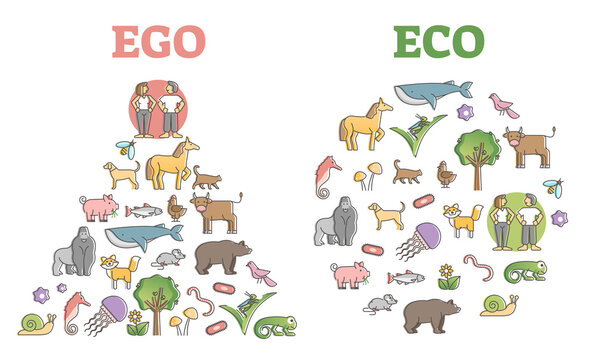

Image Source: https://universalinstitutions.com/panchayati-raj/
Abstract
This research paper explores the role of Panchayati Raj Institutions (PRIs) in environmental governance in the rural areas of Chhattisgarh. Environmental governance at the grassroots level is crucial for sustainable development, particularly in states like Chhattisgarh, which are rich in natural resources but also face challenges such as deforestation, pollution, and displacement due to industrial projects. The study examines the constitutional mandates, legal frameworks, and case studies that highlight the effectiveness and limitations of Panchayats in preserving natural resources, ensuring community participation, and balancing ecological protection with developmental needs. The findings indicate that while Panchayats have played a significant role in managing forests, water bodies, and agricultural practices, they continue to face constraints related to inadequate financial autonomy, lack of capacity building, and political interference. The paper concludes with policy recommendations to strengthen the role of Panchayats in environmental governance.
Introduction
Environmental governance has emerged as one of the most pressing concerns of the 21st century, particularly in a country like India, where rapid industrialization and population growth exert tremendous pressure on natural resources. Rural areas, which are largely dependent on agriculture, forests, and water resources, face the dual challenge of meeting developmental aspirations while ensuring environmental sustainability. Panchayati Raj Institutions (PRIs), established through the 73rd Constitutional Amendment Act of 1992, have been entrusted with significant responsibilities in local self-governance, including the protection of the environment. In states like Chhattisgarh, which is home to extensive forests and tribal communities, the role of Panchayats becomes even more critical in ensuring sustainable management of resources. This paper examines the role of Panchayats in environmental governance in Chhattisgarh, analyzing their successes, limitations, and potential for future reform.
Several studies and government reports have highlighted that Panchayats are not merely administrative bodies but also agents of environmental transformation. The increasing dependence on local institutions for environmental decision-making makes it essential to evaluate their performance. Therefore, this study focuses on understanding how Panchayats in Chhattisgarh contribute to local-level environmental governance, the challenges they face, and the strategies that can improve their effectiveness.
Conceptual Framework: Panchayati Raj and Environmental Governance
Panchayati Raj Institutions function as decentralized units of governance that bring decision-making closer to the people. Environmental governance refers to the processes, policies, and institutions through which communities manage their natural resources and address environmental challenges. In the context of Chhattisgarh, PRIs act as a link between government policies and community-level environmental management. They are responsible for activities such as watershed development, afforestation, soil conservation, and the management of common property resources.
According to the theory of decentralized environmental governance, local institutions are best suited to manage natural resources sustainably because they have direct stakes in their conservation (Agrawal & Ribot, 1999). This theoretical framework emphasizes that successful governance relies on both empowerment and accountability of local bodies such as Panchayats.

Legal and Constitutional Framework
The 73rd Constitutional Amendment provided a constitutional status to Panchayati Raj Institutions and inserted the Eleventh Schedule, which includes matters such as agriculture, land improvement, social forestry, and minor irrigation. Articles 243G and 243H empower Panchayats to prepare and implement plans for economic development and social justice, including matters relating to environmental protection. In Chhattisgarh, the Panchayati Raj Adhiniyam (1993) further delegated powers to local bodies for managing forests, water resources, and land use. Additionally, the Panchayats have an important role under the Panchayats (Extension to Scheduled Areas) Act, 1996 (PESA), which grants tribal communities greater control over natural resources.
Role of Panchayats in Environmental Protection in Chhattisgarh
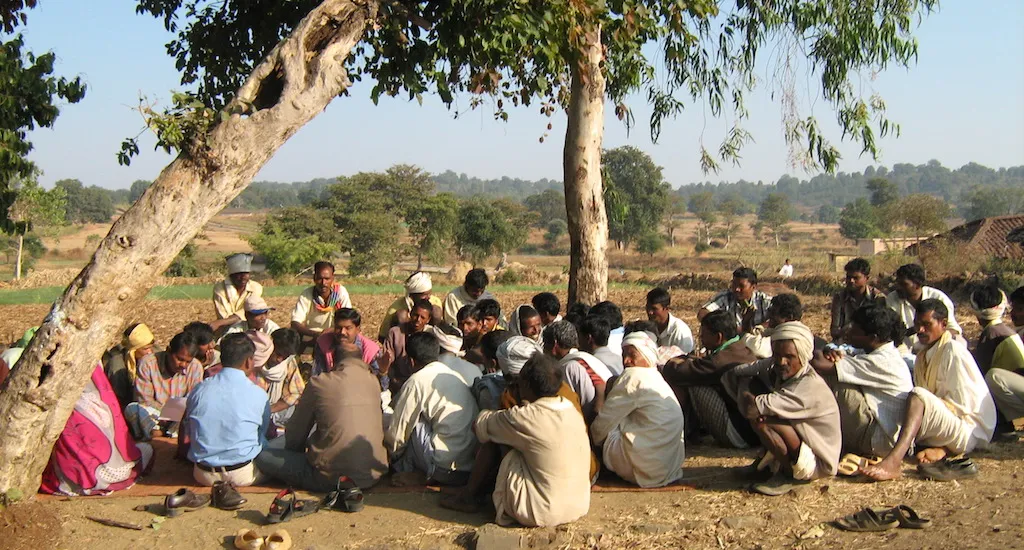
Chhattisgarh, with nearly 44% of its area covered under forests, presents a unique case for examining environmental governance through Panchayats. Gram Sabhas, empowered under PESA, play a crucial role in forest management, granting consent for land acquisition, and preventing unsustainable exploitation of resources. Case studies from districts like Bastar and Dantewada show how Panchayats have resisted deforestation for mining projects and promoted community-based forest management. Panchayats also implement schemes like MGNREGA, which are often linked to environmental projects such as water conservation, soil management, and afforestation. Furthermore, Panchayats are instrumental in mobilizing local communities for sustainable agricultural practices and rainwater harvesting.
For instance, in Bastar district, the Gram Sabha of Turenar village successfully halted a proposed iron ore mining project that threatened forest areas and water sources. Similarly, Panchayats in Surguja district implemented small-scale water harvesting projects under MGNREGA, which increased groundwater levels and supported local agriculture.
While going through various reports and articles, I was particularly impressed by how Gram Sabhas in tribal regions have tried to maintain a balance between development and conservation. The case of Turenar village in Bastar, for instance, highlights how local people’s determination can influence environmental outcomes more effectively than top-down policies. These examples show that community motivation remains one of the strongest forces in grassroots governance.
Challenges and Limitations
Despite constitutional and legal backing, Panchayats in Chhattisgarh face numerous challenges in effectively governing the environment. These include lack of financial autonomy, inadequate technical knowledge, political interference, and limited capacity-building measures. Corruption and elite capture often hinder the participatory nature of Gram Sabhas. In tribal areas, while PESA has empowered communities, its implementation remains weak, with frequent violations of consent provisions in cases of land acquisition for industrial projects. Additionally, Panchayats face difficulties in reconciling developmental needs with environmental sustainability, leading to conflicts.
Another major challenge is the limited coordination between the Forest Department and local Panchayats. In several villages, overlapping jurisdictions cause confusion about authority over forest produce, leading to delays in decision-making. Additionally, women and marginalized communities, despite their legal right to participate in Gram Sabhas, often find their voices unheard, affecting inclusivity in environmental decision-making.
Based on the reviewed data, I realized that many of these challenges are not merely administrative but also social in nature. Environmental governance requires trust, transparency, and cooperation between citizens and officials — areas where Panchayats still have a long way to go. Strengthening community participation will require not just laws but continuous dialogue and awareness.
Policy Recommendations
Strengthening the role of Panchayats in environmental governance requires comprehensive reforms. Capacity building programs must be implemented to enhance technical expertise in resource management. Financial devolution should be ensured to give Panchayats greater autonomy. The implementation of PESA needs to be strictly monitored to safeguard the rights of tribal communities. Encouraging community participation in decision-making and promoting transparency through digital governance tools can further strengthen environmental governance at the grassroots. Partnerships between Panchayats, NGOs, and academic institutions can also help in knowledge sharing and innovative practices. State governments can establish “Environmental Resource Cells” at the Panchayat level to provide technical support for activities such as soil testing, biodiversity mapping, and climate adaptation planning. Moreover, integrating Panchayat-led initiatives with national programs like the National Green Mission and Jal Jeevan Mission could ensure better alignment of environmental and developmental objectives.
Methodology
This study is based primarily on secondary data sources, including government reports, academic literature, and case studies related to Panchayati Raj Institutions in Chhattisgarh. Key documents such as the 73rd Amendment Act, PESA Act, and Chhattisgarh Panchayati Raj Adhiniyam were reviewed to understand the legal framework. Case examples from Bastar and Dantewada were analyzed to illustrate practical outcomes of Panchayat-led environmental initiatives.
During the preparation of this paper, I reviewed several online and printed sources such as government reports, legal documents, and academic studies. I also referred to local media coverage and NGO publications from Chhattisgarh to understand the practical aspects of Panchayat-led environmental efforts. Although this research is based mainly on secondary data, the observations and examples reflect real initiatives implemented at the grassroots level.
Conclusion
Panchayats in Chhattisgarh hold immense potential in ensuring sustainable environmental governance. While they have played a pivotal role in managing forests, water, and agriculture, structural challenges continue to restrict their effectiveness. Strengthening Panchayati Raj Institutions through capacity building, financial empowerment, and community participation will be crucial for achieving the dual goals of development and environmental sustainability in rural Chhattisgarh.
From this study, I have learned that the effectiveness of environmental governance depends largely on the commitment of local communities and the willingness of institutions to listen to them. Panchayats can be powerful agents of change if they are supported with the right tools, knowledge, and independence. This research helped me appreciate how local governance, when truly inclusive, can lead to long-term sustainability.
References
- Constitution of India, 73rd Amendment Act, 1992.
- Government of Chhattisgarh, Panchayati Raj Adhiniyam, 1993.
- Panchayats (Extension to Scheduled Areas) Act, 1996 (PESA).
- Ministry of Panchayati Raj. (2020). Annual Report.
- Sundar, N. (2001). Is Devolution Democratization? World Development, 29(12), 2007–2023.
- Planning Commission of India. (2008). Development Challenges in Extremist Affected Areas.
- Xaxa, V. (2011). Tribes and Social Exclusion in India. Indian Journal of Social Work, 72(1), 1–16.
- Agrawal, A. & Ribot, J. (1999). Accountability in Decentralization: A Framework with South Asian and West African Cases. The Journal of Developing Areas, 33(4), 473–502.
- Ostrom, E. (1990). Governing the Commons: The Evolution of Institutions for Collective Action. Cambridge University Press.
- Ministry of Environment, Forest and Climate Change (2021). India State of Forest Report 2021.
Author

About the Author