Image Source: https://lh7-rt.googleusercontent.com/docsz/AD_4nXf2xLcUv4dUmf1KoNj0vZDHFDBQrSGKPvQCdPQ4qO8_ao60R1wujZ1X-17pBVdQTXlsmwkpEee_4LaYHiE7sczLWppoPpAV2bLU5iBoIWSvFTvbrwObZ-cwt-T5o1aPPU1Ey3TJ8c7LL9b6K2_gIKS-zTs?key=HvEjeHJqipLvL4-RgNAPPA
Abstract
This paper examines the recent decision by the Government of Odisha (September 2024) to formally grant habitat rights to the Mankidia community, a semi‐nomadic PVTG (Particularly Vulnerable Tribal Group), under the Scheduled Tribes and Other Traditional Forest Dwellers (Recognition of Forest Rights) Act, 2006 (FRA). The grant marks the sixth PVTG in Odisha to receive habitat rights, highlighting both progress and persistent challenges in implementing the FRA. The paper places this incident in the wider legal and jurisprudential context, examining constitutional and statutory architecture, earlier case law, environmental responsibility, and human rights issues. Referring to earlier habitat rights cases in Odisha and elsewhere, it examines the meaning for forest governance, community livelihoods, biodiversity conservation, and conflict with conservation law regimes (protected areas, wildlife legislation).
The article contends that although the FRA and associated jurisprudence give robust legal basis to habitat rights, implementation hurdles like a lack of documentation, bureaucratic resistance, opposing forest/wildlife law, and paucity of resources continue to erode those rights. Suggestions are made for more effective judicial monitoring, improved grassroots capacity building, harmonisation of the laws, and more emphasis on cultural rights and ecological justice.
Introduction
The Scheduled Tribes and Other Traditional Forest Dwellers (Recognition of Forest Rights) Act, 2006 (FRA) was legislated to correct historical injustices perpetrated against forest‐dwelling communities in India. Forest‐dwelling communities were dispossessed of traditional rights over land, forest produce, and livelihoods by colonial forest laws and post‐independence forest/wildlife conservation policies for several decades. Among the rights acknowledged by FRA are rights of habitation and habitat for pre-agricultural communities and Particularly Vulnerable Tribal Groups (PVTGs) under Section 3(1)(e). Habitats covered by habitat rights are customary habitat and other such habitats in reserved forests and protected forests.
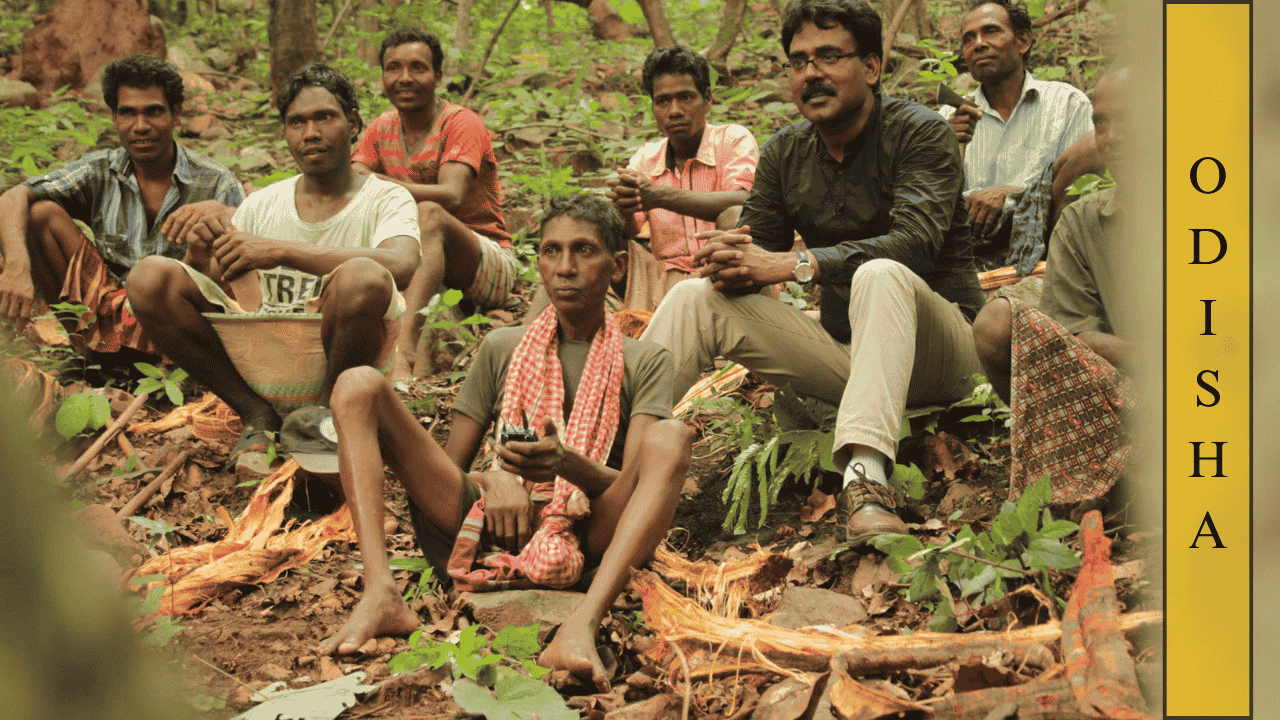
The Mankidia community of Odisha’s Mayurbhanj district was officially granted habitat rights over the forest cover around Mahilabasa village in September 2024, under FRA.This legislation takes a similar recent donation to other PVTGs in Odisha: Paudi Bhuyan, Juang, Chuktia Bhunjia, Saora, Dongria Kondh.Odisha is now leading the nation in the number of PVTGs whose habitat rights have been sanctioned.Such a development raises several legal issues: How do the granting of habitat rights in FRA coordinate with environmental law, especially in the case of reserved/protected forests and habitats of critical wildlife? Which human rights are at stake (cultural, livelihood, dignity)? Which prior cases have influenced the FRA jurisprudence, particularly habitat rights? And which are the central setbacks in translating legal recognition into everyday reality.
Main Problem / Research Questions
Although the FRA gives legal entitlements to habitat and habitation, there is usually a disconnect between legal entitlement and actual realization. Even when the habitat rights are sanctioned by committees (District Level Committees, DLCs; etc.), the exercise of survey, demarcation, issuance of legal title deeds, resolution of competing claims, provision of sustainable livelihoods, and harmonization with conservation regimes of law continues to be challenging.
The paper aims to address
- How the legislative framework (FRA, constitution, Supreme Court/High Court rulings) accommodates habitat rights for PVTGs, and what limitations prevail.
- How the case of the Mankidia community recent fits within previous jurisprudence and policy practice.
- How environmental law and conservation targets (protected areas, wildlife legislation) intersect/conflicts with, or can harmonize with, habitat rights.
- Which human rights (rights to livelihood, culture, dignity, non‐discrimination) are invoked, both in practice and law, and which are the challenges facing communities in terms of accessing these rights.
- What suggestions could be suggested to make the protection and enforcement of habitat rights stronger.
Legal and Jurisprudential Framework (Constitutional Provisions)
- Article 21: Right to life encompasses the right to live with dignity, which has been interpreted by courts to encompass the right to livelihood, culture, and traditional practices.
- Article 14 and Article 15: Non‐discrimination; protection from arbitrary state action on the tribal communities.
- Article 244, Fifth/Sixth Schedule: In case of Scheduled Areas, PESA (Panchayats Extension to Scheduled Areas Act, 1996) ensures self‐governance and mandates consulting Gram Sabhas for land acquisition and other developments in the tribal lands.
- Directive Principles (Article 46, Article 48A, etc.): Obligation of the State towards protection of tribal welfare and conservation.
Statutory Framework
- Forest Rights Act, 2006: More particularly, Section 2(h) (h habitation and habitat), 3(1)(e) (habitaton and habitat for PVTGs and pre‐agricultural people), Sections 5(c), etc., which assign the duty of conservation of the habitat in instances of forest‐habiting STs/OTFDs. FRA attempts to reverse colonial and post‐colonial forestry laws that marginalized customary rights.
- Other legislation/conservation regimes: Wildlife (Protection) Act 1972; Forest Conservation Act 1980; protection and reserved forest designation laws; environmental impact assessment legislation; etc.
Judicial Decisions and Precedent
The leading case Orissa Mining Corporation v. Ministry of Environment & Forest & Others (2013), in which Supreme Court ruled that Gram Sabha has a role to protect customary and religious rights of STs/forest dwellers under FRA.
Wildlife First v. Union of India (WP (C) 109/2008): challenge to constitutionality of FRA; whether its extension to sanctuaries/national parks, etc., violate Wildlife Protection Act;
Precedent and practice with respect to previous PVTGs in other states acquiring habitat rights: Baiga in MP & Chhattisgarh, Maria Gond in Maharashtra. These serve to demonstrate both the legal feasibility and implementation issues.
Case Study: The Mankidia Community and Odisha
Background
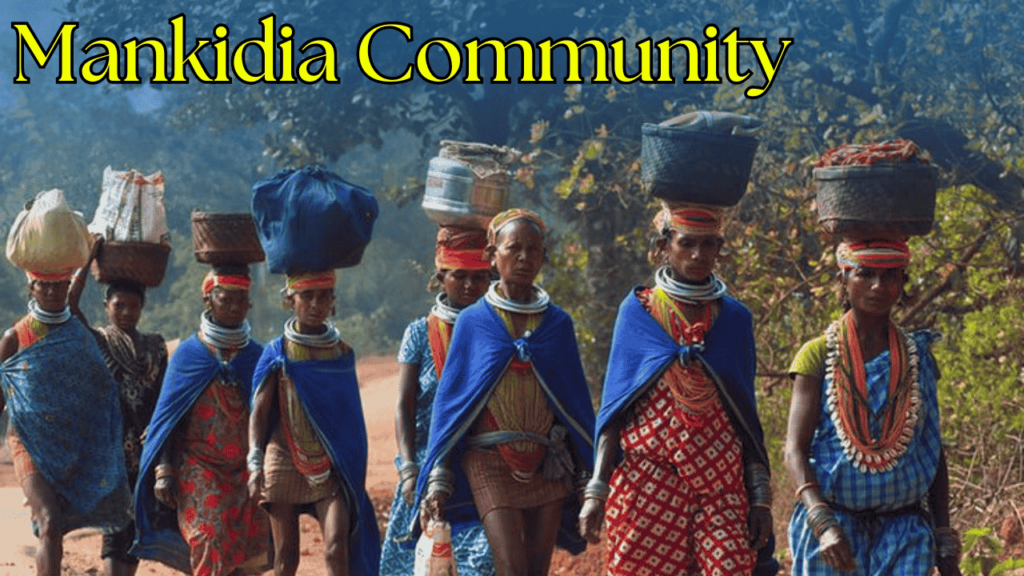
Mankidia is a semi‐nomadic subgroup of the Birhor tribe, Austro-Asiatic in origin. They occupy small groups, migrate within forests for customary livelihood: collection of NTFP (Non-Timber Forest Produce), siali rope‐making (Bauhinia vahlii), trapping etc. They have temporary leaf shelters (kumbhas) with temporary camps (tandas). They speak a variant of Munda with some familiarity with Odia.
Legal Recognition of Habitat Rights
The Mankidia community of Mahilabasa village, Khunta block, Mayurbhanj district, Odisha, were legally given habitat rights over the forests surrounding their village under FRA on 22 September 2024. Significance of the Recognition: Until now, even though they are recognized as PVTG, the people were stopped from entering forest areas or selling forest products. The legal right now eliminates legal barriers to practice traditional and cultural pursuits.
Scope
The habit happens in traditional habit (reserved and protected forests) according to FRA’s section 2(h). PVTGs other than those mentioned above have had their habitat rights sanctioned by DLCs in Odisha: Paudi Bhuyan, Juang, Saora, Chuktia Bhunjia, Dongria Kondh.
Challenges Still Pending
Despite approval, title deeds, demarcation, and implementation are pending. There also could be conflicts with wildlife reserves (e.g. overlapping claims of Critical Tiger Habitat in Similipal), like in the habitat claim by Mankidias being partly within critical wildlife habitat.

Analysis
Legal Strengths of the FRA and Habitat Rights
FRA is enlightened legislation acknowledging customary rights that were hitherto overlooked. The incorporation of habitat rights under section 3(1)(e) is a strong provision for PVTGs, one of the mostbackward tribal communities.
The law attempts to reconcile conservation with tribal rights instead of perceiving these societies as adversaries of forest conservation.
Legal recognition of habitat rights can provide communities with legal titles and therefore, the ability to control forests, have access to forest products, prevent evictions, defend their cultural and ritual practices etc.
Courts (e.g. in Orissa Mining Corporation) have substantiated Gram Sabha’s role, which assists decentralization of decision making and empowers local communities.
Tensions and Conflicts with Conservation Regimes
Protected forests, wildlife sanctuaries and key habitats commonly fall under legal regimes that place emphasis on biodiversity and ecological integrity (e.g. Wildlife Protection Act, Forest Conservation Act, etc.).
Habitat claims may conflict with space prescribed under these regimes, creating questions like whether habitation and human use is permissible within sanctuaries or tiger reserves, conflict with the concept of “inviolate spaces,” etc. Wildlife First v. Union of India deals with some of these conflicts. Section 5(c) of FRA mandates the maintenance of rights holders’ habitat, and so rights are not unconditional but can be subject to limitations when ecological issues are involved. It is a balance to ensure that conservation law does not negate tribal rights, or that its enforcement does not result in displacement in the name of conservation.

Human Rights Dimensions
- Cultural Rights: Most PVTGs’ rituals, religious practices, cemeteries, etc., are embedded in their forest home. Right to culture (implied in Article 21, enshrined in many UN treaties India is a signatory to) mandates their respect.
- Livelihood Rights: Reliance on forest products (minor forest products, NTFP), foraging, hunting/trapping, shifting cultivation, etc. Denial of habitat access amounts to denial of livelihood.
- Right to Non‐Discrimination / Equality: PVTGs are especially safeguarded under FRA. They are, to a large extent, vulnerable to being left behind during implementation.
- Dignity and Autonomy: Being given legal status, as opposed to criminalization for “trespass” accorded dignity, legal security.
Problems of Implementation
- Documentation and Evidence: FRA demands some proofs (of residence, dependency, customary practices). Most PVTGs are nomadic or semi‐nomadic, where little documentary evidence exists. This has been a cause for delay for many claims.
- Institutional Delay: State Level Committees and DLCs can clear claims, but survey, mapping, demarcation, and title issuing is delayed.
- Conflict with Forest / Wildlife Authorities: Officials can be resistant in giving rights in “protected” areas; various departments (tribal welfare, forest department) can have competing mandates.
- Awareness and Capacity: Communities can be unaware of legal rights, lack the ability to manoeuvre bureaucracy, get legal representation.
- Resource & Fiscal Limitations: It takes money, staff; tracking, blocking illegal intrusions, etc., capacity gaps.
Comparative / Jurisprudential Illustrations
Baiga tribes of Chhattisgarh, Madhya Pradesh – their battles and finally habitat rights recognized, but usually tardy or half-hearted.
Maria Gond in Maharashtra also had habitat rights promised or recognized. The Wildlife First case: questioning scope of FRA vs other acts. How the Supreme Court can sort out conflicts.
Orissa Mining Corporation v. Ministry of Environment & Forest & Others (2013): the Supreme Court’s acknowledgment that Gram Sabha has to be consulted and customary rights have to be respected in forest land cases.
Discussion: Position of Mankidia in this Landscape
The conferment of habitat rights on Mankidia is a major leap legally for Odisha, as Odisha boasts of having the highest number of PVTGs in the nation, and the support of these communities’ rights is particularly imperative.
The Mankidia claim is particularly intriguing since a large part of their traditional habitat falls in reserved forests / protected forests, and within Critical Tiger Habitat (Similipal Tiger Reserve) in some parts. This brings directly in play interface with wildlife law and the necessity to balance conservation needs with tribal rights.
Granting habitat rights to Mankidia not only ensures their right over land and resource utilization, but also their right over cultural practices—rituals, mobility, traditional knowledge.
It is still to be seen how the title deeds are granted, how overlapping claims (other communities, forest department) are dealt with, how restrictions because of protected area status are negotiated, and how ecological conservation is ensured.
Previous Cases & Jurisprudence: Anchoring with Earlier Developments
- Orissa Mining Corporation v. MoEF: Same here, upholding the role of Gram Sabha, adding significance to traditional practice.
- Wildlife First (ongoing): Could result in Supreme Court interpreting constitutional status of FRA as against wildlife / forest conservation legislations; deciding whether habitat rights can be awarded in sanctuaries / national parks, etc. The decision will probably affect numerous PVTGs whose habitat claims fall over such protected forests.
- Paudi Bhuyan (March 2024)- First in the state to get title for habitat rights over 32 villages. Juang, Saora, Chuktia Bhunjia etc., sanctioned by DLCs, albeit actual formal transfers may be behind time.
- In other states: Baiga of MP/Chhattisgarh; Maria Gond in Maharashtra. These indicate that although legal recognition is feasible across the states, the speed, the magnitude, and quality of implementation differ widely.
Environmental Law and Conservation Implications
There is potential synergy: customary forest users tend to practice sustainable practices, possess ecological knowledge, promote biodiversity, maintain low‐impact uses of NTFPs, etc. Providing habitat rights may encourage improved forest conservation in case communities are made powerful and facilitated.
However, there is risk: habitat use could, if left unregulated, clash with species protection, particularly in core reserves areas, critical habitats, corridors. But FRA itself makes provision for preservation obligations and controls. Integrated management plans, institutions of community forest resource (CFR) under FRA, co‐management strategies.
Environmental law must also change: most forest and wildlife legislation assumes exclusion of human settlement; there is jurisprudential thrust to balance that with FRA’s allowance of human settlement/habitat within forest zones.
Human Rights and International Law Dimensions
India is a signatory to international human rights conventions such as the International Covenant on Civil and Political Rights (ICCPR), the International Covenant on Economic, Social and Cultural Rights (ICESCR), the United Nations Declaration on the Rights of Indigenous Peoples (UNDRIP) (although non‐binding). These enjoin rights to culture, to life, to livelihood, to non‐discrimination, to property in favour of indigenous peoples.
The acknowledgment of habitat rights is in line with UNDRIP Articles on self‐determination, cultural survival. The international law principle of Free, Prior, and Informed Consent (FPIC) can be applicable in overlapping development or conservation initiatives.
Challenges and Gaps Identified
Overlapping claims
When habitat rights area overlaps with state protected areas, wildlife reserves. Interpretations differ, resulting in resistance by forest/wildlife departments. Uncertainty or uniform practice regarding what is allowable within protected areas once habitat rights are established: usage terms, prohibitions, which forest can be utilized, etc. Delay in title issuance, demarcation, surveying; at times sanctioned by DLC but legal title not transferred.
Bureaucratic resistance, incompatible departmental mandates, low resources, misgovernance/corruption. Lack of awareness at grassroots level, legal literacy; occasionally, communities may not be aware that they have the right to claim, or how to claim, or are intimidated.
Documentation burdens disadvantage nomadic/seminomadic groups or those with oral tradition instead of written records. Disagreements with conservationists and wildlife protections, occasionally litigated, sometimes resulting in eviction orders under environmental law, as in some of Wildlife First litigation.
Recommendations (Judicial Clarification and Oversight)
Supreme Court to settle Wildlife First with clarity on FRA with respect to Wildlife Protection Act, particularly habitat rights in sanctuaries/national parks/critical habitats. High Courts to oversee implementation in states such as Odisha; title deeds issuance, settling conflict with protected area regimes.
Conclusion
The acknowledgment of habitat rights for the Mankidia tribe in Odisha is a legally pertinent and heartening step under the FRA. It shows that the legal system has the ability to redress historical injustice inflicted on PVTGs, restore traditional rights, and ideally marry environmental protection with human rights and sustainable livelihoods. Yet, this kind of recognition is merely a starting point. Unless firmly implemented—title deeds, equitable access to resources, preservation of culture, conflict resolution against conservation regimes—the rights can be mostly symbolic.
Going ahead, India’s judiciary, executive, state governments, and civil society will need to act in concert to make habitat rights under FRA more than mere stamping approvals; they need to become legally enforceable, meaningfully practical rights. In making this happen, they need to reconcile conservation duties with human rights and cultural sovereignty, so that there is justice, dignity, and sustainability for PVTGs such as the Mankidia.
Bibliography
Statutes and Policy Documents
- Government of India. (2006). The Scheduled Tribes and Other Traditional Forest Dwellers (Recognition of Forest Rights) Act, 2006. Gazette of India. Retrieved from https://en.wikipedia.org/wiki/The_Scheduled_Tribes_and_Other_Traditional_Forest_Dweller s_%28Recognition_of_Forest_Rights%29_Act%2C_2006
- Government of India. (1972). The Wildlife (Protection) Act, 1972. Gazette of India.
- Government of India. (1980). The Forest (Conservation) Act, 1980. Gazette of India.
- Government of India. (1996). Panchayats (Extension to the Scheduled Areas) Act, 1996. Gazette of India.
Cases
- Orissa Mining Corporation v. Ministry of Environment & Forest & Others, (2013) 6 SCC 476. Supreme Court of India. Retrieved from https://en.wikipedia.org/wiki/Orissa_Mining_Corporation_v._Ministry_of_Environment_%2 6_Forest_%26_Others
- Wildlife First & Ors. v. Union of India & Ors., Writ Petition (Civil) No. 109 of 2008. Supreme Court of India. Retrieved from https://en.wikipedia.org/wiki/Wildlife_First_v._Union_of_India
Books and Reports
- Baviskar, A. (2020). In the Belly of the River: Tribal Conflicts over Development in the Narmada Valley. Oxford University Press.
- Lele, S., & Menon, A. (2014). Democratizing Forest Governance in India. Oxford University Press.
- Ministry of Tribal Affairs. (2018). Guidelines on Habitat Rights for Particularly Vulnerable Tribal Groups (PVTGs) under the FRA. Government of India.
Articles and News Sources
- Down To Earth. (2024, September 24). FRA implementation: Mankidia community becomes 6th PVTG to get habitat rights over forests in Odisha. Retrieved from https://www.downtoearth.org.in/forests/fra-implementation-mankidia-community-becomes 6th-pvtg-to-get-habitat-rights-over-forests-in-odisha
- IndiaSpend. (2023, October 9). Habitat rights promise to secure ecology, tribal heritage in Odisha. Retrieved from https://www.indiaspend.com/forest-rights/habitat-rights-promise-to secure-ecology-tribal-heritage-in-odisha-930051
- Down To Earth. (2017, October 12). Community forest rights in critical habitats face hurdle due to lack of legal roadmap. Retrieved from https://www.downtoearth.org.in/news/forests/amp/community-forest-rights-in-critical habitats-face-hurdle-due-to-lack-of-legal-roadmap-57602
- Helm News. (2024, March 15). Odisha grants habitat rights to Paudi Bhuyan PVTG under FRA, marking first in state. Retrieved from https://helm.news/2024-03-15/odisha-grants habitat-rights-paudi-bhuyan-pvtg-under-fra-marking-first.html
International Human Rights Instruments
- United Nations. (1966). International Covenant on Civil and Political Rights (ICCPR).
- United Nations. (1966). International Covenant on Economic, Social and Cultural Rights (ICESCR).
- United Nations. (2007). United Nations Declaration on the Rights of Indigenous Peoples (UNDRIP).
Author

About the Author