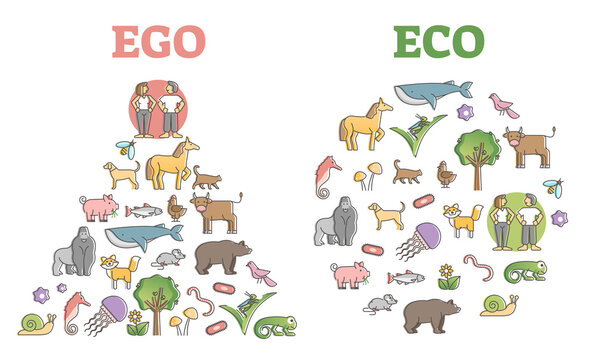
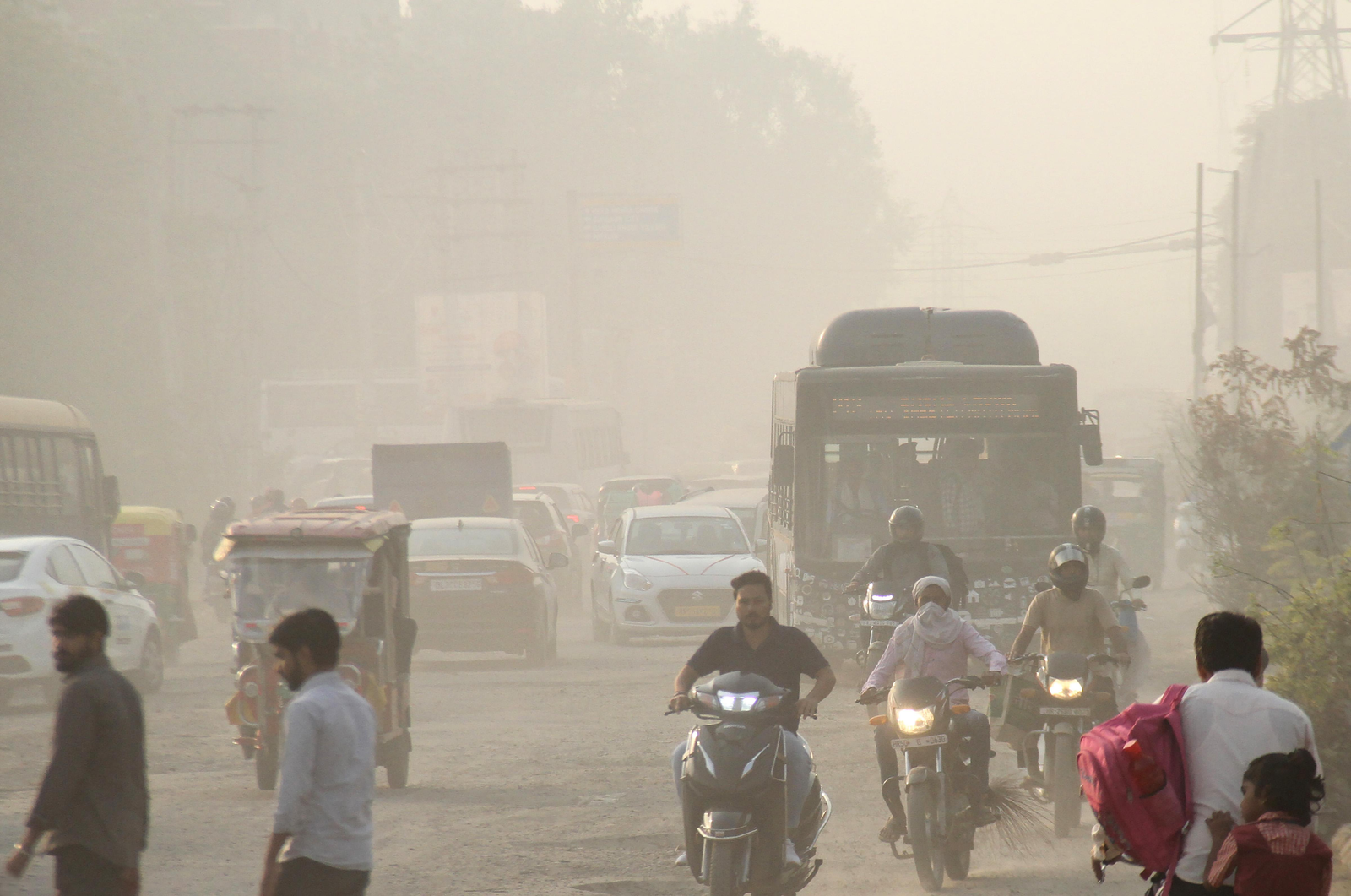
Image Source: https://www.business-standard.com/india-news/states-urged-to-comply-with-emission-standards-air-quality-panel-to-sc-124100801176_1.html
Abstract
Air pollution continues to be one of India’s most critical environmental concerns, threatening public health, biodiversity, and climate stability (CPCB, 2009; Divan & Rosencranz, 2022). To counteract this, the Government of India has framed several laws and standards under the Air (Prevention and Control of Pollution) Act (1981) and the Environment (Protection) Act (1986). Despite these frameworks, non-compliance by industries and other entities remains widespread. This paper explores the governing legal framework, enforcement mechanisms, and punitive actions against violators. It also reviews landmark judgments and the regulatory roles of agencies such as the Central Pollution Control Board (CPCB) and State Pollution Control Boards (SPCBs) in promoting environmental accountability.
Keywords: Air Pollution, Legal Action, Emission Standards, CPCB, SPCB, Environment Protection Act, Compliance
Introduction
Rapid industrialization, vehicular growth, and urban expansion have intensified air-quality problems in India (MoEFCC, 2022). The government has therefore established National Ambient Air Quality Standards (NAAQS) and emission limits for various sectors (CPCB, 2009). Breaches of these standards not only threaten ecological balance but also infringe the fundamental Right to Life under Article 21 of the Indian Constitution (Sharma, 2014).
Legal Framework
India’s environmental governance system provides an integrated structure for preventing and controlling pollution (Government of India, 1981; 1986; NGT Act, 2010). The CPCB and SPCBs serve as the main enforcement bodies ensuring compliance and environmental justice (Divan & Rosencranz, 2022).
Air (Prevention and Control of Pollution) Act, 1981
This Act was enacted after India’s participation in the 1972 Stockholm Conference on the Human Environment (Government of India, 1981).
Key provisions include establishment of CPCB/SPCBs, consent mechanisms, and penalty clauses (Section 37). SPCBs are authorized under Section 31A to issue closure or prohibition orders against violators (CPCB, 2021).
Key Provisions and Powers
- Establishment of Pollution Control Boards: The Act provides for the creation of the Central Pollution Control Board (CPCB) and State Pollution Control Boards (SPCBs) to develop, coordinate, and implement programs for controlling and managing air pollution across the country.
- Setting of Standards: The CPCB is responsible for framing the National Ambient Air Quality Standards (NAAQS) and defining permissible emission levels for various industrial sectors and vehicular sources.
- Consent Procedure: According to Section 21, industries must secure a Consent to Establish (CTE) before setting up and a Consent to Operate (CTO) before beginning operations. These consents specify acceptable emission levels and required pollution control measures.
- Supervision and Enforcement: The SPCBs are empowered to monitor emissions, inspect industrial sites, collect samples, and initiate legal action against industries that violate prescribed norms. Under Section 31A, SPCBs can issue directives for closure, restriction, or regulation of operations in case of non-compliance.
- Penalties for Violations: Failure to comply with the provisions of the Act can result in imprisonment of up to six years and/or fines under Section 37. Repeat violations may attract more severe penalties, including cancellation of operating consents and permanent closure of industrial units.
- Public Information and Awareness: To ensure transparency, the CPCB regularly publishes air quality reports and pollution data for major cities and industrial regions, helping to raise public awareness about environmental conditions.
Example: In 2023, SPCBs in multiple states ordered closure of brick kilns and textile units for operating without emission-control systems (PIB, 2023).
Environment (Protection) Act, 1986
This comprehensive Act was framed in response to the Bhopal Gas Tragedy (1984) and grants the central government broad powers for environmental protection (Government of India, 1986).
It defines emission and discharge limits, inspection authority, and penalties under Section 15 (Sharma, 2014).Illustrative Action: In 2022, MoEFCC directed all coal-based thermal power plants to install flue-gas desulphurization systems to control SO₂ emissions (MoEFCC, 2022).
Key Provisions of the Environment (Protection) Act, 1986
- Powers of the Central Government (Section 3): The Central Government holds the authority to implement all necessary actions to safeguard and enhance the environment. This includes establishing national standards for maintaining the quality of air, water, and soil.
- Standards for Emission and Discharge: The Act empowers the government to specify permissible limits for pollutants released from industrial activities, motor vehicles, and hazardous processes. These limits are notified through official regulations and schedules.
- Inspection and Compliance (Section 10): Authorized officers are permitted to enter any industrial premises for inspection, collect environmental samples, and examine pollution control systems to ensure adherence to prescribed norms.
- Penalties for Violation (Section 15):
Failure to comply with the provisions, rules, or directions under this Act may lead to:- Imprisonment for up to five years, or
- A fine up to ₹1,00,000, or both.
If the violation persists, an additional penalty of ₹5,000 per day is applicable. In cases where non-compliance continues beyond one year, imprisonment may be extended to seven years.
- Liability of Company Officials (Section 16): When offences are committed by a company, individuals in charge—such as directors, managers, or officers—are personally accountable unless they prove due diligence or lack of knowledge of the offence.
- Environment (Protection) Rules, 1986: These rules provide detailed specifications for controlling industrial emissions, vehicular pollutants, ambient air quality, and the management of hazardous chemicals and wastes.
National Green Tribunal (NGT) Act, 2010
The NGT ensures effective and prompt resolution of environmental cases (National Green Tribunal Act, 2010).
It follows Polluter Pays and Precautionary Principles recognized in Vellore Citizens’ Welfare Forum v. Union of India (1996).
Notable judgments include Sterlite Industries v. TNPCB (2018), Delhi Air Pollution (2020), and Yamuna Pollution (2022) (NGT, 2022).
The Water (Prevention and Control of Pollution) Act, 1974 aims to prevent and control water pollution and to maintain or restore the purity and quality of water resources throughout the country. The Act established the Central Pollution Control Board (CPCB) and the State Pollution Control Boards (SPCBs) to oversee and manage water quality. It regulates the discharge of industrial and municipal effluents into rivers, lakes, and other water bodies. Industries are required to obtain prior consent before releasing any wastewater or pollutants into the environment. The Act also prescribes penalties and legal actions against individuals or industries that violate the established pollution control standards.
The Air (Prevention and Control of Pollution) Act, 1981 was enacted to prevent, control, and reduce air pollution and to ensure cleaner air for the protection of public health and the environment. It established the CPCB and SPCBs to monitor, regulate, and enforce air quality standards across the country. The Act defines permissible emission levels for industries, vehicles, and other pollution sources. It authorizes the government to declare specific regions as air pollution control areas where stricter regulations are applied. Additionally, the Act empowers the boards to inspect, regulate, or close down industrial units that fail to comply with the prescribed emission standards.
The Environment (Protection) Act, 1986 provides a comprehensive framework for the protection and improvement of the environment in India. It was enacted in the aftermath of the Bhopal Gas Tragedy (1984), one of the world’s worst industrial disasters. The Act grants extensive powers to the Central Government to regulate and control all forms of environmental pollution. It authorizes the establishment of standards for emissions, discharges, and the management of hazardous wastes. Serving as an umbrella legislation, it integrates and strengthens various laws related to the control of air, water, and land pollution.
The Forest (Conservation) Act, 1980 was introduced to conserve the country’s forest resources and to regulate the diversion of forest land for non-forest purposes. It restricts the use of forest areas for agriculture, industrial, or developmental activities without the prior approval of the Central Government. The Act primarily aims to prevent deforestation, promote afforestation, and ensure the sustainable use of forest ecosystems.
The Biological Diversity Act, 2002 focuses on the conservation of India’s rich biological diversity and promotes the sustainable use of its components. It safeguards the nation’s flora, fauna, and genetic resources while regulating access to biological materials and associated traditional knowledge. The Act also provides for the establishment of National, State, and Local Biodiversity Authorities to ensure the proper implementation of its objectives. Additionally, it prevents the unauthorized use or export of India’s genetic resources to protect the rights of local communities and the country’s biodiversity heritage.
The National Green Tribunal (NGT) plays a crucial role in enforcing environmental laws and ensuring accountability. It has the power to adjudicate cases involving environmental protection and to award compensation to victims affected by pollution or ecological damage. The tribunal follows the Polluter Pays and Precautionary Principles, ensuring that polluters are responsible for bearing the costs of environmental harm and that preventive measures are taken to avoid degradation. The decisions of the NGT are legally binding and enforceable as decrees of a civil court. The tribunal also acts proactively by taking suo motu cognizance of significant pollution issues and directing relevant authorities to implement corrective actions.Several landmark judgments highlight the NGT’s impact on environmental governance. In the Sterlite Industries Case (2018), the tribunal ordered the closure of the Sterlite copper plant in Tamil Nadu due to persistent violations of emission standards. In the Delhi Air Pollution Case (2020), the NGT directed strict enforcement against stubble burning and unauthorized construction activities contributing to deteriorating air quality. Similarly, in the Yamuna Pollution Case (2022), penalties were imposed on local bodies for failing to manage sewage discharge into the river. Through such interventions, the NGT has reinforced its authority to impose fines, order the closure of polluting units, and direct the restoration of degraded ecosystems.
Standards and Regulations
Ambient Air Quality Standards (NAAQS)
Table 2: As per CPCB (2009):
| Pollutant | Time-Weighted Average | Industrial Area (µg/m³) | Residential Area (µg/m³) | Sensitive Area (µg/m³) |
| PM₁₀ | 24-hour | 100 | 100 | 100 |
| PM₂.₅ | 24-hour | 60 | 60 | 60 |
| SO₂ | 24-hour | 80 | 80 | 80 |
| NO₂ | 24-hour | 80 | 80 | 80 |
Emission Standards
Sector-specific limits for PM, SO₂, NOₓ, and CO are specified under the Environment (Protection) Rules (1986) (CPCB, 2021).
Enforcement and Monitoring Mechanisms
Industries must obtain Consent to Establish and Consent to Operate from SPCBs (Air Act, 1981).
Major industries are required to install Continuous Emission Monitoring Systems (CEMS) (CPCB, 2021).
Periodic audits and public participation through Public Interest Litigation (PIL) strengthen enforcement (Divan & Rosencranz, 2022).
Legal Actions and Penalties
| Type of Violation | Legal Provision | Penalty/Action |
| Operating without consent | Air Act, Sec. 21 & 22 | Closure of unit, fine, or imprisonment |
| Non-compliance with emission standards | EPA, Sec. 15 | Imprisonment up to 5 years and/or fine |
| Releasing hazardous pollutants | Hazardous Waste Rules, 2016 | Criminal prosecution, environmental compensation |
| Vehicular pollution | Motor Vehicles Act, 1988 | Seizure of vehicle, suspension of registration |
| Persistent non-compliance | NGT Orders | Closure direction and heavy penalty |
Landmark Case Studies
M.C. Mehta v. Union of India (1988)
The Supreme Court ordered closure of tanneries discharging untreated effluents into the Ganga, affirming that a clean environment is part of Article 21 (Indian Kanoon, 1988).
Vellore Citizens’ Welfare Forum v. Union of India (1996)
This case introduced the Polluter Pays and Precautionary principles and established liability for environmental damage (Indian Kanoon, 1996).
Delhi Diesel Ban (NGT, 2015)
The NGT banned diesel vehicles older than 10 years in Delhi-NCR to curb air pollution (PIB, 2015; CSE, 2016).
Discussion
Despite robust legal provisions, enforcement challenges persist due to weak monitoring infrastructure and administrative constraints (Centre for Policy Research, 2019). Strengthening real-time data systems, enhancing transparency, and public engagement can improve compliance (Divan & Rosencranz, 2022).
Conclusion
Violations of ambient air-quality and emission standards have far-reaching environmental and health implications. Strict enforcement of the Air Act (1981), EPA (1986), and NGT Act (2010)—coupled with citizen participation and modern technologies—is crucial for sustainable air-quality management and protection of environmental rights (MoEFCC, 2022; Sharma, 2014).
References
- Central Pollution Control Board (CPCB). (2009). National Ambient Air Quality Standards (NAAQS). Government of India.
- Central Pollution Control Board (CPCB). (2021). Annual Report on Pollution Control and Monitoring Mechanisms. New Delhi.
- Centre for Policy Research (CPR). (2019). Landmark Judgments on Environmental Protection in India. New Delhi.
- Centre for Science and Environment (CSE). (2016). Delhi Air Pollution and Vehicle Emission Control Report. New Delhi.
- Divan, S., & Rosencranz, A. (2022). Environmental Law and Policy in India (3rd ed.). Oxford University Press.
- Government of India. (1981). The Air (Prevention and Control of Pollution) Act. New Delhi.
- Government of India. (1986). The Environment (Protection) Act. New Delhi.
- Indian Kanoon. (1988). M.C. Mehta v. Union of India and Others. https://indiankanoon.org/doc/257876/
- Indian Kanoon. (1996). Vellore Citizens’ Welfare Forum v. Union of India and Others. https://indiankanoon.org/doc/1934107/
- Ministry of Environment, Forest and Climate Change (MoEFCC). (2022). Notification on Thermal Power Plant Emission Norms. Government of India.
- National Green Tribunal (NGT). (2022). Selected Orders and Directions on Air and Water Pollution Cases. New Delhi.
- National Green Tribunal Act. (2010). The National Green Tribunal Act, 2010. Government of India.
- Press Information Bureau (PIB). (2015). NGT Bans 10-Year-Old Diesel Vehicles in Delhi-NCR. Government of India.
- Press Information Bureau (PIB). (2023). SPCB Actions on Non-Compliant Industrial Units. Government of India.
- Sharma, S. (2014). Environmental Law in India. Eastern Book Company.
Author

About the Author