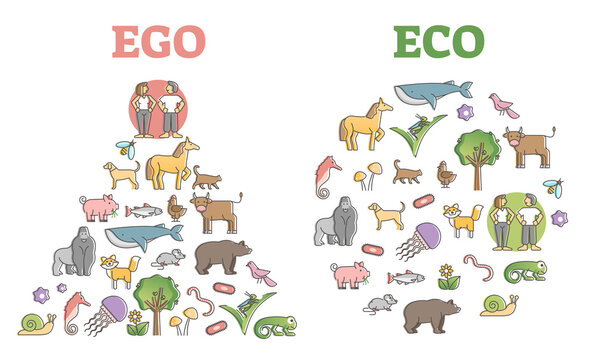

Image source: https://greeninitiative.eco/2025/06/02/why-should-we-protect-the-environment-the-urgency-to-act-now/
Abstract
Environmental law is essential for preserving our natural resources and promoting sustainable development, especially during this time of rapid industrialization and climate change. In countries like India, where environmental damage poses a risk to public health and the environment, strong legal measures are key to protecting our air, water, biodiversity, and natural habitats. This article explores the development, principles, and application of environmental law, emphasizing its importance in controlling pollution, managing resources, and addressing climate change. It also discusses current challenges like enforcement shortfalls, compliance from industries, and finding the right balance between development and conservation efforts.
By analyzing significant judicial rulings and regulatory frameworks, this paper illustrates that successful environmental law depends not only on solid regulations but also on adequate institutional support, active public involvement, and a dedication to ecological justice.
Introduction
Humanity’s connection to nature is at a critical point. As industrial activity increases and urban populations grow, environmental decline threatens our very survival. Environmental law stands as a societal response to this emergency, offering a thorough legal framework to manage human interactions with the natural world and promote ecological sustainability.
India faces particularly urgent environmental issues. With a population exceeding 1.4 billion, rapid industrial growth, and competing demands for natural resources, the country finds it challenging to reconcile economic development with environmental care. Urban air pollution has reached dangerous levels, rivers are polluted with industrial waste, forests are diminishing under development pressures, and wildlife habitats face ongoing encroachment.
In this context, environmental law plays numerous vital roles. It sets standards for controlling pollution, protects endangered species and their habitats, regulates resource extraction, and provides pathways for achieving environmental justice. Instruments like the Environment Protection Act of 1986 and the National Green Tribunal create legal avenues to tackle environmental damage and hold offenders responsible.
This article delves into the functioning of environmental law at various levels—from international climate agreements to local waste management regulations—and assesses both its successes and the challenges it continues to face in preserving our ecological heritage.
Core Principles Guiding Environmental Protection
Environmental law is founded on several key principles that shape global policy decisions and court rulings. Understanding these principles clarifies the reasons behind certain regulations and how courts handle environmental legal cases.
The Precautionary Principle encourages proactive measures to prevent harm. When there is uncertainty about potential environmental damage, this principle supports taking protective actions instead of waiting for definitive evidence. For example, if the effects of a new chemical are unknown, regulators might restrict its use until its safety can be verified.
The Polluter Pays Principle introduces economic responsibility by ensuring that those who cause environmental harm are accountable for cleaning up and compensating for damages. This transforms pollution from a hidden cost into a tangible business expense, motivating companies to invest in cleaner technologies and practices.
Sustainable Development seeks a balance between economic growth and environmental stewardship. Rather than seeing these as conflicting interests, this principle acknowledges that long-term success relies on maintaining healthy ecosystems, renewable resources, and ecological services that support human wellbeing.
Intergenerational Equity emphasizes our duty to future generations. The resources we utilize today should not compromise the ability of those to come to meet their own needs and enjoy an environment as good as what we have now.
The Public Trust Doctrine asserts that governments are the stewards of natural resources—such as air, water, forests, and wildlife—holding them in trust for all citizens. This establishes a legal duty to protect these resources for the benefit of the public, rather than allowing their degradation for private gain.
These principles work together to form a legal and ethical framework that prioritizes long-term ecological health over short-term economic gains, acknowledging our ultimate reliance on environmental sustainability.

Legislative Framework: Building Legal Protection
For effective environmental protection, we need comprehensive legislation that tackles various aspects of ecological conservation. India’s environmental legal framework serves as a clear example of how diverse laws can interact to foster protection.
The Environment (Protection) Act of 1986 functions as overarching legislation, empowering the central government to take protective action and coordinate environmental efforts. This act was created in response to the tragic Bhopal gas disaster, highlighting the need for regulatory authority capable of addressing devastating environmental risks.
The Air (Prevention and Control of Pollution) Act of 1981 specifically addresses air pollution by establishing emissions standards, mandating prior consent for industrial operations, and instituting monitoring systems. This legislation covers issues ranging from vehicle emissions to industrial smokestacks, acknowledging that air quality impacts public health.
The Water (Prevention and Control of Pollution) Act of 1974 regulates water pollution through standards for effluent, discharge permits, and treatment requirements. Given that rivers play vital roles—serving as sources of drinking water, agricultural irrigation, and cultural significance—this law seeks to safeguard both human and environmental health.
The Wildlife Protection Act of 1972 aims to conserve biodiversity by creating lists of protected species, preserving habitats, and limiting hunting and trade. India’s rich biological diversity includes tigers, elephants, and rhinoceroses, all needing legal protection from poaching and habitat loss.
The Forest Conservation Act of 1980 restricts deforestation by requiring government approval before repurposing forest land for non-forest activities. This law recognizes the critical role forests play in climate regulation, water cycles, soil preservation, and biodiversity conservation.
These laws work synergistically to provide overlapping protections for air, water, land, wildlife, and forests, understanding that environmental systems are interconnected and require comprehensive management.
Institutional Mechanisms: Enforcement and Implementation
Having laws is not enough for environmental protection; we need effective institutions to monitor compliance, investigate violations, and enforce standards. Environmental governance in India relies on multiple regulatory bodies at both national and state levels.
The Central Pollution Control Board operates at the national level, establishing pollution standards, coordinating state efforts, conducting research, and offering technical guidance. This agency develops scientific criteria for permissible pollution levels across air, water, and land.
State Pollution Control Boards enforce environmental regulations within their regions, issuing industrial permits, monitoring emissions and discharges, responding to complaints, and taking action against rule-breakers. These state agencies interpret and implement national standards locally.
The Ministry of Environment, Forest and Climate Change formulates environmental policy, authorizes major projects, engages in international treaty negotiations, and coordinates environmental initiatives within the government. This ministry plays a crucial policy-making role in India’s environmental governance.
The National Green Tribunal, formed in 2010, serves as a specialized judicial forum for environmental matters. Unlike traditional courts, the NGT includes members with scientific and technical knowledge alongside judicial figures, facilitating quicker and more informed environmental decision-making.
These institutions often work together, navigating tension and overlap, to implement environmental regulations. However, challenges persist: inadequate staffing, limited funding, political influences, corruption risks, and gaps in technical expertise constrain their effectiveness.
Environmental Impact Assessment: Prevention Through Planning
Environmental Impact Assessment (EIA) embodies a proactive approach to safeguarding the environment by evaluating proposed projects before they gain approval. This process aims to identify possible environmental damage early on, consider alternatives, and develop mitigation measures.
The EIA process typically involves several steps. Screening determines if a project requires a full assessment based on its size, location, and potential effects. Scoping outlines specific environmental issues to review. Impact Analysis scientifically assesses how the project might influence the air, water, soil, biodiversity, communities, and more. Public Consultation invites feedback from affected communities, allowing them to express concerns and suggest alternatives. Mitigation Planning develops strategies to avoid, minimize, or compensate for harmful consequences. Decision-Making resolves whether to approve, modify, or reject the project.
Monitoring tracks real-world impacts after implementation.
EIA applies to various project types: large industrial operations, mining ventures, significant infrastructure like dams and highways, power plants, real estate developments in sensitive regions, and more.
When properly executed, EIA prevents environmental damage by identifying potential issues before projects advance. It enhances transparency by making environmental information publicly available, improves project designs by considering alternatives and mitigation measures, and empowers communities through formal participation.
However, the effectiveness of EIA hinges on rigorous execution. Challenges include lacking baseline data, pressures to approve economically beneficial projects, limited public involvement, weak monitoring of approved projects, and inadequate penalties for failing to meet mitigation responsibilities.
Judicial Activism: Courts as Environmental Guardians
India’s judiciary has taken a ground-breaking role in environmental protection, often broadening rights and setting obligations beyond what legislation strictly requires. Through creative interpretations and activist stances, courts have become vital defenders of environmental justice.
Public Interest Litigation allows concerned citizens and groups to approach courts on behalf of affected communities or environmental concerns, even without direct personal injury. This democratizes justice access and enables legal actions against powerful polluters.
Courts have affirmed that the right to life under Article 21 includes the right to a healthy environment. This interpretation means environmental protection isn’t just a policy aim but a fundamental right enforceable through the courts.
Notable rulings have led to the closure of polluting industries, mandated river clean-ups, regulated vehicle emissions, shielded forests from mining activities, and imposed environmental compensation on offenders. Such decisions often extend beyond the specific case at hand to establish broader environmental principles.
The judiciary has also introduced ideas like absolute liability for hazardous industries, which removes traditional legal defences, ensuring dangerous activities are held to strict accountability. The precautionary principle and the polluter pays principle have been applied by courts even before being integrated into legislation.
However, judicial activism faces criticism. Some argue that courts overstep their bounds by making policy decisions that should belong to elected officials. Questions arise regarding the ability of courts to navigate complex environmental trade-offs. Additionally, implementation and enforcement of judicial rulings often lag behind, which lessens their practical effectiveness.
Despite these criticisms, judicial interventions have undoubtedly bolstered environmental protection, filled legislative voids, and provided remedies in cases where executive actions were lacking.
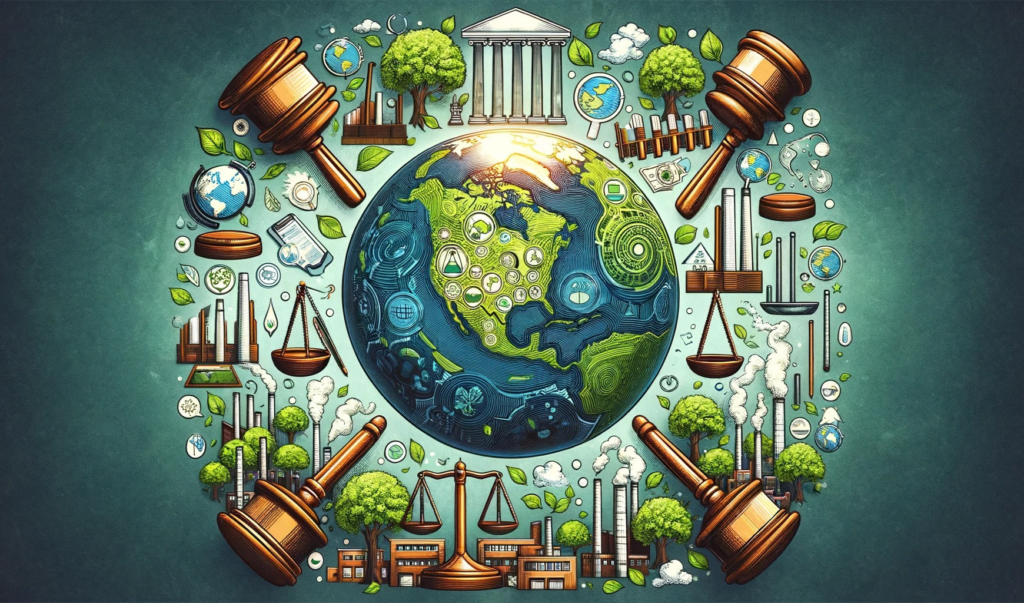
International Dimensions: Global Cooperation for Shared Problems
Environmental issues cut across national borders, necessitating international collaboration through treaties, conventions, and cooperative frameworks. Global challenges such as climate change, ozone depletion, biodiversity loss, marine pollution, and cross-border air and water pollution demand unified global responses.
The Stockholm Declaration of 1972 laid the groundwork for modern international environmental law, establishing principles for protection and forming structures for ongoing cooperation. This declaration recognized that environmental protection is a global concern that requires collective action.
The Rio Declaration of 1992 expanded sustainable development principles and produced key agreements, including the Framework Convention on Climate Change and the Convention on Biological Diversity. This summit highlighted the need to integrate environmental protection with economic and social advancement.
The Paris Agreement of 2015 marks the most significant global climate pact, with nearly all countries pledging to limit temperature increases and cut greenhouse gas emissions. While implementation varies, this agreement fosters accountability mechanisms and mobilizes climate financing.
Regional accords address specific issues like ocean pollution, hazardous waste trading, and wildlife trafficking. Bilateral treaties manage shared rivers and resources across borders.
India plays an active role in global environmental governance, having ratified major treaties and incorporated international commitments into national policies. Nonetheless, there are often clashes between the need for development and environmental responsibilities, particularly regarding climate action expectations placed on developed versus developing nations.
Enforcement of international environmental law is challenging since no global enforcement body exists. Compliance mainly relies on national implementation, international pressure, and treaty mechanisms, including reporting and dispute resolution protocols.
Contemporary Challenges: Emerging Threats and Persistent Obstacles
Despite having legal frameworks and institutional mechanisms in place, environmental protection faces serious challenges that demand innovative responses and renewed commitment.
Climate Change stands out as the preeminent environmental challenge. Rising temperatures, extreme weather events, sea-level rise, disrupted ecosystems, and agricultural impacts all threaten global human security. Although legal frameworks exist, major implementation gaps remain. Countries struggle to meet emission reduction targets, reliance on fossil fuels continues, and adaptation efforts lag as impacts escalate.
Biodiversity Loss is occurring at an alarming pace. Habitat destruction, poaching, pollution, invasive species, and climate change are pushing species toward extinction at rates far exceeding natural background levels. Protected areas are coming under increasing pressure, wildlife corridors are becoming fragmented, and vital ecosystem services are deteriorating.
Pollution persists despite existing regulations. Industrial discharges poison water systems, urban air quality remains hazardous, plastic waste accumulates in oceans and locales, and toxic substances endure in the environment and food chains. Enforcement gaps, illegal dumping, and insufficient waste treatment infrastructure hinder pollution control endeavors.
Development Pressures generate ongoing tension between economic growth and conservation. Infrastructure projects, urban sprawl, resource extraction, and intensified agriculture compete for land and resources against conservation priorities. Political and economic interests often take precedence over environmental considerations.
Enforcement Deficits undermine the effectiveness of even robust laws. Regulatory agencies struggle with budget constraints, political interferences, corruption risks, and technical skills shortages. Industries exploit gaps in regulations, delay compliance, and engage in lengthy litigations to challenge new regulations.
Public Awareness remains low. Many citizens are unclear about environmental laws, their rights, and how to participate. Strategies for environmental education in schools and outreach programs need enhancement.
Emerging Issues such as microplastic pollution, chemical contamination, light pollution, electronic waste, and biotechnology risks require legal attention and regulation frameworks that are still being developed.
Tackling these challenges calls for not only better laws but also improved implementation, adequate funding, political ambition, technological advancement, international collaboration, and a societal commitment to environmental values.
Practical Impact: Environmental Law in Everyday Life
The effects of environmental law reach far beyond courtrooms and government halls; they shape everyday lives and community well-being. Recognizing these connections helps us appreciate the personal importance of environmental protection.
Air Quality regulations reduce respiratory issues by controlling vehicle emissions and industrial pollutants. When you breathe fresher air, encounter fewer days of smog, and enjoy blue skies, you can credit environmental laws for setting and enforcing standards that protect public health.
Water Safety legislation ensures that drinking water meets health standards and that recreational waters remain safe. When tap water is potable, rivers can be used for fishing and swimming, and groundwater is uncontaminated, it’s a result of environmental regulations effectively working behind the scenes.
Waste Management laws mandate proper waste collection, sorting, and disposal. Cleaner neighbourhoods, efficient recycling systems, and less littering reflect the successes of environmental governance at the local level.
Noise Control regulations limit construction noise, traffic sounds, and industrial activities during certain hours, thereby protecting mental health and quality of life—especially in bustling urban areas where noise can significantly affect well-being.
Green Spaces preservation through zoning and urban planning keeps parks, city forests, and wetlands alive in our cities. These spaces provide recreational opportunities, enhance air quality, support urban biodiversity, and offer psychological benefits through a connection with nature.
Product Safety standards ensure consumer products use safe chemicals, sustainable materials, and eco-friendly packaging. Labelling requirements empower consumers to make informed choices regarding the environmental impacts of their purchases.
Energy Transitions backed by environmental policies foster renewable energy adoption, increase energy efficiency, and lower carbon footprints. Solar panels, wind farms, electric vehicles, and green buildings represent the influence of environmental law on energy systems. These daily impacts show that environmental law isn’t just an abstract concept; it’s deeply connected to health, well-being, and quality of life for all.
Case Study: The Ganga River Pollution Litigation
The litigation surrounding Ganga River pollution serves as a vivid illustration of how environmental law functions in practice, revealing both the potential and limitations of legal action in environmental protection.
The Ganga River is of immense cultural, spiritual, and economic importance to millions in India. However, years of industrial waste, municipal sewage, and agricultural runoff have turned parts of this sacred river into heavily polluted waterways, endangering public health and ecological integrity.
Environmental activist M.C. Mehta approached the Supreme Court for intervention to halt pollution and help restore the river’s health. The Court recognized the fundamental right to clean water under constitutional protections, asserting that industrial pollution violated this right.
The court’s response involved multiple directives: closure or relocation of industries failing to meet treatment standards, mandatory setup of effluent treatment plants, imposition of fines on offenders, establishment of monitoring systems, and requirements for government agencies to execute river cleanup initiatives.
This litigation established key legal principles. The polluter pays principle mandated that industries incur cleanup costs rather than shifting the burden of environmental damage onto society. Absolute liability removed defenses for polluting entities, while the right to a healthy environment became well-established as a constitutional safeguard.
Yet, challenges arose in implementing these measures. Many businesses resisted closure or relocation, compliance monitoring proved arduous, government cleanup efforts faced hurdles in funding and coordination, and new sources of pollution continued to arise. Despite years of litigation and numerous court orders, pollution in the Ganga persists in several regions.
This case underscores both the power and the limitations of legal recourse. Courts can legislate rights and impose obligations but effective environmental stewardship requires sustained political dedication, proper resources, institutional infrastructure, technological innovations, and active public involvement—factors not directly controllable by the courts.

The Path Forward: Strengthening Environmental Protection
To enhance the effectiveness of environmental laws, we must adopt comprehensive strategies that encompass legal, institutional, technological, and societal dimensions.
Legislative Reform should fill loopholes, confront emerging challenges, bolster penalties, and streamline overlapping regulations. Laws must adapt to meet issues like climate change, microplastic pollution, and biotechnology risks that were not anticipated when many existing laws were initially written.
Institutional Strengthening requires proper funding, staffing, training, and technical capabilities for regulatory bodies. Ensuring political independence from undue influences empowers effective enforcement. Coordinating mechanisms help reduce overlap and gaps across various agencies.
Technological Innovation can introduce solutions for compliance monitoring through advanced sensing technologies, improve pollution treatment methods, facilitate a transition towards cleaner production techniques, and foster circular economy principles that minimize waste.
Public Participation should be meaningful rather than merely tokenistic. Environmental information needs to be accessible, participatory processes transparent, and community voices must have a real impact on decision-making. Environmental education must be enhanced to foster awareness and involvement from a young age.
Judicial Capacity can be improved by providing specialized training for judges on environmental matters, refining procedures for handling environmental cases, and ensuring effective implementation and monitoring of judicial orders.
International Cooperation should be strengthened by facilitating knowledge sharing, transferring technology, mobilizing climate finance, and coordinating responses to transboundary environmental issues.
Economic Instruments such as pollution taxes, emissions trading, incentives for clean technologies, and green procurement practices can complement regulatory approaches by establishing market incentives for environmental stewardship.
Corporate Responsibility necessitates robust environmental, social, and governance standards, mandatory sustainability disclosures, accountability in the supply chain, and legal responsibility for environmental harm. At its core, enhancing environmental protection relies on political resolve and a societal commitment. Ultimately, laws and institutions reflect the collective decisions about priorities and values. Forging a sustainable future requires acknowledgment that environmental protection is not optional or secondary; it is vital for our survival and well-being.
Conclusion
Environmental law stands at the convergence of legal regulation, scientific understanding, ethical considerations, and effective governance. It reflects humanity’s efforts to create rules for coexisting sustainably with the natural world that sustains us.
The legal structures, guiding principles, and institutions discussed in this article showcase the strides made in environmental protection. From international climate agreements to local waste management laws, from landmark court rulings to pollution control standards, environmental law has established meaningful protections and spurred significant advancements.
However, the scale and urgency of environmental issues—climate change, biodiversity loss, pollution, and resource depletion—demand far more than what is currently being accomplished. Enforcement challenges, political barriers, resource limitations, and competing developmental pressures continue to undermine our efforts at conservation.
The future of environmental law must not merely focus on stricter regulations but on transforming our relationship with nature. This implies recognizing ecological limits, appreciating the value of ecological services, respecting indigenous knowledge, ensuring environmental justice, and acknowledging our responsibilities to future generations.
Environmental law is not just about preventing harm; it’s about enabling both humanity and our ecosystems to thrive. It calls for legal frameworks that are comprehensive, efficiently implemented, scientifically informed, publicly endorsed, and ethically grounded.
As we face unprecedented environmental challenges, environmental law needs to evolve from a niche legal field to a core organizing principle governing society, the economy, and governance. The air we breathe, water we drink, food we eat, and climate we experience all hinge on our ability to translate environmental protections from legal language into real, lived experiences.
The success of environmental law will ultimately be judged not by how sophisticated its principles are or by how many regulations are enacted, but by whether future generations inherit a planet capable of sustaining life in all its diversity and providing opportunities for human flourishing within the limits of nature.
Author

About the Author