https://s3.youthkiawaaz.com/wp-content/uploads/2021/03/04190606/yka.jpg
Abstract
With the progress of society towards nation with equal rights, there is often a question left unanswered about why women’s healthcare is still not a main topic about research and main focus in 2025, only recently the studies on women’s bodies have started with endometriosis as serious illness that needs to address. This paper will investigate the common issues faced in India by women of unequal healthcare access, mainly examining the various social, structural, and legal factors that contribute to these disparities. It discusses how deep-rooted norms, institutional hurdles, and policy restrictions still hinder women’s access to vital health services. The research considers constitutional values, laws, and court interpretations that shape our understanding of fairness and non-discrimination in healthcare. Focused on the Indian context, the paper brings attention to recurring themes of gender inequality, public health governance, and rights-based approaches, stressing the continuous need for legal and institutional systems that are more responsive.
Keywords
Women’s Health, Gender Inequality, Healthcare Access, Discrimination, Constitutional Rights.
Introduction
In today’s dynamic world, access to health care is widely seen as a basic human right and plays a crucial role in human development and social fairness. In India, the Constitution upholds equality and non-discrimination under Articles 14 and 15, as well as the right to life and personal liberty under Article 21, which has been interpreted by courts to include the right to health. But even with these legal protections, women in India still confront systemic obstacles that hinder their access to essential health services. This discrimination shows in various ways, like socio-cultural norms that restrict women’s mobility, decision- making, and autonomy, as well as economic dependence, geographic hurdles, and biases within health-care systems.
The health of women is closely tied to the overall development of society, influencing family well-being, economic productivity, and demographic trends. Ongoing inequalities in access to maternal health care, reproductive services, preventive treatment, and health financing highlight that just having legal recognition isn’t enough to guarantee fair health care. Research by scholars both nationally and internationally shows that women frequently deal with delays in getting treatment, face financial hardships, or can’t use available health facilities due to obstacles that impact them more than men. There is need to address these issues on global level, as WHO states that SDG 5: Achieve gender equality and empower all women and girls and SDG 3: Ensure healthy lives and promote well-being for all at all ages needs to achieve for sustainable goals.1
History of Gender Bias
The roots of discrimination in women’s healthcare access can be traced back to entrenched patriarchal systems that have influenced gender roles for generations. In India, the view of women’s health has often been limited to fertility, motherhood, and household responsibilities, rather than recognizing it as a matter of personal rights or autonomy. Researchers point out that these patriarchal structures tend to place women in the role of primary caregivers, which leads to putting family and male health needs ahead of their own2. Anthropological studies have shown that traditional kinship systems reinforce these gendered expectations on women who are often expected to suffer through health issues without complaint, to not be a burden, and to seek medical help only when it’s necessary, and if they became victim to unfortunate events then they are often shamed and thrown out then supported3. This has resulted in patterns of delayed treatment and a reluctance to seek care, with many women internalizing feelings of neglect. On top of that, socio-economic factors make the situation worse.
Limited property rights, lack of access to education, and reliance on male family members leave women without the power to make their own health decisions. National surveys have consistently shown that women who are less educated and less wealthy often victim to their spouse abuse and this in return leads to decline to access in healthcare, with the National Family Health Survey (NFHS) repeatedly highlighting the link between low female empowerment and poor health result4. Various overlapping factors like caste, religion, geographic location, and poverty often worsen these disparities. Women from marginalized backgrounds often deal with multiple layers of exclusion, facing discrimination both in society at large and within healthcare systems. Studies by UN Women and the Population Foundation of India reveal that these structural inequalities result in less access to crucial services, such as reproductive health care, preventive screenings, and mental health support. It has been studied that due to intersectional disadvantage gender discrimination becomes even more complex when women also confront obstacles related to class, caste, or where they live. 5 All this shows that the discrimination seen in women’s healthcare in India is not merely a series of unrelated incidents; it’s a product of deep-seated, systemic inequalities that still influence health outcomes today.
Lack of Access to HealthCare
Structural Discrimination
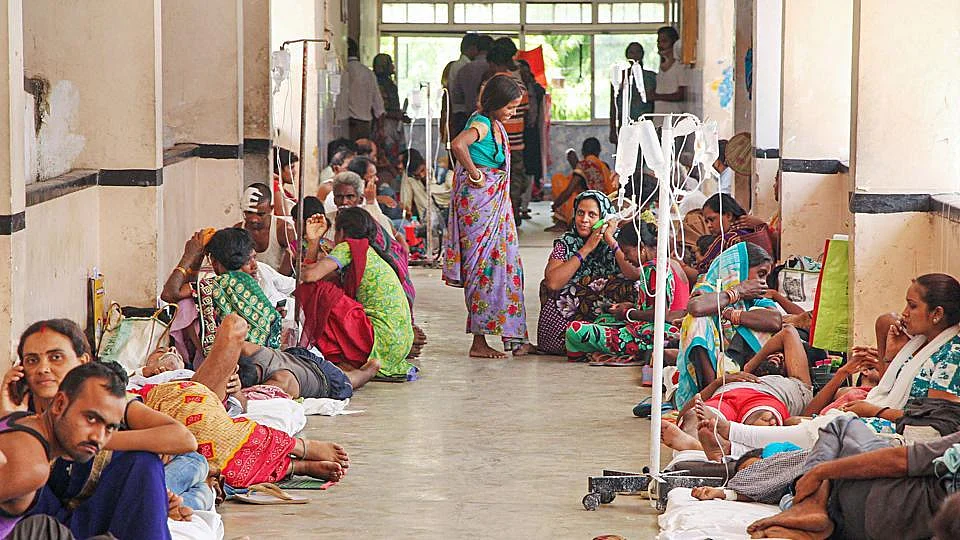
This includes things like a lack of female doctors, not enough reproductive health facilities, and a lack of privacy in clinical environments. The World Health Organization points out that health systems often develop without considering gender differences, which creates situations where women might feel unsafe or uneasy when seeking care.6These systemic issues not only impact the availability of services but also affect women’s comfort, dignity, and ability to make their own choices, which can ultimately discourage them from seeking the care they need.
Institutional Bias
It is all about the unfair attitudes and actions that healthcare providers might show, often influenced by cultural stereotypes and personal judgments. Studies indicate that women, especially those who are single and looking for birth control or survivors of gender-based violence, frequently encounter stigma or insensitive care in medical environments.7 This type of bias can really damage trust and create mental barriers, which makes a lot of women hesitate or even skip getting the care they need. Although institutional discrimination might not be as obvious as structural issues, it still seriously affects women’s health experiences and how they view healthcare systems.
Economic Disparity
This often stems from women’s lack of financial independence and the way household priorities are typically divided by gender. Research shows that families usually invest more in men’s health, which means that women’s preventive and treatment needs don’t get the attention they deserve. When women lack control over financial choices, they might end up putting off necessary treatment or skipping it altogether. This financial instability not only limits their access to healthcare but also contributes to ongoing cycles of inequality, ultimately worsening health outcomes in the long run.
Socio-Cultural Discrimination
Cultural norms really limit women’s access to healthcare by creating a stigma around topics like menstruation, sexual health, infertility, and even pregnancy outside of marriage. Many women are held back from talking about their health issues or getting the care they need. The NFHS-5 data highlights that a lot of women face domestic violence but don’t often reach out for medical assistance, which shows the fear and shame they feel, along with a lack of support. Overall, these societal expectations tend to keep women from seeking the healthcare they deserve and make it seem normal to overlook their health needs.
Lack of Standalone Women Yojana
There are many yojanas from government for Women and Family, but most of them only cover the maternal and childcare and not standalone women’s mental care or adolescent or any covering any part where it talks only about women’s health as priority. This creates negative situation where women as human is always protected because of her role in society and because she is a human first.
International Conventions
- The International Covenant on Civil and Political Rights (ICCPR) states in Article 2 that it’s the responsibility of state parties to ensure that everyone enjoys the rights guaranteed by the convention without discrimination based on factors like gender, caste, or religion. It also emphasizes that everyone should have equal access to public services, which includes health services.
- The Convention on the Elimination of All Forms of Discrimination against Women (CEDAW), adopted in 1979, represents a significant step forward in women’s rights advocacy by various international organizations. Article 12 requires member states to take necessary actions to eliminate discrimination against women in healthcare, ensuring that women have equal access to healthcare services, including family planning. Additionally, members must provide appropriate services around pregnancy and childbirth, including free services when necessary and adequate nutrition during pregnancy and breastfeeding.
- According to Article 12 of the International Covenant on Economic, Social and Cultural Rights (ICESCR), everyone has the right to the highest attainable standard of physical and mental health, which includes effective maternal care. This article essentially guarantees women better access to healthcare facilities based on their rights.
- The Universal Declaration of Human Rights (UDHR) is a landmark document for acknowledging various individual rights. Article 25 outlines the right to health, aiming for effective and efficient realization of healthcare, while also addressing the importance of early maternal and childcare.
Indian Policies
Surakshit Matritva Aashwasan (SUMAN)
It was launched in 2019, which ensures Assured, dignified and respectful delivery of quality healthcare facilities at no cost and zero tolerance for denial of facilities to any woman and newborn visiting a public health care so as to end all preventable maternal, newborn deaths and morbidities and provide a positive birth experience.
Ayushman Bharat- Pradhan Mantri Jan Arogya Yojana
It provides health coverage of up to Rs 5 lakh per family per year to around 10.74 crore poor and vulnerable families in the country as per Socio Economic Caste Census (SECC). This will certainly help women of rural India who are unable to find easy access of health facilities due to low income.8
Menstrual Hygiene Scheme (MHS)
Under this scheme sanitary pads are provided to adolescent girls in the age group of 10-19 year in rural areas. This will help in maintaining menstrual hygiene among them. Most of the healthcare yojanas are aimed at maternal healthcare and not for women alone, there is a serious lack of women only yojanas that protects them as a human.
Judicial Interventions
The Constitution of India has provisions that’s safeguards the equality and right to healthcare:
Article 14 – Equality Before Law
It makes sure that everyone is treated equally by the law and gets the same protection from the government. It stops arbitrary discrimination and states that any distinctions made by the government need to be fair and not based on bias. In healthcare specifically, this means that women can’t be denied or receive lower-quality medical care simply because they are women.
Article 15(1) – Prohibition of Gender Discrimination
It explicitly bans the State from discriminating against any citizen based on their sex. This ensures that women have equal access to public health services, programs, and benefits without being affected by gender stereotypes or social status.
Article 15(3) – Special Provisions for Women
It prohibits discrimination, Article 15(3) lets the State create special laws or programs for women to tackle historical and structural disadvantages. This includes initiatives related to maternal health, reproductive rights, and welfare programs aimed at improving access to healthcare for women.
Article 21 – Right to Life Includes Right to Health
It guarantees the right to life and personal liberty. Indian courts have interpreted this to include the Right to Health, acknowledging that living with dignity is not possible without access to medical services. So, if women are denied adequate healthcare, it can be seen as a violation of Article 21.
X v. The Principal Secretary, Health and Family Welfare Department, Govt. of NCT of Delhi & Anr9
In this case the court had allowed the termination of pregnancy of unmarried women by interpreting rule (3) b) of the MTP, 1971 which states the change of “marital status” during ongoing pregnancy. Thus, it can be understood that thereproductive rights of unmarried women are also recognized, thus changing the whole landscape of woman bodily autonomy and decisional autonomy as well.
Samira Kohli v. Dr. Prabha Manchanda & Another10
In this case it was held that informed consent of a woman is necessary to do any surgery or organ removing procedure on her. Thus, it can be said that informed consent is vital under the concept of right to health under article 21 of the constitution. Any treatment or operation done on a woman without taking her consent would be a violation of the right to life with dignity. This case particularly acknowledged the serious violation of the right to health, autonomy and bodily integrity of the woman due to the removal of her reproductive organs based on consent obtained simpliciter. It was held that the requirement for informed consent is rooted in the right of self-determination, which can only be effectively exercised when the patient possesses adequate information to enable an intelligent choice.
Laxmi Mandal and Others v. Deen Dayal Harinagar Hospital and Others11
This case shed light on the lack of proper implementation of maternal health schemes in India especially for women from socio-economically marginalized groups. The right to health is a fundamental right and an integral facet of the right to life protected under Article 21, and it is the state’s responsibility to ensure that these rights are protected.
Progress in Access to HealthCare
The National Family Health Survey (NFHS) is a major survey carried out across India to gather information about population health, family well-being, and nutrition. It gives us solid data on important topics like maternal and child health, fertility rates, mortality, healthcare usage, domestic violence, and women’s empowerment. It also shows us the data on why and how women lack access to health care.
In the 2015-16 study revealed that “NFHS-4 asked women age 15-49 about potential problems in obtaining medical treatment for themselves when they are sick. About two- thirds (67%) of women report at least one problem for themselves in obtaining medical care. One-fourth of women cite money as a problem. Thirty percent of women cite the distance to a health facility and 27 percent cite having to take transport as a problem. Thirty-seven percent of women report concerns that no female health provider is available. Forty-five percent of women report concern that no provider is available and 46 percent that no drugs are available”
While in 2019- 2021 NFHS-5 study revealed that “NFHS-5 asked women age 15-49 about potential problems in obtaining medical treatment for themselves when they are sick. Three-fifths of women report at least one problem for themselves in obtaining medical care. Over one-fifth (21%) of women cite money as a problem. Twenty-three percent of women cite the distance to a health facility and 22 percent cite having to take transport as a problem. Thirty-one percent of women report concerns that no female health provider is available. Thirty-nine percent of women report a concern that no provider is available and 40 percent that no drugs are available.”
If we compare both the data then looking at NFHS-4 and NFHS-5, there’s a noticeable step forward in women accessing healthcare, although there are still significant hurdles. Back in NFHS-4, about 67% of women said they faced at least one issue when trying to get medical help, but that number dropped to around 60% in NFHS-5, which is a decent improvement in overall access. Financial issues also went down, from 25% in NFHS-4 to 21% in NFHS-5, hinting at a bit more affordability thanks to expanded health schemes and insurance. There’s been progress in physical access too: distance-related problems fell from 30% to 23%, and transport issues dropped from 27% to 22%. This suggests that infrastructure is getting better and connectivity is improving. Moreover, worries about the availability of female healthcare providers decreased from 37% to 31%, which shows that we’re seeing gradual improvements in gender representation in the healthcare workforce. The percentage of women who reported having no available provider is also down, from 45% to 39%, and those saying there were no medicines available dropped from 46% to 40%. This points to better staffing and a more efficient supply chain. While all these indicators show a positive trend, it’s important to note that high numbers in both surveys highlight that structural and systemic barriers are still making it tough for women in India to access healthcare fairly.
Suggestions
Strengthen Gender-Sensitive Health Infrastructure
Policymakers really need to focus on boosting health facilities in rural and tribal areas that don’t have enough resources. It’s essential to have more female healthcare providers and a steady supply of medications. According to NFHS data, the shortage of providers and medicines is a significant hurdle. To tackle these issues, we should look at targeted strategies, provide incentives for women doctors, and improve logistics to reach the last mile.
Improve Financial Protection for Women
Even though NFHS-5 indicates that financial barriers have lessened, many women still find it challenging to get healthcare because of the costs involved. By broadening programs like Ayushman Bharat to cover more outpatient services, reproductive health needs, and transportation support for women, we can help lessen their reliance on male family members and boost their ability to seek care independently.
Increase Awareness and Community-Level Education
A big part of the ongoing barriers comes from ingrained gender norms. It’s important for both government and civil society to really step up efforts to raise awareness about women’s health rights, the importance of seeking care early, and the options available. We also need to make sure that community health workers, like ASHAs and ANMs, are trained to push back against these discriminatory attitudes and motivate women to get the care they need on time.
Strengthen Accountability and Monitoring of Public Health Services
There needs to be regular checks, social audits, and ways for people to voice their concerns to make sure there’s enough staff, medication, and working facilities. Also, let’s utilize the gender-specific data from the NFHS to assess how each state is performing and to inform our actions at the district level.
Promote Women’s Digital Health Access
Digital health platforms linked to the Ayushman Bharat Digital Mission could really improve women’s access to things like teleconsultations, e-prescriptions, and remote diagnostics. Making sure women have the skills to use these technologies and that they can afford smartphones will help tackle issues related to mobility and distance.
CONCLUSION
Discrimination in women’s access to healthcare is still a major issue in India’s health system. Even though laws officially acknowledge women’s rights to health, there are still deep-rooted inequalities due to gender norms, economic disadvantages, and biases within institutions that limit women’s access to timely and proper care. Historically, social structures have fostered dependence, restricted movement, and have led to prioritizing family health over women’s personal care, which has resulted in a significant underuse of essential services. These challenges are even more pronounced for women from marginalized groups, showing the compounded nature of discrimination, they face. Despite ongoing reforms, there are still gaps in healthcare infrastructure, a shortage of female healthcare providers, inconsistent care quality, and a lack of awareness about health rights that all slow down progress. To really make a difference, we need a comprehensive approach that strengthens health systems, improves gender-sensitive service delivery, boosts accountability, and encourages shifts in community attitudes toward women’s health. Tackling discrimination in healthcare isn’t just important from a policy standpoint; it’s crucial for achieving gender justice and upholding the constitutional values of equality and dignity. Making sure women can access fair, affordable, and respectful healthcare is essential for India’s overall social and developmental progress.
BIBLIOGRAPHY
- International Covenant on Civil and Political Rights, Dec. 16, 1966, 999 U.N.T.S. 171, https://www.ohchr.org/en/instruments-mechanisms/instruments/international- covenant-civil-and-political-rights
- Convention on the Elimination of All Forms of Discrimination Against Women, Dec. 18, 1979, 1249 U.N.T.S. 13, https://www.ohchr.org/en/instruments- mechanisms/instruments/convention-elimination-all-forms-discrimination-against- women
- International Covenant on Economic, Social and Cultural Rights, Dec. 16, 1966, 993 U.N.T.S. 3, https://www.ohchr.org/en/instruments-mechanisms/instruments/international-covenant-economic-social-and-cultural-rights
- Universal Declaration of Human Rights, G.A. Res. 217A (III), U.N. Doc. A/810 (Dec. 10, 1948), https://www.un.org/en/about-us/universal-declaration-of-human-rights
- Ministry of Health & Family Welfare, Gov’t of India, National Family Health Survey– 4 (NFHS-4) 2015–16: India Report (2017), https://dhsprogram.com/pubs/pdf/fr339/fr339.pdf
- Ministry of Health & Family Welfare, Gov’t of India, National Family Health Survey– 5 (NFHS-5) 2019–21: India Report (2021), https://dhsprogram.com/pubs/pdf/FR375/FR375.pdf
- Supriya, Gender Disparity in Healthcare Access to Women, Indian Journal of Integrated Research in Law, Vol. II, Issue VI (2022), https://ijirl.com/wp- content/uploads/2022/11/GENDER-DISPARITY-IN-HEALTHCARE-ACCESS-TO- WOMEN-.pdf
- Tiwari, A., Access to Healthcare for Women in India: Legal and Policy Dimensions, Anu Books (2025), https://anubooks.com/uploads/session_pdf/17522961961.pdf.
- Kalra, R. J., Access to Health Care a Distant Dream for Most Indian Women, Deutsche Welle (DW) (Aug 21, 2019), https://www.dw.com/en/access-to-health-care-a-distant- dream-for-most-indian-women/a-50108512.
- Ministry of Health & Family Welfare, Gov’t of India, Intra-Household Inequalities in Health Expenditure (Population Research Centres, MoHFW Report), https://prc.mohfw.gov.in/fileDownload?fileName=Intra- household%20Inequalities%20in%20Health%20Expenditure.p
- Villines, Zawn, What to Know About Gender Bias in Healthcare, Medical News Today (Oct. 25, 2021), https://www.medicalnewstoday.com/articles/gender-bias-in- healthcare#consequences
- World Health Org., Gender and Health, WHO, https://www.who.int/health- topics/gender#tab=tab_2
- Sen G, Ostlin P. Gender inequity in health: why it exists and how we can change it. Glob Public Health. 2008;3 Suppl 1:1-12. doi: 10.1080/17441690801900795. PMID: 19288339.
- Singh, Sumanjeet, Binod Rajak, Ranjit K. Dehury, Swati Mathur & Akankhya Samal, Differential Access of Healthcare Services and Its Impact on Women in India: A Systematic Literature Review, 13 SN Soc. Sci. (2023), https://doi.org/10.1007/s43545- 023-00607-9
Footnotes
- WHO Gender and Health, https://www.who.int/health-topics/gender#tab=tab_2 ↩︎
- Sen G, Ostlin P. Gender inequity in health: why it exists and how we can change it. Glob Public Health. 2008;3 Suppl 1:1-12. doi: 10.1080/17441690801900795. PMID: 19288339. ↩︎
- Dube, L. (1997). Women and Kinship: Comparative Perspectives on Gender in South and South-East Asia. United Nations University Press. https://digitallibrary.un.org/record/442703?ln=enCv=pdf ↩︎
- International Institute for Population Sciences (IIPS) and ICF. 2017. National Family Health Survey (NFHS-4), 2015-16: India. Mumbai: IIPS. https://dhsprogram.com/pubs/pdf/fr339/fr339.pdf ↩︎
- Kabeer, N. (2010). Gender and Social Protection in the Informal Economy https://www.researchgate.net/publication/286234158_Gender_and_Social_Protection_Strategies_in_the_Inf ormal_Economy ↩︎
- WHO,2019, Breaking Barriers TOWARDS MORE GENDER-RESPONSIVE AND EQUITABLE HEALTH SYSTEMS, https://www.who.int/docs/default-source/documents/gender/gender-gmr- 2019.pdf?sfvrsn=905f494f_2#:~:text=knowledge%20about%20HIV.-,%E2%80%A2,women%20reported%20s moking%20tobacco%20daily. ↩︎
- Santhya, K. G. and Jejeebhoy, S. J. (2015) ‘Sexual and reproductive health and rights of adolescent girls: Evidence from low- and middle-income countries’, Global Public Health, 10(2), pp. 189–221. doi: 10.1080/17441692.2014.986169. ↩︎
- Ministry of Health and Family Welfare, Health Schemes for Rural Women, available at:https://www.pib.gov.in/Pressreleaseshare.aspx?PRID=1896026 ↩︎
- 2022 SCC Online SC 1321 ↩︎
- AIR 2008 SC 138 ↩︎
- [2010] INDLHC 2983 ↩︎
Author

About the Author