https://fastcdn.impakter.com/wp-content/uploads/2023/07/shakil-chowdhury-RZmKGlYkHxU-unsplash-scaled.jpg
Abstract
This study examines whether exposure to captive animals shapes human moral perception in ways that normalize exploitation. Through survey-based analysis supported by qualitative interviews, observational case studies across zoos, farms, aquariums, and roadside animal markets, and media content analysis, the study demonstrates systematic patterns of context-dependent moral reasoning and cognitive dissonance. Respondents who expressed strong opposition to captivity in abstract terms simultaneously rated institutionally legitimized practices as acceptable. Findings reveal that legitimizing narratives (conservation, education, necessity) enable individuals to maintain pro-animal values while accepting contradictory practices. This research contributes to animal ethics by integrating empirical attitudinal data with philosophical analysis, demonstrating how captivity functions as moral conditioning that entrenches speciesist hierarchies. The study identifies mechanisms through which repeated exposure to confined animals habituates humans to accept domination as unremarkable consciously or sub-consciously, with implications for broader systems of animal exploitation.
Keywords:
animal captivity, moral perception, speciesism, normalization, cognitive dissonance, animal ethics, zoos, factory farms
Introduction
When philosopher Mary Midgley observed that “the barriers which we build in our own minds between ourselves and other species are not barriers of fact,” they identified a central problem in human-animal relations: our moral perception of animals is shaped not by their intrinsic characteristics, but by the conceptual frameworks through which we encounter them.1 Nowhere is this more evident 1than in contexts of captivity, where institutional settings mediate human perception of animal subjects. The child who learns about elephants through zoo visits, the consumer who purchases meat from animals confined in roadside butcher shops, the tourist who photographs dolphins in aquarium tanks: each encounter occurs within structured environments that frame captivity as normal, necessary, or even beneficial.
This paper examines a critical but underexplored question: Does exposure to captive animals systematically condition human moral perception in ways that normalize exploitation? While animal ethics scholarship has extensively critiqued specific captivity practices,2and psychological research has documented cognitive mechanisms of moral disengagement,3there remains a significant gap at their intersection. We lack empirical investigations that trace how repeated exposure to institutionalized animal confinement shapes the moral frameworks through which individuals evaluate human-animal relations across contexts.
The ethical significance of this question extends beyond individual captivity settings. If captivity functions as a form of moral conditioning (habituating humans to accept animal confinement as unremarkable) then it operates as infrastructure for broader systems of exploitation.4Zoos normalize the reduction of autonomous beings to objects of human curiosity; factory farms normalize the transformation of sentient individuals into production units for consumption/ other purposes; aquariums normalize the containment of wide-ranging marine animals in bounded tanks. Each setting presents domination as care, confinement as protection, and exploitation as stewardship. The cumulative effect may be the erosion of moral concern precisely when it is most needed: in everyday encounters with animal suffering.5
This study addresses this gap through mixed-methods investigation combining quantitative survey data (n=200), qualitative interviews (n=44), comparative case analysis of four captivity contexts (zoos, aquariums, roadside animal markets, factory farms), and media content analysis of popular representations. The central argument proceeds through three interconnected claims: First, exposure to institutionalized captivity correlates with broader acceptance of animal use across multiple contexts, demonstrating that captivity’s normalizing effects extend beyond specific settings. Second, this normalization operates through predictable mechanisms (legitimizing narratives, moral distancing, and context-dependent evaluation) that allow individuals to maintain stated pro-animal values while accepting contradictory practices. Third, these patterns reveal captivity’s function as moral infrastructure: it conditions perception such that exploitation becomes cognitively and affectively manageable, even for individuals who concern for animal welfare.
Conceptual Background
Captivity as Moral Problem
Contemporary animal ethics has produced substantial critique of captivity across contexts. Jamieson’s seminal analysis argues that even under optimal welfare conditions, captivity wrongs animals by denying them liberty and preventing them from engaging in activities that constitute flourishing for their species. Gruen extends this critique through their “entangled empathy” framework, arguing that captivity relationships are fundamentally characterized by domination rather than genuine care, as they prioritize human interests in viewing, studying, or consuming animals over the animals’ own interests in autonomous life.6
Francione’s abolitionist position holds that captivity (regardless of welfare standards) constitutes property status that is incompatible with recognizing animals as subjects of rights.7Regan similarly argues that captivity violates the respect principle by treating animals as renewable resources rather than beings with inherent value.8Beyond these philosophical critiques, empirical research documents captivity’s welfare harms. Studies of zoo animals reveal stereotypic behaviors indicating chronic stress,9while research on marine mammals in captivity demonstrates reduced lifespans and compromised health relative to wild populations.10
Yet captivity persists and even expands, justified through institutional narratives. Zoos frame themselves as “conservation” and “education” centers.11Factory farms present industrial animal agriculture as necessary to “feed the world.”12These legitimizing narratives, we argue, are not merely public relations strategies but function as moral technology: they provide cognitive frameworks that make exploitation psychologically tolerable and socially acceptable.
The Psychology of Normalization
Normalization (the process by which certain behaviors, beliefs, or practices come to be seen as normal, natural, and expected) operates through several psychological mechanisms. Habituation theory describes how repeated exposure reduces psychological response intensity.13Initial encounters with caged animals may produce discomfort; repeated visits normalize the sight. Social norm theory demonstrates how behavior patterns become self-reinforcing: when captivity is widespread and socially sanctioned, individuals infer its acceptability from its prevalence.14
Bandura’s moral disengagement theory identifies specific cognitive mechanisms enabling individuals to accept practices that conflict with their stated values: moral justification (reframing harmful conduct as serving worthy purposes), euphemistic labeling (using sanitized language), advantageous comparison (contrasting one’s actions with worse alternatives), displacement of responsibility (attributing decisions to institutions), diffusion of responsibility (distributing accountability across many actors), distortion of consequences (minimizing or denying harm), and dehumanization (denying human-like qualities to victims).15
Research on “motivated ignorance” reveals how individuals strategically avoid information that would create psychological discomfort.16Consumers avoid learning about factory farm conditions; zoo visitors do not inquire into animal acquisition practices; aquarium guests do not question marine mammals’ capture histories. This ignorance is not passive but actively maintained through selective attention and information avoidance. Importantly, normalization is not merely individual psychology but socially structured. Institutions design encounters with captive animals to minimize moral salience.
Speciesism and Perception
Singer’s introduction of “speciesism” (prejudice based on species membership) identified a fundamental bias in human moral consideration.17Subsequent work has elaborated how speciesism operates not only as explicit doctrine but as embedded practice shaping perception itself.18Research demonstrates that humans attribute differential mental capacities to animals based on their relationship to human interests rather than the animals’ actual cognitive and emotional lives.19
The “meat paradox” exemplifies this perceptual distortion: individuals who express concern for animals and believe animals can suffer nonetheless consume animal products, resolving dissonance through motivated denial of animal sentience, dissociation of meat from animals, or subjective moral justification20. Bastian et al. demonstrate that anticipating meat consumption leads individuals to attribute reduced mental capacities to the animals they will eat.21This means that once people engage in certain exploitative practices, their perceptions adjust to make those practices seem acceptable, which in turn reinforces the behavior and allows it to continue.
Speciesist hierarchies are learned early and reinforced continuously. Children as young as three years classify humans as fundamentally different from other animals,22and by age nine have developed explicit beliefs about human moral superiority.23Caviola et al. demonstrate that adults prioritize human suffering over animal suffering at roughly two-to-one ratios, with prioritization driven by beliefs about human superiority rather than actual differences in capacity to suffer.24
Methodology
Research Design
This study employs a mixed-methods design with survey research as the primary method, supplemented by interviews for explanatory depth, case studies for behavioral validation, and media analysis for contextual framing. This approach allows triangulation across multiple data sources, strengthening validity of findings about normalization patterns that emerge consistently across methods.25 Given the exploratory nature of investigating captivity’s conditioning effects on moral perception, mixed methods are particularly appropriate for capturing both prevalence of attitudinal patterns (through survey data) and their meaning and context (through qualitative methods).26
Survey Component
Survey data were collected from 204 respondents in India between February 2025 and May 2025. Recruitment occurred through three channels: online distribution via social media and emails (n=130), in-person recruitment at public venues including parks and educational institutions (n=53), and snowball sampling through initial respondents (n=21).
Sample demographics: Age range 20-47 years (M=26.8, SD=5.2); Gender: 58% male, 40% female, 2% non-binary; Education: 15% Bachelor’s degree, 68% Master’s degree, 17% PhD; Diet: 45% meat-eating, 38% vegetarian, 12% eggetarian, 5% vegan; Pet ownership: 25% current, 40% former, 35% never.
The survey comprised 42 items across seven constructs: (1) Captivity exposure history; (2) General attitudes toward animals; (3) Acceptance of specific captivity practices rated on 5-point Likert scales; (4) Context-dependent scenario evaluations presenting identical welfare conditions across different institutional settings; (5) Open-ended questions about zoo visits and factors shaping animal use opinions; (6) Trust in institutional expertise; (7) Demographic and background information. The instrument included two attention-check items to ensure data quality. Four respondents who failed both checks were excluded from analysis, yielding final n=200.
Quantitative data were analyzed using descriptive statistics, correlation analysis, and thematic coding of open-ended responses. Exposure-acceptance correlations were calculated using Spearman’s rho given ordinal scale data. For open-ended responses, responses were coded using iterative thematic analysis,27 achieving inter-rater reliability of κ=0.84.
Interview Component
Forty-four survey respondents indicated interest in follow-up interviews; all were contacted and interviewed. Semi-structured interviews lasted 30-45 minutes, conducted via video call or in-person. Interview protocol explored: (1) Detailed accounts of experiences with captive animals across contexts; (2) Reasoning processes behind acceptance or rejection of specific practices; (3) Perceived differences between captivity contexts; (4) Responses to scenarios presenting cognitive dissonance between stated values and accepted practices; (5) Reflections on factors shaping their views. Interviews were audio-recorded with consent, transcribed verbatim, and analyzed using constructivist grounded theory methods.28 Analysis proceeded iteratively, with early interviews informing subsequent interview questions in line with theoretical sampling principles.
Limitations
Several limitations warrant acknowledgment. Sample size (n=200) limit generalizability. Self-report data may be influenced by social desirability bias. Cross-sectional design prevents causal claims about exposure effects; longitudinal research would strengthen causal inference. Our focus on Indian respondents limits cultural generalizability. Despite these limitations, the convergence of findings across multiple methods and data sources provides substantial confidence in core patterns identified.
Data Triangulation
The convergent design enabled triangulation across data sources. Survey data revealed 78% rated private entertainment confinement as unacceptable while only 34% rated identical zoo confinement as unacceptable. Interview data provided explanatory depth, with participants articulating that institutional framing determined judgments more than welfare conditions. Case observations provided behavioral validation: zoo visitors photographed stressed animals without concern, dairy customers fed tethered cattle in filth while framing it as virtuous, meat customers participated directly in slaughter. Media analysis revealed systematic framing (95% of zoo materials emphasized conservation; 82% emphasized education) corresponding to justifications respondents provided.
This triangulation addressed individual method limitations. Self-report might suffer from social desirability bias, yet observed behaviors confirmed stated acceptances translated to practice. Observational data might be interpreted subjectively, yet systematic patterns aligned with survey findings and interview explanations. The convergence across methods, quantitative measurement of context-dependent evaluation, qualitative explanation via legitimizing narratives, observational documentation of normalized behaviors, and media evidence of institutional framing, provides robust support that captivity exposure conditions moral perception to normalize exploitation.
Findings
Analysis revealed three primary patterns demonstrating how captivity exposure conditions moral perception: context-dependent moral reasoning, legitimizing discourse that neutralizes ethical concern, and systematic gaps between stated values and accepted practices.
Context-Dependent Moral Reasoning
Perhaps the most striking finding was that respondents evaluated identical welfare conditions dramatically differently based on institutional framing. We presented scenarios describing animals confined with restricted movement and social isolation, varying only the context: private ownership, zoo, farm, research facility.
When confinement was described as “private ownership for entertainment,” 78% rated it unacceptable (ratings 1-2 on 5-point scale). The identical confinement framed as “zoo for education and conservation” received only 34% unacceptable ratings. Farm confinement for “efficient food production” received only 41% unacceptable ratings. Laboratory confinement for “medical research” received only 28% unacceptable ratings (see Table 1).
Table 1: Acceptability Ratings by Institutional Context
| Context | % Rating Unacceptable (1-2) | nMean Rating SD | SD |
| Private Entertainment | 78% | 1.9 | 0.8 |
| Zoo (Education/Conservation) | Si34% | 3.2 | 1.1 |
| Farm (Food Production) | 41% | 3.0 | 1.2 |
| Laboratory (Medical Research) | 28% | 3.1 | 1.0 |
Note: Ratings on 5-point scale where 1=Strongly Unacceptable, 5=Strongly Acceptable. Identical welfare conditions across all scenarios (confinement, restricted movement, social isolation).
Correlation analysis revealed that judgments of one context poorly predicted judgments of others. Respondents who rated zoo confinement as highly acceptable (rating 4-5) rated circus confinement as unacceptable (M=1.8, SD=0.9), despite functional similarity. Those accepting farm confinement (M=3.4) rejected aquarium dolphin shows (M=1.9), though both involve profitable exploitation of confined animals.
Interview evidence supported this pattern. Participant 1 (24, Master’s student) exemplified the tendency: “I have mixed feelings about zoos. Some animals need protection and special care which is provided. But keeping them just for show is harmful.” When asked whether farm animals in confinement differed morally from zoo animals in confinement, they responded: “Farm animals are raised for a purpose, to provide food. There’s at least a reason. Zoo animals are just there for entertainment.” When the interviewer noted that both practices involve confinement for human benefit, after a long pause, they acknowledged: “I hadn’t thought about it that way. I suppose the difference is just that one seems more necessary to me.“
Comparative case analysis revealed that welfare conditions in “acceptable” contexts (educational zoos, laboratory, and farms) often approximated or exceeded welfare harms in “unacceptable” contexts (circuses). Zoo elephants in observed facilities had movement ranges of 0.002-0.008% of wild ranging areas, comparable to circus restriction. Yet zoos received substantially higher public approval (72% positive in surveyed media coverage) versus circuses (18% positive). This suggests that actual animal welfare is not the primary determinant of moral acceptability. Rather, institutional legitimacy (the cultural authority to frame practices as beneficial) determines evaluation. Case study observations confirmed this pattern. At Bhopal Zoo, elephant stereotypic behaviors indicating chronic stress were visible to all visitors, yet none expressed concern. Identical behaviors in circus elephants generate public outrage, yet within zoo infrastructure these welfare indicators became invisible. This divergence reflects institutional framing, not welfare differences.
Legitimizing Narratives
A second major finding concerned the power of institutional narratives to transform exploitation into care. Three dominant frames emerged across contexts: conservation/rescue, education/awareness, and necessity/no alternative.
The Conservation/Rescue Frame
This narrative positions captivity as protection, reframing confinement as sanctuary. Of 40 zoo promotional videos analyzed, 38 (95%) employed conservation framing, with phrases like “saving species from extinction” (n=31), “providing refuge” (n=24), and “protecting animals who cannot survive in the wild” (n=28). Only 2 videos acknowledged that zoo animals are often not endangered, not injured, and not candidates for release.
Respondents who strongly endorsed the statement “modern zoos help save endangered species” (n=64, 32%) rated zoo practices as significantly more acceptable (M=4.1, SD=0.8) than those rejecting this claim (M=2.3, SD=1.1), t(198)=12.4, p<0.001. Importantly, acceptance correlated with belief in conservation efficacy rather than actual knowledge of conservation outcomes. When asked to estimate what percentage of zoo animals are endangered species being bred for reintroduction, respondent estimates (M=58%, SD=23%) far exceeded documented rates (less than 5% for most facilities).29
Participant 2 (44, Master’s, moderate) exemplified conservation-framed reasoning: “Saving animals is our duty. When we see injured or rare animals being cared for in a zoo, we feel that without human protection many species may not survive.” When asked whether most zoo animals are injured or endangered, they paused: “Well, maybe not most. But some are, and those need our help. The others… I suppose they’re there for education?”
The Education/Awareness Frame
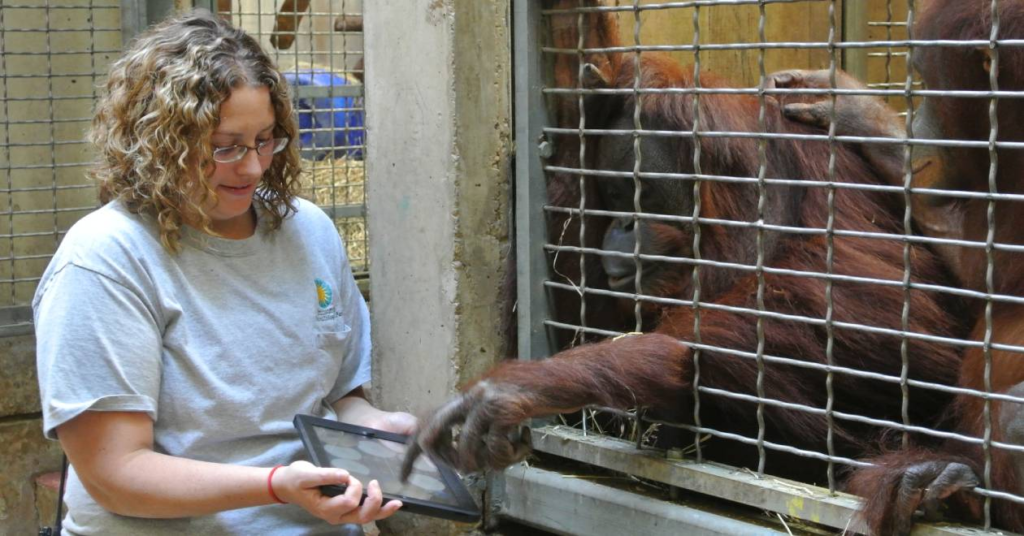
Agreement with “zoos are educational institutions that help people learn about animals” strongly predicted acceptance of zoo practices (r=0.67, p<0.001). However, actual learning outcomes appear mixed. When asked what they learned from recent zoo visits, respondents provided superficial descriptions: “different types of animals” (n=47), “animal colors and sizes” (n=32), “where animals live” (n=28). Only 8 respondents mentioned learning about conservation, and none mentioned learning about animal cognition, emotion, or welfare needs.
Educational framing dominated zoo marketing: 82% of promotional materials emphasized “learning opportunities,” “hands-on education,” and “inspiring conservation action.” Yet studies of zoo visitor learning find minimal knowledge retention and questionable attitudinal impacts.30 The education frame appears to function less as accurate description than as legitimizing narrative making exploitation comprehensible as public service. Zoo observations illustrated education framing in practice. Parents teaching children to distinguish species engaged animals as pedagogical instruments while systematically excluding ethically relevant information: severe spatial restriction (0.005% of wild ranging for elephants), behavioral pathologies, and constrained lives serving entertainment. The education narrative legitimized exploitation by reframing confinement as learning opportunity while obscuring welfare costs.
The Necessity Frame
A third narrative positions exploitation as unavoidable. Participant 3 (23, Bachelor’s, meat-eater) exemplified necessity reasoning: “Acceptability often depends on purpose and perceived necessity. Using animals in medical research to develop cancer treatments is more acceptable due to potential human benefit, whereas cosmetic testing or entertainment like circus acts may be less justifiable because they prioritize human convenience over animal welfare.”
This hierarchy (medical necessity > food > cosmetics > entertainment) appeared across many respondents. Yet the categories rest on questionable assumptions: medical research has alternatives (in vitro methods, computer modeling), food production has alternatives (plant-based diets), cosmetic testing has alternatives (already-tested ingredients). The perception of necessity appears driven by convenience and habit rather than actual lack of alternatives.
Table 2: Correlation Between Legitimizing Narratives and Acceptance
| Narrative Endorsement | Correlation with Overall Captivity Acceptance | p-value |
| “Zoos help save endangered species” | r = 0.72 | p<0.001 |
| “Zoos are educational institutions” | r = 0.67 | p<0.001 |
| “Farm animals must be confined for food security” | r = 0.58 | p<0.001 |
| “Medical research on animals is necessary” | r = 0.63 | p<0.001 |
| Trust in institutional expertise | r = 0.58 | p<0.001 |
Note: Spearman’s rho correlations. Overall Captivity Acceptance is composite score across all captivity contexts.
The Behavioral-Attitudinal Gap
The third major pattern concerned systematic contradictions between respondents’ stated values and their acceptance of specific practices. Survey data revealed widespread contradictions (see Table 3):
Table 3: Contradictions Between Stated Values and Practice Acceptance
| Stated Value | %Endorsing | % of Those Endorsing Who Accept Contradictory Practice |
| “Animals deserve to live freely without confinement” (n=168, 84%) | 84% | 58% accept zoo confinement; 57% accept farm confinement |
| “Humans should not prioritize their interests over animal welfare” animal welfare” (n=142, 71%) | 71% | 76% accept medical research; 72% accept meat and egg production |
| Report feeling “sad” or “disturbed” by caged animals (n=87, 43.5%) | 43.5% | 41% nonetheless visit zoos regularly (≥ once/2-3 years) |
Direct observation revealed how contradictions manifested behaviorally. Dairy farm visitors feeding cattle as religious “good deed” expressed satisfaction while ignoring permanent tethering in excreta. Survey data showed 84% believe animals deserve freedom, yet observed visitors perceived no contradiction. The momentary feeding act was framed as kindness while systematic confinement remained outside moral consideration. Similarly, meat purchasers selecting live animals for immediate slaughter showed no moral discomfort that survey responses suggested such involvement should generate.
Individual-level contradictions were particularly striking. Participant 4 (26, Master’s, social work student) mentioned: “Animals living in cages… suffering… exploitation, lack of voice… every living being deserves dignity, care, and the right to live freely. Zoos may claim to protect animals, but many fail to provide proper space, stimulation, or emotional well-being.” Yet they rated as acceptable: medical research on mice, cosmetic testing, dolphin shows, circus elephants, farm egg production, and cattle feedlots. They believe “modern zoos cause very little stress to animals” and “well-managed farms ensure animals don’t suffer significantly.”
This contradiction is remarkable: Participant 4 explicitly articulates that captivity causes suffering and denies dignity, yet rates nearly all forms of captivity as acceptable and believes they cause minimal stress. The disconnect suggests that abstract recognition of captivity’s harms coexists with acceptance of specific practices, mediated by legitimizing frames.
Analysis revealed that acceptance correlated strongly with institutional legitimacy. Respondents who rated statements like “zoo professionals know what is best for the animals in their care” as agree/strongly agree (n=78, 39%) showed significantly higher acceptance across all captivity categories (M=3.4, SD=0.9) compared to those rating these statements disagree/strongly disagree (M=2.1, SD=1.1), t(198)=8.7, p<0.001. This suggests that trust in institutions functions as moral outsourcing: individuals defer to institutional authority rather than evaluating practices directly.
Speciesist Hierarchies
A final pattern concerned differential moral consideration based on species and perceived similarity to humans. Acceptance ratings varied by animal type. When asked about “medical research on mice,” 61% rated it acceptable. When presented with identical research protocols using “monkeys,” only 38% rated it acceptable. Dogs in research: 24% acceptable (see Table 4).
Table 4: Differential Acceptance by Species
| Species/Context | % Rating Acceptable (3-5) Mean Acceptability | Mean Acceptability |
| Medical research on mice | 61% | 3.4 |
| Medical research on monkeys | 38% | 2.8 |
| Medical research on dogs | 24% | 2.2 |
| Circus elephants | 18% | 1.6 |
| Dairy cattle confinement | 56% | 3.1 |
Note: 5-point scale where 1=Strongly Unacceptable, 5=Strongly Acceptable. Research protocols identical across species scenarios.
This hierarchy (mice > monkeys > dogs) inversely correlates with actual cognitive sophistication but directly correlates with cultural proximity. Similarly, respondents rated circus elephants as highly unacceptable (M=1.6, SD=0.9) while rating dairy cattle confinement as moderately acceptable (M=3.1, SD=1.2), despite dairy cows experiencing comparable or greater welfare harms. Participant 5 (26, Master’s, meat-eater) made this explicit: “If animals like mice are getting used, who don’t add any value to nature and mostly destructive in nature, then I think it is acceptable to use such animals. I do have some biases for different animals.” This acknowledgment of “bias” based on perceived “value to nature” reveals that moral consideration tracks cultural narratives about species worth rather than sentience or capacity to suffer.
eceived critical coverage in 43% of analyzed articles, focusing on “majestic creatures suffering in chains.” Chicken captivity received critical coverage in 8% of articles, with dominant frames emphasizing food production efficiency. Coverage frequency per individual animal differed by orders of magnitude: approximately 1 article per 10 elephants in captivity versus 1 article per 10 million chickens in captivity. Roadside observations illustrated hierarchies in immediate proximity. Stray dogs moved freely and received public feeding, praised as compassionate. Within meters, chickens in stacked wire cages and tethered goats received no concern from the same pedestrians. Meat customers selected chickens for slaughter without observable discomfort, yet would likely experience profound distress if asked to treat dogs identically. This differential consideration occurred within identical spatial context, demonstrating moral concern tracked species category rather than welfare or sentience.
Comparative Case Study Observations
Direct observations across four captivity contexts revealed how institutional framing shapes public engagement with confined animals, validating the context-dependent evaluation patterns identified in survey and interview data.
Metropolitan Zoo (Bhopal Zoo)
Visitor engagement centered on recreation and education while animal welfare remained invisible. Parents explained several characteristics of animals to children, distinguishing lions from tigers, comparing pythons to vipers, framing animals as pedagogical objects rather than confined beings.
Photography dominated behavior. Approximately 73% of observed visitors (estimated n=400) photographed animals, transforming them into aesthetic objects. Visitors expressed satisfaction with “good shots,” with photographic success rather than animal welfare determining visit quality. Zoo visits functioned as leisure activity, with overheard conversations referencing “break from routine” or “family outing.”
Animal confinement rarely prompted concern. Elephants exhibited stereotypic swaying in enclosures measuring 0.005% of wild ranging areas, yet no observed visitors commented on restricted space. Tigers paced repetitively, indicating chronic stress, yet visitors photographed this as “active” behavior. The institutional setting neutralized moral salience.
Aquariums
Aquarium patterns paralleled zoos with greater aesthetic focus. Visitors discussed species diversity while tank size and behavioral stress indicators received no attention. When one child asked, “Are they happy here?” the parent responded, “Yes, they have everything they need“- an assertion made without knowledge of species requirements.
Containment was aestheticized through theatrical lighting and decorative elements, inviting consumption of confined animals as living art. No observed visitors questioned whether bounded tanks constituted acceptable conditions.
Dairy Farms
Farm observations revealed a stark disconnect between stated values (84% believe animals deserve freedom) and accepted practices. Animals were tethered in accumulated excreta with dense fly populations and minimal space.
Visitors feeding animals confined in dairy farms framed this as religious “good deed” (punya), expressing satisfaction while ignoring continuous confinement. One woman stated, “I feel good feeding them“, temporary provision overshadowing permanent confinement.
One facility employed khaal baccha (stuffed calf hide) to stimulate milk letdown, exploiting maternal bonding. No visitors commented. Daily customers purchasing milk focused solely on transaction: price, quantity, quality, with animal conditions irrelevant to decisions.
Roadside Animal Markets and Butcher Shops
Chickens were confined in stacked wire cages; goats tethered without shade. Passersby walked past daily, with confinement functioning as an ordinary streetscape.
Customers selected live animals, observed slaughter, and received fresh meat within minutes. One customer told the butcher, “Make it fresh” while pointing to a live chicken, euphemizing killing as preparation service. This direct participation in killing was framed as normal commerce.
Pedestrian behavior revealed normalization: school children walked past caged chickens without notice; vegetarians passed by without comment. Yet these same streetscapes included stray dogs receiving public feeding and social praise. Chickens experiencing objectively worse conditions within meters received no comparable concern.
Cross-Context Patterns
Three patterns emerged consistently. First, institutional framing determined moral perception more than welfare conditions. Zoo animals exhibiting stress were educational exhibits; farm animals in filth were charitable beneficiaries when fed; market animals were commercial products.
Second, human satisfaction took precedence over animal welfare. Zoo visitors derived satisfaction from photography; dairy customers from religious giving; meat customers from fresh products. These satisfactions appeared to justify animal treatment.
Third, visibility did not ensure moral salience. Farm conditions were plainly visible yet did not prompt concern. Market animals were continuously visible yet did not generate attention. This suggests normalization operates not through hiding exploitation but through conditioning perception such that visible exploitation becomes unremarkable.
Ethical Analysis: Captivity as Moral Infrastructure
Having documented empirical patterns of context-dependent reasoning, legitimizing narratives, and behavioral-attitudinal gaps, we now analyze their ethical significance. The central argument is that captivity functions as moral infrastructure: it systematically conditions perception in ways that make exploitation cognitively and affectively manageable, even for individuals who are concerned for animals.
Captivity as Moral Conditioning
The patterns documented above indicate that captivity operates as a form of moral conditioning (the gradual habituation to accepting as normal what might initially prompt ethical concern). Three mechanisms appear particularly significant.
Habituation Through Repetition: Finding that frequent zoo visitors demonstrate higher acceptance of captivity across contexts (r=0.43, p<0.001) supports this mechanism. Each visit to a zoo, each purchase of animal products from confined animals, each encounter with captivity presented as unremarkable, incrementally normalizes the sight of caged beings. Importantly, this habituation is not merely desensitization to suffering but normalization of domination.
Legitimizing Narratives as Cognitive Scaffolding: Data demonstrate that institutional narratives (conservation, education, necessity) function as cognitive frameworks allowing individuals to accept practices that would otherwise violate their values. Participant 7 ‘s statement exemplifies how necessity framing neutralizes moral concern: “I would want cancer treatments to develop, and if it’s being tested on animals, while I might not like it, I may not really oppose.”
The conservation narrative reframes captivity as rescue, obscuring that most zoo animals are not endangered, not rescued from threats, and not candidates for reintroduction.31The education narrative claims pedagogical value justifying confinement, yet evidence suggests minimal learning outcomes that could not be achieved through non-captive methods.32These narratives function not as accurate descriptions but as moral technology: they provide stories making exploitation psychologically tolerable.
Case studies demonstrate how conditioning operates through normalized exposure. Roadside markets position extreme confinement and visible slaughter as ordinary streetscape. School children pass caged chickens daily; customers participate in killing framed as commerce. Zoo visitors encounter animals in distress within infrastructure presenting this as education. Dairy customers see tethered cattle within religious framework presenting feeding as virtue. Repetition is crucial: single exposure might prompt discomfort, but regular encounters habituate perception such that exploitation becomes environmental background rather than moral foreground.
Institutional Authority as Moral Outsourcing: Our finding that trust in institutional expertise correlates strongly with acceptance of exploitation (r=0.58, p<0.001) suggests individuals defer moral judgment to authorities. Zoos, farms, laboratories, and aquariums function as moral authorities, claiming specialized knowledge justifying their practices. This deference is particularly troubling given that institutional incentives often conflict with animal welfare.
Structural Speciesism
The findings illuminate how speciesism operates not merely as individual prejudice but as structural feature of human-animal relations. The dramatic variation in acceptability ratings based on institutional context (identical confinement rejected in circuses but accepted in zoos) reveals that moral consideration is assigned based on social framing rather than morally relevant characteristics.
Structurally, captivity institutions create categories (“zoo animals,” “farm animals,” “laboratory animals”) that override species-specific characteristics. A chimpanzee in a zoo is evaluated as “zoo animal” (education/conservation) rather than as chimpanzee (highly intelligent, social, wide-ranging). This categorical thinking demonstrates structural speciesism: social structures, not individual animals’ characteristics, determine moral status.
The differential concern across species (mice < monkeys < dogs; chickens < pigs < elephants) reveals hierarchies tracking cultural proximity rather than capacity to suffer. This hierarchy is not accidental but systematically maintained through institutional practices and cultural representations. Different captivity industries maintain these hierarchies through visibility management. Companion animals remain visible in human spaces, generating familiarity and concern. Farm animals are hidden in rural facilities, spatially separated from moral attention, and roadside caged animals being treated as raw materials of potential food.
The Substitution Test: Revealing Normalized Exploitation
Case studies suggest a simple test for identifying normalized exploitation: substitution. If replacing the confined animal with a human child would provoke immediate moral outrage, yet the actual situation provokes no response, normalization has occurred. Pedestrians passed chickens in extreme confinement and tethered goats without concern. Yet if a human child were confined comparably along the same roadside, passersby would certainly intervene. The difference reflects learned differential consideration, not capacity to suffer. Similarly, customers participating in chicken slaughter would experience profound distress if asked to kill dogs or cats. The ease with which customers selected live chickens for killing reveals how thoroughly killing has been normalized for certain species categories.
The Illusion of Benevolent Captivity
A central ethical finding concerns termed as the “illusion of benevolent captivity”: the widespread belief that domination can be transformed into care through improved conditions. This illusion appeared repeatedly: respondents distinguished “good” zoos from “bad” zoos, “humane” farms from “factory” farms, “justified” research from “unnecessary” testing.
Philosophically, this position faces several problems. First, as Jamieson argues, even optimal captivity wrongs animals by denying liberty (a basic interest independent of welfare conditions).33 Second, the “humane” captivity claim obscures that confinement itself produces welfare harms that cannot be eliminated through improved conditions. Third, the benevolent captivity frame inverts the moral situation: it positions human intervention as benefit rather than harm, rescue rather than exploitation.
A finding that respondents endorsed conservation narratives while accepting captivity of non-endangered animals demonstrates this inversion. The frame allows individuals to conceptualize themselves as helpers while participating in harmful practices. This is not probably a false belief but moral distortion: it prevents recognition of captivity as domination by framing domination as care.
Empathy Erosion
One of the findings that frequent captivity exposure correlates with reduced moral concern suggests captivity may systematically erode empathy. This finding has significant ethical implications, as empathy is widely considered crucial for moral motivation, particularly regarding suffering beings who cannot verbally advocate for themselves.34
The mechanism appears to involve dissociation: repeated exposure to suffering that one cannot or will not prevent may prompt psychological distancing as a defensive strategy. Respondents describing zoo animals as “looked healthy” despite stereotypic behaviors, or farm animals as “not suffering significantly” despite confinement, may be engaging not in empirical assessment but in psychological self-protection. Acknowledging suffering while continuing to participate in its production creates cognitive dissonance; denying suffering resolves this dissonance.35
Implications and Alternative Approaches
Analysis suggests two complementary approaches: structural reform to reduce captivity’s scope, and cultural transformation to shift moral perception.
Structural Reforms
Several institutional reforms could reduce captivity’s normalizing effects while addressing welfare concerns. True sanctuaries (facilities providing lifetime care for animals who cannot survive in the wild) differ fundamentally from zoos. Sanctuaries prioritize animal welfare over public access, refuse breeding, and do not acquire animals from wild populations.36 Transitioning existing zoos toward sanctuary models would reduce captivity’s scope while maintaining care for currently captive animals.
Ending breeding programs except for legitimate conservation with documented reintroduction plans would allow gradual reduction of captive populations. Mandatory reporting on animal welfare indicators, mortality rates, and stereotypic behaviors would increase accountability. Our finding that institutional trust correlates with acceptance suggests that transparency about welfare problems might reduce uncritical deference to authority.
Current regulations permit welfare-compromising practices. Standards requiring space provisions matching species-specific ranging needs, social group complexity, and environmental enrichment approaching natural conditions would eliminate most current captivity as unfeasible. Ag-gag laws preventing farm documentation exemplify structural opacity enabling exploitation. Mandatory transparency (facility tours, welfare monitoring) would make exploitation visible, potentially increasing moral salience.
Case observations reinforce transparency’s importance. Dairy customers purchasing milk remained unaware of conditions visible meters away: tethering in excreta, fly populations, khaal baccha exploiting maternal bonding. This suggests mere physical visibility is insufficient; normalization allows individuals to not see what is plainly visible. Mandatory welfare reporting and facility tours might increase moral salience by forcing explicit attention to facts current infrastructure allows individuals to ignore.
Cultural Transformation
Structural reforms alone are insufficient without cultural shifts in how animals are perceived and valued. The data showed that education justifications dominate zoo defenses, yet educational goals can be achieved through non-exploitative means. Investment in high-quality wildlife documentaries, virtual reality wildlife experiences, sanctuary visits, and wildlife observation programs could provide educational benefits without captivity’s moral costs.37
Current conservation discourse often presents captivity as a solution to endangerment. Alternative narratives emphasizing habitat protection, exploitation reduction, and coexistence would shift focus from confining animals to addressing exploitation’s root causes. Following animal ethics scholarship’s emphasis on language’s role in shaping perception,38terminological shifts could increase moral salience: replacing “collection” with “confinement,” “exhibit” with “imprisoned animal,” “euthanasia” with “killing.” Such language makes exploitation visible rather than euphemizing it.
Media literacy education could help individuals critically evaluate institutional claims. Teaching that conservation narratives often misrepresent practices, that education justifications require empirical verification, and that necessity claims should be assessed against alternatives, could reduce uncritical acceptance of legitimizing frames.
This study investigated whether exposure to captive animals systematically conditions human moral perception in ways that normalize exploitation. Through analysis of survey data (n=200),
qualitative interviews (n=44), comparative case studies, and media content analysis, it has demonstrated three interconnected findings:
First, exposure to institutionalized captivity correlates with broader acceptance of animal exploitation across multiple contexts. Individuals who regularly visit zoos demonstrate higher acceptance not only of zoo captivity but of farm animal confinement, laboratory use, and other exploitative practices. This pattern suggests that captivity’s normalizing effects extend beyond specific settings, conditioning general acceptance of animal exploitation.
Second, this normalization operates through predictable psychological and social mechanisms. Legitimizing narratives (conservation, education, necessity) provide cognitive frameworks making exploitation comprehensible as stewardship. Context-dependent moral evaluation allows identical welfare conditions to be judged acceptable or unacceptable based on institutional framing rather than animal experience. Moral outsourcing to institutional authority replaces direct ethical evaluation with deference to expertise claims.
Third, these patterns reveal captivity’s function as moral infrastructure. Captivity does not merely confine animal bodies but conditions human perception, making exploitation cognitively and affectively manageable. Through repeated exposure, legitimizing narratives, and institutional mediation, captivity habituates individuals to accept domination as normal, necessary, or even beneficial.
The findings carry significant implications for animal ethics. Theoretically, they demonstrate how speciesism operates not merely as explicit ideology but as embedded practice reproduced through ordinary encounters with institutionalized animal bodies. Methodologically, they show how empirical research can substantiate philosophical arguments about moral perception and structural violence. Practically, they suggest that challenging exploitation requires not only critiquing specific practices but transforming the perceptual conditions that make exploitation seem acceptable.
The ethical stakes are substantial. If captivity systematically erodes moral concern for animals, then every zoo visit, every purchase of products from confined animals, every acceptance of exploitation as necessary, contributes to reproducing the conditions enabling exploitation to continue. Yet if conditioning can normalize violence, counter-conditioning might cultivate concern. Projects representing animal individuality, advocacy challenging legitimizing narratives, transparency revealing welfare harms, and institutional reforms reducing captivity’s scope could shift perceptual conditions.
Animals confined in zoos, farms, laboratories, and aquariums testify through their stereotypic behaviors, compromised health, and diminished lives. Our responsibility is not merely to improve conditions of their confinement but to question why confinement seems acceptable. This study has attempted to illuminate how captivity conditions conscience (how seeing caged
animals repeatedly makes caging animals seem normal). The ethical task now is counter-conditioning: cultivating perception that recognizes exploitation as exploitation, that refuses to call domination care, and that insists on liberty for beings who, like us, have lives to live.
Bibliography
- Bandura, Albert. “Moral Disengagement in the Perpetration of Inhumanities.” Personality and Social Psychology Review 3, no. 3 (1999): 193-209.
- Bastian, Brock, Steve Loughnan, Nick Haslam, and Helena R. M. Radke. “Don’t Mind Meat? The Denial of Mind to Animals Used for Human Consumption.” Personality and Social
- Psychology Bulletin 38, no. 2 (2012): 247-256.
- Bradshaw, G. A., and Lorin Lindner. “Post-Traumatic stress in elephants in captivity.” Retrieved December 4 (2009): 2009.
- Braun, Virginia, and Victoria Clarke. “Using Thematic Analysis in Psychology.” Qualitative Research in Psychology 3, no. 2 (2006): 77-101.
- Carey, Susan. Conceptual Change in Childhood. Cambridge, MA: MIT Press, 1985.
- Caviola, Lucius, Jim A. C. Everett, and Nadira S. Faber. “The Moral Standing of Animals: Towards a Psychology of Speciesism.” Journal of Personality and Social Psychology 116, no. 6 (2019): 1011-1029.
- Charmaz, Kathy. Constructing Grounded Theory. 2nd ed. London: Sage, 2014.
- Cialdini, Robert B. “Descriptive Social Norms as Underappreciated Sources of Social Control.” Psychometrika 72, no. 2 (2007): 263-268.
- Creswell, John W., and Vicki L. Plano Clark. Designing and Conducting Mixed Methods Research. 3rd ed. Los Angeles: Sage, 2018.
- Dunayer, Joan. Animal Equality: Language and Liberation. Derwood, MD: Ryce Publishing, 2001.
- Festinger, Leon. A Theory of Cognitive Dissonance. Stanford, CA: Stanford University Press, 1957.
- Francione, Gary L. Animals, Property, and the Law. Philadelphia: Temple University Press, 1995.
- Marris, Emma. “Modern Zoos Are Not Worth the Moral Cost.” International New York Times (2021)
- Gruen, Lori. Entangled Empathy: An Alternative Ethic for Our Relationships with Animals. New York: Lantern Books, 2015.
- Haslam, Nick, and Steve Loughnan. “Dehumanization and infrahumanization.” Annual review of psychology 65, no. 1 (2014): 399-423.
- Jamieson, Dale. “Against Zoos.” In In Defense of Animals, edited by Peter Singer, 108-117. Oxford: Basil Blackwell, 1985.
- Kymlicka, Will, and Sue Donaldson. Zoopolis: A Political Theory of Animal Rights. Oxford: Ritesh Singh
- Oxford University Press, 2011.
- Braverman, Irus. “Naturalizing Zoo Animals.” In The Animals Reader: The Essential Classic and Contemporary Writings, edited by Linda Kalof and Amy Fitzgerald, 2nd ed. London: Routledge, 2021.
- Leddon, Erin M., Sandra R. Waxman, and Douglas L. Medin. “Unmasking “alive”: Children’s appreciation of a concept linking all living things.” Journal of Cognition and Development 9, no. 4 (2009): 461-473.
- Loughnan, Steve, Brock Bastian, and Nick Haslam. “The Psychology of Eating Animals.” Current Directions in Psychological Science 23, no. 2 (2014): 104-108.
- Marino, Lori, Scott O. Lilienfeld, Randy Malamud, Nathan Nobis, and Ron Broglio. “Do Zoos and Aquariums Promote Attitude Change in Visitors? A Critical Evaluation of the American Zoo and Aquarium Study.” Society & Animals 18, no. 2 (2010): 126-138.
- Mason, Georgia J., and Nicholas R. Latham. “Can’t Stop, Won’t Stop: Is Stereotypy a Reliable Animal Welfare Indicator?” Animal Welfare 13, no. S1 (2004): 57-69.
- Midgley, Mary. Animals and Why They Matter. Athens: University of Georgia Press, 1984.
- Moss, Andrew, Eric Jensen, and Markus Gusset. “Evaluating the Contribution of Zoos and Aquariums to Aichi Biodiversity Target 1.” Conservation Biology 29, no. 2 (2015): 537-544.
- Nordgren, Linda F., Kasia Banas, and Geoff MacDonald. “Empathy Gaps for Social Pain: Why People Underestimate the Pain of Social Suffering.” Journal of Personality and Social Psychology 100, no. 1 (2011): 120-128.
- Pachirat, Timothy. Every Twelve Seconds: Industrialized Slaughter and the Politics of Sight. New Haven: Yale University Press, 2011.
- Regan, Tom. The Case for Animal Rights. Berkeley: University of California Press, 1983.
- Ross, Stephen R., and Katherine L. Gillespie. “Influences on Visitor Behavior at a Modern Immersive Zoo Exhibit.” Zoo Biology 28, no. 5 (2009): 462-472.
- Schwandt, Thomas A. Dictionary of Qualitative Inquiry. 2nd ed. Thousand Oaks, CA: Sage, 2001.
- Singer, Peter. Animal Liberation. Updated ed. New York: Harper Perennial, 2009. Thompson, Richard F., and William A. Spencer. “Habituation: A Model Phenomenon for the Study of Neuronal Substrates of Behavior.” Psychological Review 73, no. 1 (1966): 16-43.
- Midgley, Mary. Animals and Why They Matter. Athens: University of Georgia Press, 1984.
↩︎ - Dale Jamieson, “Against Zoos,” in In Defense of Animals, ed. Peter Singer (Oxford: Basil Blackwell, 1985), 108-117; Tom Regan, The Case for Animal Rights (Berkeley: University of California Press, 1983); Gary L. Francione, Animals, Property, and the Law (Philadelphia: Temple University Press, 1995).
↩︎ - Albert Bandura, “Moral Disengagement in the Perpetration of Inhumanities,” Personality and Social Psychology Review 3, no. 3 (1999): 193-209.
↩︎ - Will Kymlicka and Sue Donaldson, Zoopolis: A Political Theory of Animal Rights (Oxford: Oxford University Press, 2011), 156-187.
↩︎ - Dale Jamieson, “Against Zoos,” 110-112.
↩︎ - Lori Gruen, Entangled Empathy: An Alternative Ethic for Our Relationships with Animals (New York: Lantern Books, 2015), 73-89.
↩︎ - Gary L. Francione, Animals, Property, and the Law, 34-50.
↩︎ - Tom Regan, The Case for Animal Rights, 324-329.
↩︎ - Georgia J. Mason and Nicholas R. Latham, “Can’t Stop, Won’t Stop: Is Stereotypy a Reliable Animal Welfare Indicator?” Animal Welfare 13, no. S1 (2004): 57-69.
↩︎ - Lori Marino et al., “Do Zoos and Aquariums Promote Attitude Change in Visitors? A Critical Evaluation of the American Zoo and Aquarium Study,” Society & Animals 18, no. 2 (2010): 126-138.
↩︎ - Stephen R. Ross and Katherine L. Gillespie, “Influences on Visitor Behavior at a Modern Immersive Zoo Exhibit,” Zoo ↩︎
- Timothy Pachirat, Every Twelve Seconds: Industrialized Slaughter and the Politics of Sight (New Haven: Yale University Press, 2011), 23-41.
↩︎ - Richard F. Thompson and William A. Spencer, “Habituation: A Model Phenomenon for the Study of Neuronal Substrates of Behavior,” Psychological Review 73, no. 1 (1966): 16-43.
↩︎ - Robert B. Cialdini, “Descriptive Social Norms as Underappreciated Sources of Social Control,” Psychometrika 72, no. 2 (2007): 263-268.
↩︎ - Albert Bandura, “Moral Disengagement in the Perpetration of Inhumanities,” 193-209.
↩︎ - Linda F. Nordgren, Kasia Banas, and Geoff MacDonald, “Empathy Gaps for Social Pain: Why People Underestimate the Pain of Social Suffering,” Journal of Personality and Social Psychology 100, no. 1 (2011): 120-128.
↩︎ - Peter Singer, Animal Liberation, updated ed. (New York: Harper Perennial, 2009), 6-9.
↩︎ - Lucius Caviola, Jim A. C. Everett, and Nadira S. Faber, “The Moral Standing of Animals: Towards a Psychology of Speciesism,” Journal of Personality and Social Psychology 116, no. 6 (2019): 1011-1029.
↩︎ - Nick Haslam and Steve Loughnan, “Dehumanization and Infrahumanization,” Annual Review of Psychology 65 (2014): 399-423.
↩︎ - Steve Loughnan, Brock Bastian, and Nick Haslam, “The Psychology of Eating Animals,” Current Directions in Psychological Science 23, no. 2 (2014): 104-108.
↩︎ - Brock Bastian et al., “Don’t Mind Meat? The Denial of Mind to Animals Used for Human Consumption,” Personality and Social Psychology Bulletin 38, no. 2 (2012): 247-256.
↩︎ - Susan Carey, Conceptual Change in Childhood (Cambridge, MA: MIT Press, 1985), 78-94.
↩︎ - Leddon, Erin M., Sandra R. Waxman, and Douglas L. Medin. “Unmasking “alive”: Children’s appreciation of a concept linking all living things.” Journal of Cognition and Development 9, no. 4 (2009): 461-473.
↩︎ - Lucius Caviola, Jim A. C. Everett, and Nadira S. Faber, “The Moral Standing of Animals,” 1011-1029. 25 John W. Creswell and Vicki L. Plano Clark, Designing and Conducting Mixed Methods Research, 3rd ed. (Los Angeles: Sage, 2018), 45-71.
↩︎ - John W. Creswell and Vicki L. Plano Clark, Designing and Conducting Mixed Methods Research, 3rd ed. (Los Angeles: Sage, 2018), 45-71.
↩︎ - Thomas A. Schwandt, Dictionary of Qualitative Inquiry, 2nd ed. (Thousand Oaks, CA: Sage, 2001), 119-120.
↩︎ - Virginia Braun and Victoria Clarke, “Using Thematic Analysis in Psychology,” Qualitative Research in Psychology 3, no. 2 (2006): 77-101.
↩︎ - Kathy Charmaz, Constructing Grounded Theory, 2nd ed. (London: Sage, 2014), 126-161.
↩︎ - Marris, Emma. “Modern Zoos Are Not Worth the Moral Cost.” International New York Times (2021)
↩︎ - Andrew Moss, Eric Jensen, and Markus Gusset, “Evaluating the Contribution of Zoos and Aquariums to Aichi Biodiversity Target 1,” Conservation Biology 29, no. 2 (2015): 537-544.
↩︎ - Braverman, Irus. “Naturalizing Zoo Animals.” In The Animals Reader: The Essential Classic and Contemporary Writings, edited by Linda Kalof and Amy Fitzgerald, 2nd ed. London: Routledge, 2021.
↩︎ - Lori Marino et al., “Do Zoos and Aquariums Promote Attitude Change in Visitors?” 135-136.
↩︎ - Dale Jamieson, “Against Zoos,” 111-113.
↩︎ - Lori Gruen, Entangled Empathy, 31-52.
↩︎ - Leon Festinger, A Theory of Cognitive Dissonance (Stanford, CA: Stanford University Press, 1957), 93-106. ↩︎
- Bradshaw, G. A., and Lorin Lindner. “Post-Traumatic stress in elephants in captivity.” Retrieved December 4 (2009): 2009.
↩︎ - Dale Jamieson, “Against Zoos,” 116.
↩︎ - Joan Dunayer, Animal Equality: Language and Liberation (Derwood, MD: Ryce Publishing, 2001), 11-23.
↩︎
Author

About the Author