
https://images.indianexpress.com/2021/07/leopard-3.jpg?w=1200
Introduction
“Human Animal Conflict is always been a challenging reality of co-existence.”
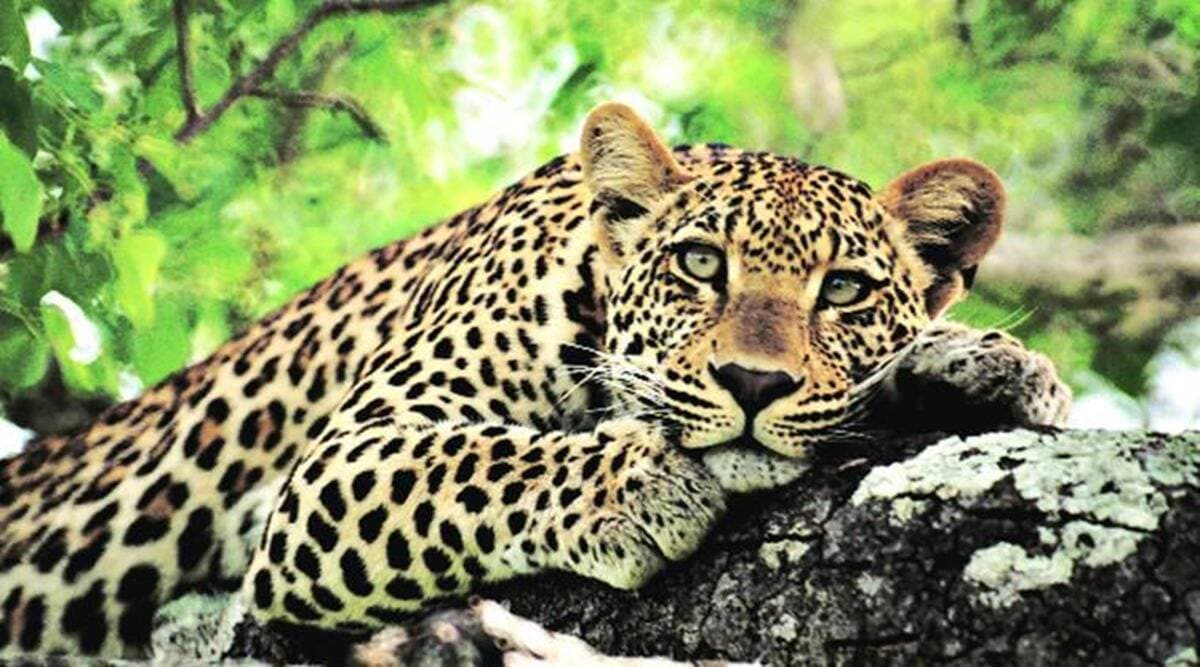
There has been an increase in human animal conflict in India in the last few decades. India has witnessed a significant increase in incidents involving wild animals entering human civilizations. In this conflict Asian Elephants, Tigers & Common Leopards are considered the most conflicting species among all causing the most damage to human lives, livestock and properties. But in these three conflicting species Common leopards stands out due to its increasing presence in the semi – urban and rural areas of India. Human Leopard conflict is always been a major issue in India, majorly in the state of Maharashtra, Karnataka and Uttarakhand where leopard population is relatively high as compared to other states in India.
In this study we will be focusing mainly on the issue of Human Leopard Conflict which is aggressively increasing in the state of Maharashtra. Leopards being the most evasive and adaptable big cats and their unique ability unlike other wild animals to thrive in a wide range of habitats has resulted in their coexistence with humans in various parts of India. With rapid destruction of leopard’s natural habitat in the making of human settlements, agriculture, infrastructure and massive growth in human population has some where forced the wild life to enter in human settlements in search of their basic needs and come in contact with humans.
Maharashtra is one of the leading states in India experiencing escalating leopard-human conflict. Districts such as Pune, Nashik, Junnar, Ahmednagar, and Thane have reported numerous cases where leopards have been sighted near human settlements, agricultural fields, and even peri-urban environments. Unlike tigers and elephants, which require vast habitats, leopards are highly flexible in their choice of prey and environment. This adaptability enables them to survive in fragmented landscapes, often bringing them into close proximity with humans.
The rise in such encounters is not simply a wildlife management issue—it reflects broader environmental challenges including rapid urbanization, habitat fragmentation, agricultural expansion, and declining natural prey availability. Public perception of leopards ranges from fear and hostility to cultural reverence, making the conflict itself deeply social and psychological, not merely physical.
Aim of the study
This study explores whether the current leopard-human dynamic in Maharashtra represents conflict or coexistence. Through an analysis of recorded cases, government and NGO reports, legal provisions, and community responses, this project seeks to understand patterns, causes, and mitigation approaches. Ultimately, the aim is to examine how Maharashtra can move towards sustainable coexistence, reducing harm to both human communities and wildlife while fostering compassionate, science-based conservation strategies.
Why Are Leopards Entering Human Areas?
As we see in the news almost twice or thrice, we get to hearing about a leopard attack in some area mainly rural areas and this trend is closely linked with the ecological changes happening around us.
Human Settlements
One of the major reason is cutting down of the forests which are the natural habitat of the wild animals. Leopards which once used to roam in the vast forest landscapes, now find them navigating in smaller and disconnected areas which are often surrounded by human settlements. As humans move closer to forests and as cities expand outwards, the buffer zone between wild life and humans has gradually disappeared. What used to be leopard territory gradually becomes shared space. This proximity increases the chances of encounters, especially in peri urban areas such as Pune, Nashik, and Mumbai outskirts.
Adaptable nature of leopards
However, unlike other wildlife animals such as tigers, leopards show their remarkable to adapt with various landscapes. This adaptability makes them one of the few large carnivores that can coexist with humans—at least ecologically, if not socially.
Decreasing prey population in the forests
Leopards mainly rely on natural prey such as deer, wild boar and monkeys for their survival. However, with the loss of their natural habitats and decrease in their natural prey has led leopards to enter into the human settlements in search of foods which is a basic necessity of any living being, which has made them more vulnerable to human conflicts.
Easy availability of prey in Human settlements
A main and final ecological driver is the abundance of easy prey in human settlements. Large populations of stray dogs, pigs, poultry, etc create an easy food supply for the leopards. In many regions, dogs form up to 40–60% of a leopard’s diet in human-dominated landscapes. When food is readily available outside forests and harder to find inside due to prey decline, leopards follow the most energy-efficient survival path—toward human spaces.
Poor waste management
The increasing and easy availability of food waste dumped in the open spaces is making this areas more appealing to this animals who are roaming in search for some food.
Some of the attacks on people by leopards in some states of India
According to the latest survey there are around 3,800 leopards in the forest’s of Maharashtra, but the number living in the sugarcane fields remains unknown. Pune district officials estimate there are around 2,000 leopards in sugarcane fields.
Some of the recent leopard attacks
Nagpur residential attack — 7 people injured (Dec 2025)
A leopard entered a populated area in Pardi, Nagpur on the morning of 10th December 2025 and attacked the residents. Leaving seven people seriously injured before the forest department sedated and captured the animal.
Raigad / Nagav village attack
In Raigad’s Nagav village, a leopard attacked several villagers, including 5 members of the rescue team. Forest teams are actively trying to capture the animal.
Pune district – Leopard attacks & deaths
In Shirur &Pimparkhed villages (Pune) there were repeated fatal attacks, including the death of a 13-year-old boy on 2nd November 2025 which sparked strong protests from the villagers. The forest department issued order to capture or eliminate the man eater leopard involved.
Case Study
Key Leopard–Human Interaction Incidents in Maharashtra
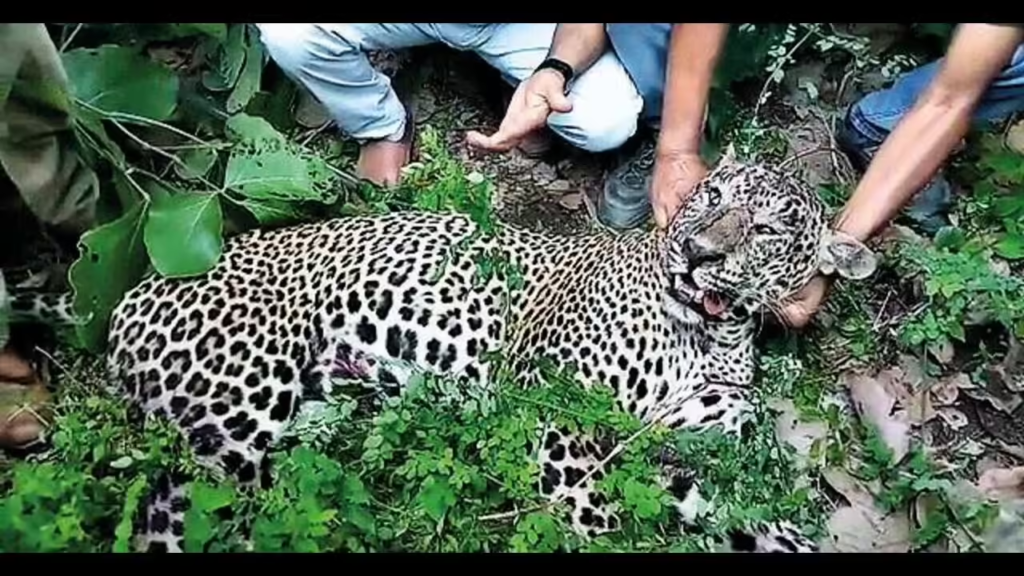
Maharashtra has witnessed several notable leopard–human interaction events in recent years that demonstrate the complex challenges of coexistence in expanding urban and semi-urban landscapes. Three incidents—Pune’s Bavdhan sighting, the Aarey Colony cases in Mumbai, and the Nashik Peth Road rescue—highlight how ecological pressures, human behavior, and urban growth shape the conflict narrative.
Pune’s Bavdhan area (2024)
CCTV footage of a leopard walking near residential buildings went viral, triggering widespread panic. Large crowds gathered at the site, obstructing the forest department’s efforts. Although the leopard did not harm anyone, the situation became risky mainly due to crowd pressure and uncontrolled movement of people. This incident illustrates that even non-aggressive leopard sightings can turn dangerous when public fear and curiosity overwhelm rescue protocols.
Aarey Colony, Mumbai
Leopard sightings are common because the region acts as a buffer between Sanjay Gandhi National Park and residential pockets. A notable incident in 2023 involved the leopard attacking a child, which led to intense public concern. Investigations later showed that high stray dog populations and abundant open garbage attracted leopards closer to homes. The forest department responded with camera traps, increased patrolling, and long-term awareness campaigns. This case emphasizes how unmanaged urban ecosystems—stray dogs and waste—create predictable patterns of leopard movement and elevate conflict risk.
The Nashik Peth Road incident (2022)
Further reveals the consequences of poor crowd management. A leopard entered a shop and, frightened by honking vehicles and hundreds of people trying to record videos, accidentally injured several individuals while attempting to escape. The rescue team eventually tranquilized the leopard after hours of difficulty. Here, the conflict was not driven by predatory behavior but by extreme human disturbance and noise. Collectively, these incidents show that most leopard–human conflicts in Maharashtra are preventable and arise primarily from human-created conditions—habitat encroachment, unmanaged prey (stray dogs), improper waste disposal, and crowd panic. Understanding these patterns is essential for designing effective coexistence strategies that protect both people and wildlife.
Legal Framework Governing Leopard–Human Conflict in Maharashtra
The legal framework for managing leopard-human conflict in Maharashtra is grounded in India’s broader wildlife protection laws, environmental regulations, and state-specific policies. These laws collectively aim to protect wildlife populations while ensuring human safety, regulating forest use, and providing mechanisms for compensation and conflict mitigation.
Wildlife Protection Act, 1972
The Wildlife (Protection) Act, 1972 (WPA) is the principal legislation governing wildlife conservation in India. Leopards (Panthera Pardus Fusca) are listed under Schedule I, the highest level of protection.
Key provisions relevant to conflict situations
Strict Protection (Section 9)
Hunting, capturing, or harming a leopard is prohibited. Killing is allowed only under Section 11 when an animal becomes a danger to human life.
Declaration of ‘Problem Animal’ (Section 11)
The Chief Wildlife Warden may permit the capturing or eliminating of a leopard only after scientific assessment proves it is a threat. This prevents arbitrary killing.
Protected Areas (Sections 18–35)
Establishes sanctuaries and national parks that serve as leopard habitats.
Penalties (Section 51)
Illegal killing or trade of a leopard carries imprisonment of 3–7 years and fines up to ₹25,000 or more (as amended).
Framework Guidelines for Managing Human–Leopard Conflict in Coexistence Areas
Habitat & Landscape Management
Maintain and restore natural forest patches to reduce leopard movement into human spaces. Prevent fragmentation by regulating construction near forest edges. Create safe wildlife corridors connecting forest patches to reduce accidental dispersal into villages. Manage invasive plant species that reduce prey populations and force leopards towards livestock.
Awareness Generation & Involvement of People
Modern practices in wildlife conservation have the involvement of all the stakeholders in implementation & planning of conflict mitigation measures to muster greater support & cooperation from people. Awareness programmes should target the people sharing space with leopards, in human dominated landscapes like sugarcane fi elds, tea gardens, fruit orchards, etc.
Establishment of Emergency Response Mechanism
Immediate responses are very important to manage all the conflict situations. The protocol for Emergency Response should be periodically rehearsed and reviewed to incorporate corrective measures to make it more efficient.
Management of Crowd
Crowd management is also an important point in any successful animal rescue operation. The area should be covered with barricades and the public should be alerted through the public address system. Regular updates should be made available to the administration and local public. There should be an ambulance kept ready to take care of any medical emergencies.
Management of Animal
The objective should be to give the animal enough space and opportunity to return to its habitat, and situation-specific rescue measures should be followed. The best method of dealing with a wild cat, in the absence of attacks on humans, is not to intervene.
Following steps are prescribed to deal with different situations.
• Semi-confined.
• Animal Confined in a Closed Area
Capturing & Handling of the Trapped Animal
Captured leopards should not be put on display after capture. Such unintended forced close contact with humans may alter the behaviour of captured animals with highly adverse consequences following their release.
Release or Translocation of Captured Leopards
The decision to capture an animal should be the last option. It is very important that human intervention is restricted to the minimum to avoid future conflict. If the captured leopard is to be released, it should be in the immediate vicinity of capture, i.e., within the animal’s home range. A translocated leopard trying to navigate to its home territory through a dense human landscape may lead to increased incidences of conflicts rather than reducing the same. Therefore, it is best to avoid translocation.
Monitoring of Translocated Leopards
The success of translocation or release of leopard has to be measured and evaluated against appropriate post-release monitoring protocols. Individual identity of all the released animals should be monitored by marking them with microchips and ear tags or colour coded collars before release. Radio collars should be put on a sub-set of released animals to monitor post-release movements and survival.
Challenges and System Gaps in Human–Leopard Conflict
Habitat Fragmentation and Loss
Expansion of roads, farms, and housing reduces continuous forest cover, forcing leopards to move through villages and agricultural fields. This increases the chances of encounters and accidental attacks.
Weak Coordination Between Departments
Forest officials, police, and local authorities often respond independently, causing delays during sightings or emergencies. Lack of a unified command system makes conflict management inefficient.
Inadequate Scientific Monitoring
Many regions lack regular camera-trap surveys or mapping of leopard corridors. Without reliable data on leopard movement or density, the government cannot predict or prevent high-risk situations.
Stray Dog Overpopulation Near Human Settlements
Poor waste disposal leads to high stray dog numbers—one of the leopard’s preferred prey. This attracts leopards into human-dominated landscapes, especially peri-urban and rural areas.
Public Panic and Crowd Mismanagement
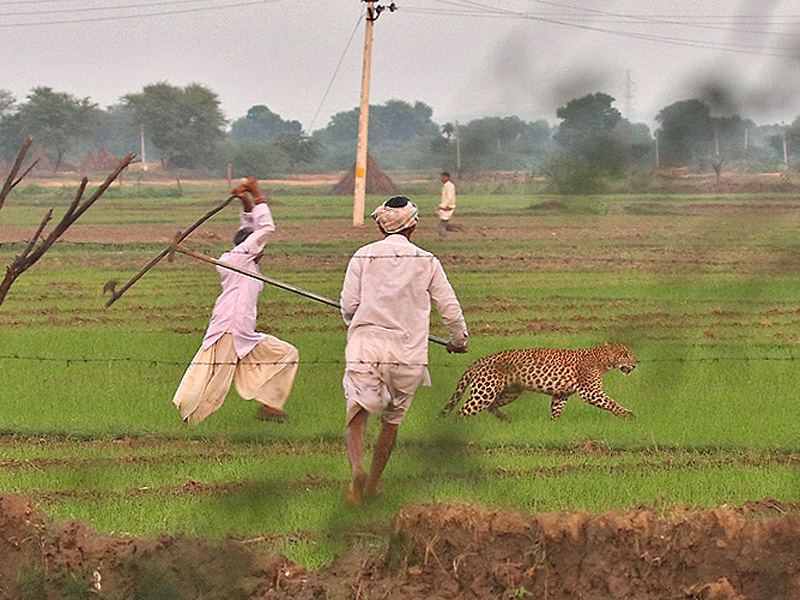
During leopard sightings, large crowds gather, shout, and try to corner the animal. This provokes the leopard into defensive attacks and makes rescue operations dangerous for both people and the animal.
Slow and Bureaucratic Compensation Processes
Villagers who lose livestock or suffer injuries face long delays in receiving compensation. This causes frustration and can lead to retaliatory attitudes against wildlife.
Unscientific Use of Translocation
Leopards are sometimes captured and moved to new forests. Research shows this is ineffective because translocated leopards become stressed and often enter new human settlements, increasing conflict elsewhere.
Shortage of Trained Staff and Modern Equipment
The forest department lacks enough rescue teams, tranquilizing experts, and night patrolling units. Outdated equipment also slows down safe rescue and monitoring efforts.
Lack of Long-Term Community Awareness Programs
Most awareness initiatives are short-term. Many villagers still lack clear guidance on how to behave during encounters, how to secure livestock, or how to report sightings safely.
Solutions and Policy Recommendations
Protect Leopard Habitats
Keep forest areas safe and connected so leopards stay in the wild and don’t enter villages. Avoid building houses or roads in places where leopards usually move.
Reduce Things That Attract Leopards
Improve forests so wild animals (their natural prey) are available. Control stray dog populations because leopards come near villages to hunt them. Keep garbage covered and clean so animals don’t gather near houses.
Faster and Better Emergency Response
Create trained rescue teams in each district to handle leopard sightings quickly. Ensure police, forest officials, and local leaders work together and share information instantly.
Use Technology to Monitor Leopards
Put camera traps and CCTV in areas where leopards often roam. Use phone alerts to inform villagers when a leopard is seen nearby. Keep a proper record of all sightings and conflicts to plan better.
Improve Safety for People and Livestock
Keep cattle in strong, closed sheds at night. Put solar lights around farms and village boundaries. Teach people what to do if they see a leopard—stay calm, don’t form crowds, and call the forest department.
Make Compensation Fast and Fair
Give money quickly to people who lose livestock or get injured. Keep the process simple and transparent so people trust the system.
Stop Unnecessary Leopard Shifting (Translocation)
Moving leopards to new places often creates more problems. Only shift a leopard when absolutely necessary and follow scientific rules.
Increase Staff and Better Equipment
Hire more trained forest staff and provide them with good tools like drones, nets, and tranquilizer equipment. Conduct regular training for rescue operations.
Create Long-Term Awareness Programs
Organize workshops in villages and schools to teach how to live safely around leopards. Work with NGOs and local groups to keep people informed throughout the year.
Stronger Policies and Planning
Include wildlife safety while planning new roads, buildings, and farms. Take environmental checks seriously before starting big projects near forests. Encourage villagers to report sightings early and participate in local wildlife committees.
Conclusion
The leopard-human conflict in Maharashtra is not simply a clash between wildlife and people—it is a reflection of how human actions have reshaped natural landscapes. As forests shrink, stray dog populations rise, and waste accumulates near villages and towns, leopards are driven into human-dominated areas in search of food and space. Most incidents labelled as “attacks” are actually defensive reactions triggered by panic, crowds, or sudden encounters, not deliberate aggression. This shows that the conflict is primarily human-made, not leopard-driven.
Yet, Maharashtra also demonstrates that coexistence is possible. Regions like Pune, Nashik, and Mumbai have shown that with awareness, scientific monitoring, rapid response teams, and community participation, people and leopards can share space safely. Instead of relying on reactive measures like capture or translocation, long-term solutions must focus on habitat protection, better waste management, and empowering local communities.
If implemented sincerely, Maharashtra can transform from a conflict-prone state into a national model of coexistence—where human safety and wildlife conservation advance together, not at the cost of each other.
References
- Wildlife Protection Act, 1972. Government of India.
- https://www.indiacode.nic.in/bitstream/123456789/1726/5/A1972-53.pdf
- Guidelines for Human Leopard Conflict management
- https://hpforest.gov.in/storage/files/4/pdf/Guidelines%20for%20Human%20Leopa rd%20Conflict%20Management.pdf
- Human Leopard Management Guidelines (by V ATHREYA)
- https://media.rufford.org/media/project_reports/Human
- Leopard%20Management%20Guidelines.pdf
- News Reports: “Leopard Injures 7 in Nagpur Residential Area,” The Times of India , Dec 10, 2025.
- “13-Year-Old Killed in Pune Leopard Attack,” Indian Express , Nov 2, 2025.
Author

About the Author