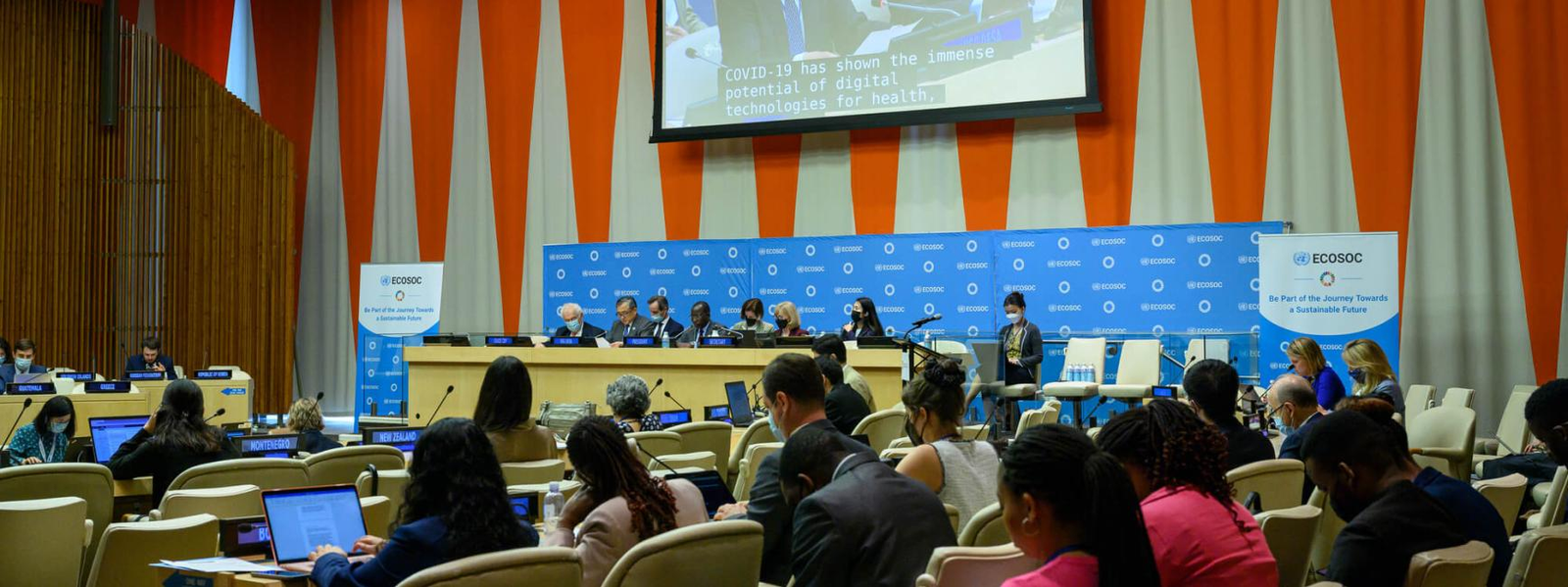
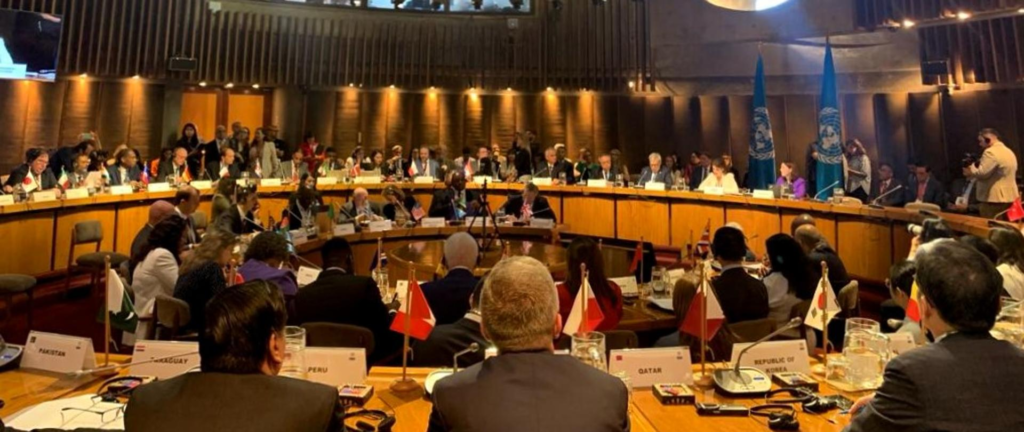
Image Source: https://ecosoc.un.org/en/what-we-do/management-segment
Abstract
The adoption of Sustainable Development Goals (SDGs) in 2015 quietly but significantly transformed the working of the United Nations, especially the role of the Economic and Social Council (ECOSOC). Formerly as a procedural and marginal body, ECOSOC has gradually become a key platform for global coordination, tracking progress and multi-stakeholder participation in sustainable development. This article explores how SDGs reshaped ECOSOC’s institutional role and authority, the mechanisms this transformation is taking place, and broader implications for global governance. While the SDG framework revived ECOSOC’s significance in the UN system, they have also introduced challenges around accountability, coordination and inclusion. The article concludes by considering ECOSOC’s role as the UN moves towards the 2030 Agenda deadline and recommends some strategies to strengthen its effectiveness within the global governance structure.
Introduction
The ECOSOC was established in 1945 as one of the six main organs of the United Nations. It has been tasked with the promotion of international cooperation on economic, social and humanitarian issues.1 But since the beginning, ECOSOC has only ever been a second class body. It is permitted to submit recommendations, but it is not granted decision making power and was placed under the authority of the General Assembly.2 However, the introduction of Sustainable Development Goals (SDGs) marked a turning point in the history of ECOSOC. They reflect an understanding that everywhere must integrate economic growth, social well-being, and environmental protection. ECOSOC was then proposed as a system-wide governing body and would be responsible for annual monitoring, policy coherence, and a participatory approach.3In this context, ECOSOC has undergone a transformation where the role, responsibilities, authority, and position have changed within the UN governance system.
ECOSOC Before the SDGs: Mandate and Limitations
The Economic and Social Council (‘ECOSOC’ or ‘Council’) has a broad mandate of coordinating the economic, social, and cultural activities of the United Nations and promote international cooperation and development.4 Particularly, it was tasked to promote higher living standards, full employment, and economic and social progress. It also provides a platform to coordinate activities within the UN system and its specialised agencies.5
But its practical influence was limited because it does not have any independent responsibilities, autonomy and decision making power like the Security Council. Its recommendations were non-binding, which have limited enforcement and it also lacks direct control over the resource allocation.2
Despite these difficulties, ECOSOC retained a procedural and symbolic importance as the UN’s principal development organ. Instead of formal reforms, it was the introduction of SDGs which changed its institutional identity and global role.
The SDGs as a Governance Turning Point
The Sustainable Development Goals were unanimously adopted by UN member states in 2015, representing a major evolution in global development thinking.6 Unlike Millennium Development Goals (MDGs), they are uniformly applicable to all countries of the world, removing the ‘developing’ versus ‘developed’ dichotomy. The SDGs expanded the scope of global development with-and-for sustainability and demonstrates that the environment is not an add-on, but rather the base that underpins all other goals. The SDGs also emphasised interconnectedness, recognizing that progress in one area depended on parallel progress in others.7 The integrated and comprehensive nature of SDGs required a central coordinating mechanism within the UN. ECOSOC, because of its institutional structure and historical mandate, became the natural anchor for this. It brings together all the different people and partners involved in achieving sustainable development and also explores the scope of a renewed global partnership and invites youth to share their views on their future.1
ECOSOC’s Transformation in SDGs Era
The 2021 review, enhanced ECOSOC’s Charter mandate as a coordinator, convener and specialised body for policy dialogue, policy-making and forger of consensus towards the
implementation of the 2030 Agenda for Sustainable Development .Now, it has also strengthened its leading role in identifying emerging challenges, promoting innovation, and achieving a balanced integration of the three pillars – economic, social and environmental of sustainable development.8.
One of the most visible transformations has been the rise of the High-level Political Forum (HLPF), which operates under ECOSOC’s auspices as the principal global platform for reviewing SDG implementation. By hosting this, ECOSOC acquired a central monitoring function it previously lacked and brings together ministerial and high-level representatives of governments, experts and stakeholders, including heads of UN entities and representatives of major groups.
Through Voluntary National Reviews (VNRs), countries share their experiences, including successes, challenges and lessons learned, to accelerate the implementation of 2030 Agenda. Though non binding these reviews create peer pressure for transparency and accountability.9 The transformation is also visible in the council’s approach to stakeholder participation. SDGs emphasise inclusiveness and multi stakeholder engagement in encouraging collaboration, not only among governments but also with civil society, non governmental organisation, private sector women, youth, academia and others.10 While ECOSOC has become the primary gateway through which these actors participate in UN processes. NGOs that have been granted consultative status now engage actively in deliberations through meetings and events at UN.11 Furthermore, SDGs compelled ECOSOC to adopt a data-driven, analytical approach to policy making because there are hundreds of indicators in SDGs that require statistical monitoring.12 For this ECOSOC has increased collaboration with statistical bodies and research institutions for credible data, digital tools and scientific advisory mechanisms.
All this evidence marks a significant change from the council’s conventional procedural role to an inclusive one and embraces its transformation in SDGs era.
Changing Norms in UN Governance
The transformation brought by the Sustainable Development Goals (SDGs) highlights a broader evolution in the United Nations governance. The SDGs renewed the call for greater coordination and coherence by highlighting the need for a more integrated agenda and ECOSOC through its
newly established High- level Political Forum on Sustainable Development provides ‘leadership, guidance and recommendations’ for sustainable development.13
Another significant transformation is the transition from a state centric governance model to a networked and multi actor system. The SDGs acknowledge that governments alone cannot achieve sustainable development and emphasise collaboration with NGOs, civil society, private sector, and others.10 As a result ECOSOC is now seen as a hub for diverse stakeholder participation supporting a governance style based on shared responsibility and partnership.
Transparency has also become a defining norm in SDG-era governance. The introduction of public Voluntary National Reviews and annual progress reporting have raised global scrutiny and enabled accountability and shared responsibility.9
Through these changes, ECOSOC has become a central actor in creating a more inclusive, transparent, and networked global governance architecture.
Continuing challenges in ECOSOC’s Evolving Role
Even with its strengthened authority and visibility in the SDG era, ECOSOC still experiences structural, political and financial constraints that limits its capacity to fully perform its expanding responsibilities.
One of the major issues is the overburdened mandate. The SDGs cover almost every domain of public policy from climate transition to gender equality, infrastructure, global health and digital innovation which puts lots of pressure on ECOSOC’s institutional capacities. The other major challenge of ECOSOC is that its agenda is too packed, with too many reports of subsidiary bodies, that it cannot handle them effectively and fulfill its function of coordinating the agencies of the system; and that there is duplication of debate with the also overloaded general assembly.14
Insufficient Accountability and Transparency is another persistent challenge for ECOSOC, as the public remains unaware of how funding from the ECOSOC gets divided across various initiatives.The insufficient disclosure about resource distribution makes people worry about wrongful management together with possible stabilisation of resources and according to some critics, The ECOSOC also suffers from reduced efficiency and impartial execution because several donor states base their donations on political or strategic needs, which diminishes its effectiveness.15
Another challenge is related to the High-level political forum; they have become a focal point for promoting SDGs through the United Nations system. However, the leadership, authority and capacity of the forum have remained limited, as has its role in enhancing institutional interplay. The value of the forum lies mainly in informal leadership and guidance, for example, through peer learning.13 Implementation gaps for the 2030 Agenda also hinder the effectiveness of ECOSOC. With just five years remaining to meet the goals of the 2030 Agenda for sustainable development, progress is uneven which is a core focus of ECOSOC’s work.16Without proper focus on these challenges, ECOSOC functions may remain limited.
Future Trajectories and the Road to 2030
Despite ECOSOC’s enhanced role in guiding the 2030 Agenda, its structural and functional limitations demand reforms that are both strategic and practical. To achieve the SDGs, ECOSOCs institutional coherence, accountability and leadership potential have to be strengthened.
Firstly, the overburdened mandate of ECOSOC should be rationalised. Because SDGs cover every aspect of development from climate action to digital governance- the council should prioritise the core clusters and simplify reporting requirements. According to scholars, excessive fragmentation makes it difficult for ECOSOC to deliver coordinated policy direction across the UN system.17 A clearer focus would make its efforts more powerful and effective.
Secondly, the success of ECOSOC depends on reducing the complex system of overlapping reports and meetings. Cooperation between member states, NGOs, civil societies and UN agencies should be more effortless and easy and, to revive international governance there is a need for strong and inclusive coordination.
Thirdly, enhancing accountability and transparency in development finance remains the crucial part. Council should publish clear information on funding flows, donors and resource allocation to rebuild the confidence among member states and stakeholders. Increased transparency mechanisms are also recommended for effective work.
Fourth, the High-level political forum (HLPF) must be empowered and evolve beyond being a platform for voluntary reviews. It needs a better and clearer mandate, binding follow-up actions
and more space for evidence-based dialogues. It would make SDG monitoring more credible and action oriented.18 Finally, the most important step is to improve implementation on the ground. With only a few years until 2030, disparities in regional progress shows the need for better financing, data systems and collaborations. According to the UN SDG progress report, the world is “off track” on most goals making ECOSOC’s role more important than ever in closing these gaps.19 And for reversing the current trends before 2030, targeted capacity building and data driven monitoring mechanisms are essential.
Conclusion
The transformation of ECOSOC in the era of Sustainable Development Goals shows both progress and enduring challenges. The role of the Council has become more visible, more connected to global development goals and more important in monitoring the 2030 Agenda. However some constraints such as overburdened mandate, overlapping functions, insufficient accountability, lack of transparency and slow pace of SDG implementation, continue to restrict its overall effectiveness.
Going forward, ECOSOC needs to simplify its work, build better coordination among UN agencies, and strengthen transparency and follow-up mechanisms. With clearer priorities, strong partnerships, and more focused leadership, ECOSOC can effectively guide global development efforts to achieve the SDGs. Ultimately, its success will depend on how well it responds to evolving demands of a fast-changing world while keeping the core vision of SDGs in the centre of UN governance.
References
- United Nations. (2019). ECOSOC Handbook: A guide to the UN Economic and Social Council, https://www.un.org/ecosoc
- Jens Martens, The Reform of the UN Economic and Social Council (ECOSOC): A Never Ending Story? WORLD ECONOMY AND DEVELOPMENT AND GLOBAL POLICY FORUM, https://archive.globalpolicy.org/social-and-economic-policy/social-and-economic-policy at-the-un/reform-of-ecosoc-and-the-social-and-economic-policy-process-at-the-un/47509. html
- German Development Institute(2015), Briefing Paper 6/2015, https://www.idos-research.de/fileadmin/migratedNewsAssets/Files/BP_6.2015
- United Nations ECOSOC. (n.d.). #ECOSOC80: A turning point for ECOSOC, https://ecosoc.un.org/en/un80#:~:text=%23ECOSOC80:%20A%20Turning%20Point%20 for,ECOSOC’s%20mission%20from%20the%20outset
- United Nations ECOSOC. (n.d.). ECOSOC70: Taking Action to Improve Lives Background Note, https://ecosoc.un.org/sites/default/files/2025-10/background_note%5B1%5D.pdf
- United Nations. (2015). Transforming our world: The 2030 Agenda for Sustainable Development. https://sdgs.un.org/2030agenda
- Michael Woodbridge(2015), From MDGs to SDGs: What are the Sustainable Development Goals?, ICLEI BRIEFING SHEET – Urban Issues, No. 01,
- United Nations ECOSOC. (n.d.). ECOSOC at a Glance, https://ecosoc.un.org/en/about-us
- United Nations DESA. (2023). High-Level Political Forum on Sustainable Development, High-Level Political Forum, https://hlpf.un.org/
- United Nations (2022). ECOSOC Partnership Forum 2022, https://sdgs.un.org/events/ecosoc-partnership-forum-2022#:~:text=In%20addition%2C%20all%20submitted%20responses,UNDESA%20and%20the%20UN%20Foundation
- United Nations ECOSOC. (n.d.), NGO Branch, https://ecosoc.un.org/en/ngo
- United Nations. (n.d.). Sustainable Development Goals, https://sdgs.un.org/goals
- The Political Impact of Sustainable Development Goals: Transforming governance through global goals. CAMBRIDGE UNIVERSITY PRESS.
- Erskine Childers(1955), An Agenda for Peace and an Agenda for Development: The Security Council and the Economic and Social Council in the UN reform process
- International United Nations Watch(2025), Multiple challenges: Financial operations of United Nations Economic and Social Council. https://intunwatch.com/multiple-challenges-financial-operations-of-the-united-nations-ec onomic-and-social-council/#:~:text=International%20funding%20of%20certain%20activi ties,Demands%20for%20Change
- United Nations. (n.d.). Economic and Social Council Press release. https://press.un.org/en/content/economic-and-social-council#:~:text=Amid%20Shrinking%20National%20Budgets%2C%20Rising,the%20Economic%20and%20Social%20Coun cil
- Beisheim, M., & Simon, N. (2018). Multilateral Cooperation in the 2030 Agenda Implementation.
- UN DESA. (2023). Strengthening the HLPF for Accelerated SDG Progress.
- United Nations. (2023). The Sustainable Development Goals Report 2023: Special Edition. https://unstats.un.org/sdgs/report/2023/.
Author

About the Author