
https://blog.ipleaders.in/wp-content/uploads/2025/04/Legal-Aspects-of-medical-evidence.jpg
Abstract
Medical evidence forms an indispensable component of modern criminal adjudication, serving as the bridge between science and law. It helps courts ascertain truth, ensure justice, and prevent wrongful convictions or acquittals. The role of forensic medical experts has evolved from mere post-mortem examiners to sophisticated scientific witnesses who interpret complex medico-legal findings with objectivity and precision. In India, where criminal justice relies heavily on testimonial evidence, medical evidence offers an essential corroborative and interpretative function. This article explores the legal and evidentiary value of medical testimony, the historical evolution of forensic medicine, and the challenges faced by medical experts in the adversarial trial process. The study further compares international practices in the use of forensic evidence, evaluates recent legal developments under the Bharatiya Sakshya Adhiniyam (2023) and Bharatiya Nyaya Sanhita (2023), and identifies gaps in institutional and procedural frameworks. The article concludes with recommendations to strengthen medico-legal infrastructure, ensure expert training, and integrate forensic science into judicial processes more effectively, thereby ensuring justice based on scientific accuracy and ethical responsibility.
Keywords
Medical Evidence, Forensic Experts, Criminal Trials, Autopsy, Medico-Legal Examination, Forensic Medicine, Expert Testimony, Bharatiya Sakshya Adhiniyam 2023, Scientific Evidence, Criminal Justice System
Introduction
In the realm of criminal trials, the pursuit of truth demands evidence that is both credible and scientifically sound. Medical evidence plays a pivotal role in this process, providing courts with objective insights into causes of death, nature of injuries, sexual offences, poisoning, and other medico-legal issues. Unlike ordinary witnesses, forensic medical experts assist the judiciary by interpreting technical facts and clarifying scientific dimensions of the case. Their opinions, grounded in medicine and forensic science, help determine whether an act constitutes a crime, identify the accused’s role, and ensure fair adjudication.
The Indian criminal justice system recognizes the significance of such evidence under Section 45 of the Indian Evidence Act, 1872, which authorizes courts to consider expert opinions on medical, scientific, and technical matters. With the introduction of the Bharatiya Sakshya Adhiniyam, 2023, these provisions have been modernized to reflect advancements in technology and forensic methodology. Forensic medical experts are increasingly called upon in cases involving homicide, rape, assault, poisoning, intoxication, and unnatural deaths, where their scientific interpretation supplements ocular testimony and circumstantial evidence.
However, despite its importance, medical evidence is not without challenges. Variations in interpretation, inadequate infrastructure, lack of coordination between police and medical authorities, and occasional bias can compromise the reliability of expert opinions. Moreover, the admissibility, credibility, and weight of such evidence depend on the expert’s competence, the clarity of documentation, and judicial understanding of scientific principles.
In this context, the present article evaluates the evolving role of forensic medical experts in criminal trials, tracing their historical origins, examining legal developments, comparing international standards, and exploring reforms necessary to enhance their contribution to justice delivery.
Historical Background
The use of medical evidence in criminal proceedings can be traced back to the earliest civilizations. Ancient Egyptian, Greek, and Indian societies recognized the value of medical knowledge in determining causes of injury or death. The Charaka Samhita and Sushruta Samhita, ancient Indian treatises, contained detailed descriptions of anatomy, toxicology, and wounds that guided early medico-legal understanding. The physician’s duty to aid justice was implicit, though not formally codified.
In the Western world, forensic medicine began taking a structured form during the 16th and 17th centuries. The term “forensic” derives from the Latin word forensis, meaning “of or before the forum,” signifying the application of medical science to legal questions. The first systematic work on legal medicine, Fortunatus Fidelis’s De Relationibus Medicorum (1602), is often regarded as the birth of forensic pathology.
By the 19th century, with the rise of scientific methods and anatomy, forensic medicine became institutionalized. Autopsies, chemical tests, and expert reports gained recognition as reliable evidence in criminal proceedings. In India, British colonial governance introduced medico- legal systems through the Indian Evidence Act, 1872, Indian Penal Code, 1860, and Code of Criminal Procedure, 1898, establishing the legal framework for expert testimony.
The post-independence era saw the evolution of state forensic science laboratories (FSLs) and medical colleges that trained doctors in forensic pathology. Over time, the medico-legal system began to incorporate disciplines like toxicology, serology, DNA profiling, and forensic anthropology. Cases such as K.M. Nanavati v. State of Maharashtra (1962) showcased the critical role of medical evidence in corroborating circumstantial and ballistic findings. Similarly, in Bhagwan Das v. State of Rajasthan (1957) and Ram Deo Chauhan v. State of Assam (2001), medical evidence clarified discrepancies between witness statements and injury reports.
In the 21st century, advancements in DNA technology, digital forensics, and electronic evidence have expanded the boundaries of medical testimony. The recent enactment of the Bharatiya Nyaya Sanhita (BNS), 2023 and Bharatiya Sakshya Adhiniyam (BSA), 2023 reflect India’s legislative intent to integrate scientific tools more effectively into criminal investigations. Despite progress, challenges in expert training, chain of custody, and judicial interpretation still hinder optimal utilization of medical evidence.
National Perspective
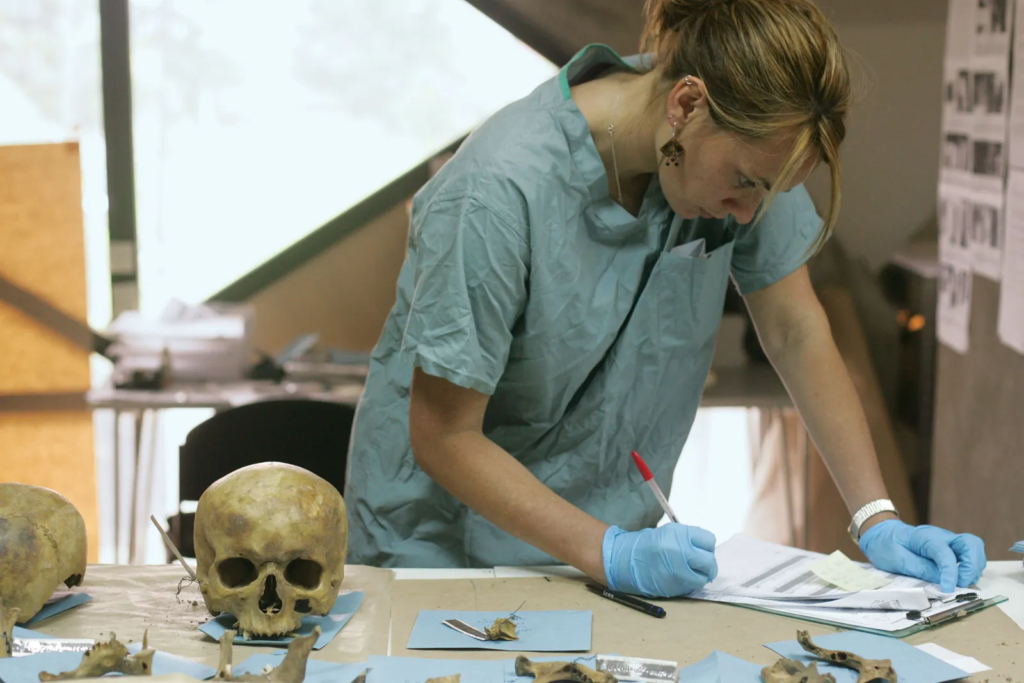
In India, medical evidence plays a crucial role in the administration of criminal justice, bridging the gap between scientific investigation and legal adjudication. The Indian Evidence Act, 1872, particularly Sections 45 to 51, recognizes expert testimony, including that of medical practitioners, as a vital aid to the court in determining questions of fact. Medical evidence, whether in the form of post-mortem reports, injury analyses, DNA profiling, or toxicological findings, assists judges and investigators in establishing the cause, nature, and circumstances of a crime. Institutions like the Central Forensic Science Laboratory (CFSL) and state-level FSLs provide the necessary infrastructure for scientific analysis, while the Code of Criminal Procedure (CrPC) mandates medical examination in cases such as sexual assault, custodial violence, and homicide. Despite these frameworks, challenges persist due to inadequate forensic infrastructure, procedural delays, and the lack of specialized training for medical officers and investigating officers. Moreover, discrepancies between medical and ocular evidence often create judicial dilemmas. Strengthening the interface between the legal and medical communities through improved standard operating procedures, expert training, and technological integration can significantly enhance the credibility and efficiency of medical evidence in Indian criminal trials. Thus, the national perspective underscores the need for a robust and coordinated forensic-medical-legal system that ensures justice based on scientific precision and ethical responsibility.
Judicial Trends
Indian judiciary has consistently acknowledged the indispensability of medical and forensic evidence in criminal trials, particularly in homicide, sexual offence, and custodial death cases. In State of Himachal Pradesh v. Jai Lal (1999), the Supreme Court emphasized that expert opinion must be founded on recognized scientific principles and its credibility assessed in light of other evidence. In Bhagwan Das v. State of Rajasthan (1957), medical evidence was held to have corroborative value when consistent with eyewitness accounts, but insufficient on its own to convict unless supported by other evidence. Similarly, in State of Haryana v. Bhagirath (1999), the Court reiterated that courts must evaluate medical opinions in conjunction with the entire evidentiary record, not in isolation. The judiciary has also increasingly relied on DNA profiling and forensic pathology, as seen in Santosh Kumar Singh v. State (2010), where DNA evidence became the cornerstone of conviction. Courts have encouraged the modernization of forensic institutions and adoption of advanced scientific tools like digital autopsy and cyber-forensics. However, the judiciary has cautioned against over-reliance on uncorroborated or technically flawed medical reports. Recent judgments reflect a proactive judicial stance demanding greater accountability from forensic experts, adherence to ethical standards, and transparent documentation of findings. Overall, judicial trends reveal a balanced yet progressive approach valuing medical evidence as an essential but not conclusive determinant of truth, while promoting reforms that align scientific expertise with the principles of natural justice and procedural fairness.
International Perspectives
Globally, the integration of medical evidence into criminal trials reflects a steady convergence between science and law. In the United States, the Daubert v. Merrell Dow Pharmaceuticals (1993) decision established the Daubert Standard under Rule 702 of the Federal Rules of Evidence, ensuring that expert testimony is scientifically valid and relevant. Courts rely extensively on forensic pathologists and medical examiners for homicide and sexual assault investigations. In the United Kingdom, the Criminal Procedure Rules (Part 19) and the Crown Prosecution Service (CPS) emphasize impartiality, transparency, and peer-reviewed expert testimony in forensic medicine. Similarly, Canada’s R. v. Mohan (1994) case laid down the Mohan Test for admissibility, ensuring expert evidence meets standards of necessity, relevance, and qualification—playing a vital role in correcting wrongful convictions through DNA-based reviews.
In Australia, forensic medicine operates within an integrated medico-legal system, with cases such as Rogers v. Whitaker (1992) demonstrating the importance of medical expertise in judicial reasoning. Across Europe, nations like Germany and France maintain university-based medico-legal institutes, supported by the European Network of Forensic Science Institutes (ENFSI) and the Council of Europe’s Convention on Human Rights and Biomedicine (1997), ensuring ethical rigor.
Conversely, developing nations face challenges in forensic infrastructure, expertise, and standardization. Agencies like the WHO and UNODC advocate forensic capacity-building and global best practices. While India’s medico-legal framework aligns with these international norms, inconsistent implementation and resource gaps persist. Nevertheless, rising focus on forensic education and digital modernization marks a progressive step toward achieving global standards in medical evidence management.

Role and Evaluation of Forensic Medical Experts
Forensic medical experts are the scientific interpreters of evidence in criminal cases. Their duties extend beyond conducting post-mortems to include examination of living victims and accused persons, interpretation of injury patterns, detection of sexual assault, identification of poisons, and assessment of mental fitness. Their expertise transforms physical observations into legally admissible conclusions that aid the judiciary.
Under Section 45 of the Bharatiya Sakshya Adhiniyam (2023), medical experts’ opinions are admissible where specialized knowledge can assist the court. However, courts are not bound by expert opinion; it must be weighed with other evidence. In State of H.P. v. Jai Lal (1999), the Supreme Court clarified that expert testimony must be corroborated by facts and reasoning, ensuring scientific soundness.
In cases of homicide, medical evidence determines whether injuries were ante-mortem or post- mortem, accidental or intentional. It establishes cause, manner, and time of death, thereby corroborating or disproving eyewitness accounts. In sexual offence cases, forensic experts provide vital reports on genital injuries, semen analysis, and DNA profiling, which can conclusively link the accused to the crime. Under the POCSO Act, 2012, medical professionals play a critical role in collecting and preserving evidence with due sensitivity.
However, the challenges faced by forensic medical experts are significant. Many government hospitals lack adequate forensic infrastructure. Delayed autopsies, improper documentation, and poor chain of custody reduce evidentiary reliability. Moreover, experts often encounter courtroom hostility, where cross-examinations test their credibility rather than the content of their findings.
Ethical dilemmas also arise doctors must balance professional confidentiality with legal obligations. Bias, corruption, and pressure from law enforcement agencies can compromise impartiality. The absence of specialized forensic training programs and inadequate remuneration further discourages competent professionals from engaging in medico-legal work.
Recent reforms such as establishing regional forensic medical centres, introducing video- recorded autopsies, and mandating digital evidence documentation aim to improve transparency. The National Forensic Sciences University (NFSU) and State Forensic Science Laboratories (FSLs) are emerging as hubs for capacity-building. Yet, systemic gaps remain in ensuring uniform standards across India’s vast judicial landscape.
Conclusion
Medical evidence serves as a cornerstone of scientific justice, transforming complex biological phenomena into judicially comprehensible facts. The role of forensic medical experts has grown exponentially, reflecting the increasing demand for accuracy, transparency, and impartiality in criminal trials. Their testimony not only corroborates other forms of evidence but often becomes decisive in determining guilt or innocence.
In India, despite constitutional and legislative acknowledgment of scientific evidence, effective integration of forensic medicine remains inconsistent. The new Bharatiya Nyaya Sanhita (BNS, 2023) and Bharatiya Sakshya Adhiniyam (BSA, 2023) represent significant progress in updating evidentiary frameworks. Nevertheless, institutional deficiencies, training gaps, and judicial unfamiliarity with forensic principles continue to undermine the impact of expert testimony.
Forensic medicine must evolve as a collaborative discipline, linking medical professionals, investigators, and judiciary through shared scientific literacy. Strengthening forensic education, ensuring ethical independence of experts, and enhancing laboratory standards are essential to realize the full potential of medical evidence in criminal trials.
Future Scope
The future of medical evidence in criminal justice lies in technological integration and institutional reform. India must prioritize the modernization of forensic laboratories, establishment of dedicated medico-legal units in hospitals, and incorporation of AI-driven analytical tools for digital autopsies and injury analysis.
There is a pressing need for judicial training modules to improve judges’ and prosecutors’ understanding of forensic science. Interdisciplinary collaboration between medical universities, law schools, and police academies should be institutionalized to ensure consistent standards of practice.
Legal reforms should also focus on data protection, expert accountability, and certification systems for forensic professionals. The adoption of uniform medico-legal autopsy formats, evidence preservation protocols, and centralized digital databases will enhance reliability and transparency.
Globally, India can benefit from cooperation with institutions like Interpol’s Forensic Science Network, UNODC, and WHO, ensuring adherence to international best practices. With these measures, forensic medicine can evolve into a cornerstone of India’s reformed criminal justice system anchoring truth, science, and justice in unison.
References
- Agarwal, A. (2023). Forensic Medicine and Toxicology in Indian Courts. Delhi: Universal Law Publishing.
- Beck, T. (2019). Forensic Science and Criminal Justice: A Comparative Study. Journal of Legal Medicine, 40(2), 85–102.
- Bharatiya Nyaya Sanhita, 2023 (Act No. 45 of 2023). Ministry of Law and Justice, Government of India.
- Bharatiya Sakshya Adhiniyam, 2023 (Act No. 47 of 2023). Ministry of Law and Justice, Government of India.
- Charaka Samhita. (2016). Translated Edition. Varanasi: Chaukhambha Orientalia.
- Daubert v. Merrell Dow Pharmaceuticals, 509 U.S. 579 (1993).
- Government of India. (2019). National Forensic Sciences University Act, 2020. New Delhi: Ministry of Home Affairs.
- Jai Lal v. State of Himachal Pradesh, (1999) 7 SCC 280.
- K.M. Nanavati v. State of Maharashtra, AIR 1962 SC 605.
- Mohan, R. v. (1994) 2 S.C.R. 9 (Supreme Court of Canada).
- National Crime Records Bureau (NCRB). (2024). Crime in India: Annual Report 2023. New Delhi: Ministry of Home Affairs.
- Rogers v. Whitaker, (1992) 175 CLR 479 (Australia).
- State of H.P. v. Jai Lal, (1999) 7 SCC 280.
- Supreme Court of India. (2001). Ram Deo Chauhan v. State of Assam, (2001) 5 SCC 714.
- Supreme Court of India. (2008). State of Punjab v. Bhajan Singh, (2008) 10 SCC 261.
- United Kingdom. (2022). Criminal Procedure Rules (Part 19). London: Crown Prosecution Service.
- United Nations Office on Drugs and Crime. (2021). Guidelines on Forensic Science in Criminal Justice Systems. Vienna: UNODC.
- World Health Organization. (2022). Strengthening Forensic Services for Justice and Human Rights. Geneva: WHO Press.
- Yadav, R. (2024). Medico-Legal Evidence in Indian Criminal Justice: Challenges and Reforms. Indian Journal of Law and Forensic Studies, 15(1), 45–67.
- Zhou, L. (2025). Global Trends in Forensic Medicine: Science, Ethics, and Law. International Review of Legal Medicine, 28(4), 120–139.
Author

About the Author